


At UN, Pakistan calls for greater global solidarity to achieve SDGs
Ahsan Iqbal reaffirmed Pakistan's commitment to the 2030 Sustainable Development Agenda, urging global cooperation, climate justice, and financial reforms to address challenges and accelerate SDG progress.
- Pakistan's national transformation plan, URAAN Pakistan.
- Impact of climate change and devastating floods.
- Reforms needed for the international financial architecture.
- Threats to water security from the Indus Waters Treaty.
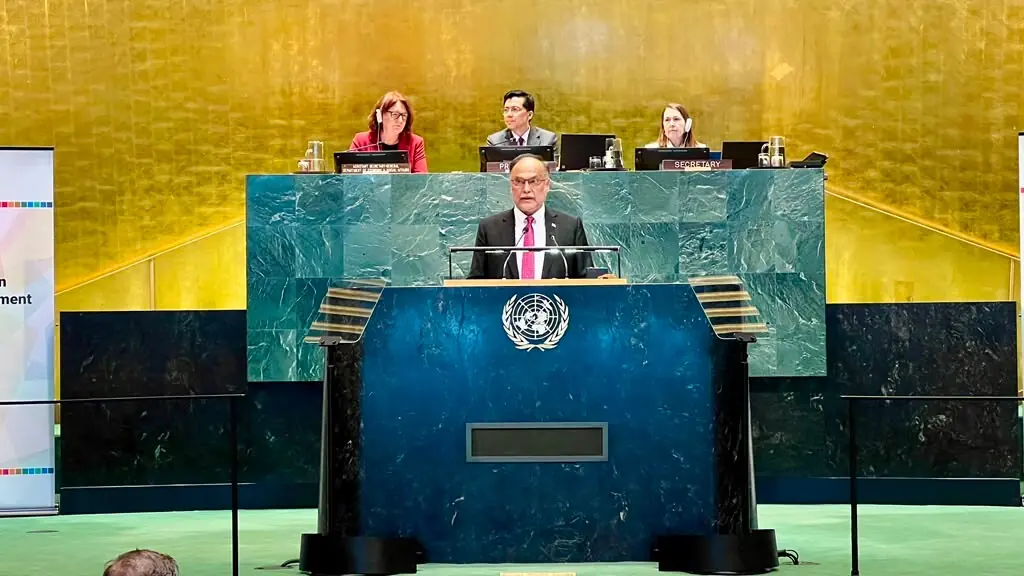

Federal Minister for Planning, Development and Special Initiatives, Ahsan Iqbal, reaffirmed Pakistan’s commitment to the 2030 Agenda for Sustainable Development while calling for stronger global cooperation, climate justice, and reforms to the international financial system during Pakistan’s national statement at the ministerial segment of the High-Level Political Forum (HLPF) on Sustainable Development 2026 at the United Nations Headquarters.
Addressing the segment of the United Nations Economic and Social Council (ECOSOC), the minister said that with only five years remaining until 2030, the world faces growing challenges, including economic shocks, climate disasters, geopolitical tensions, and rising debt burdens, which have slowed progress towards the Sustainable Development Goals (SDGs), according to an official statement on Tuesday.
He said Pakistan remains firmly committed to achieving the SDGs through its national transformation plan, URAAN Pakistan, which focuses on accelerating economic growth, creating jobs, harnessing technology, strengthening climate resilience, enhancing energy security, and ensuring inclusive development that leaves no one behind. He added that the government’s economic reforms over the past two years have restored macroeconomic stability and strengthened confidence in the economy.
Highlighting Pakistan’s vulnerability to climate change, Iqbal said the devastating floods of 2022 and 2025 underscored the urgent need for climate resilience.
He emphasised Pakistan’s commitment to ecosystem restoration, water security, clean energy, and climate-resilient development.
Referring to the Indus Waters Treaty, he stressed that its unilateral suspension threatens the water security and livelihoods of 240 million Pakistanis and undermines international treaty obligations.
Calling for renewed global partnership, the minister urged reforms to the international financial architecture, greater access to concessional finance, fulfilment of climate finance commitments, and innovative financing mechanisms to help developing countries build resilience. He concluded by emphasising that achieving the SDGs requires urgent, collective action and stronger international solidarity




















Comments