


PAA’s Automated Border Control E-Gate project comes under scrutiny
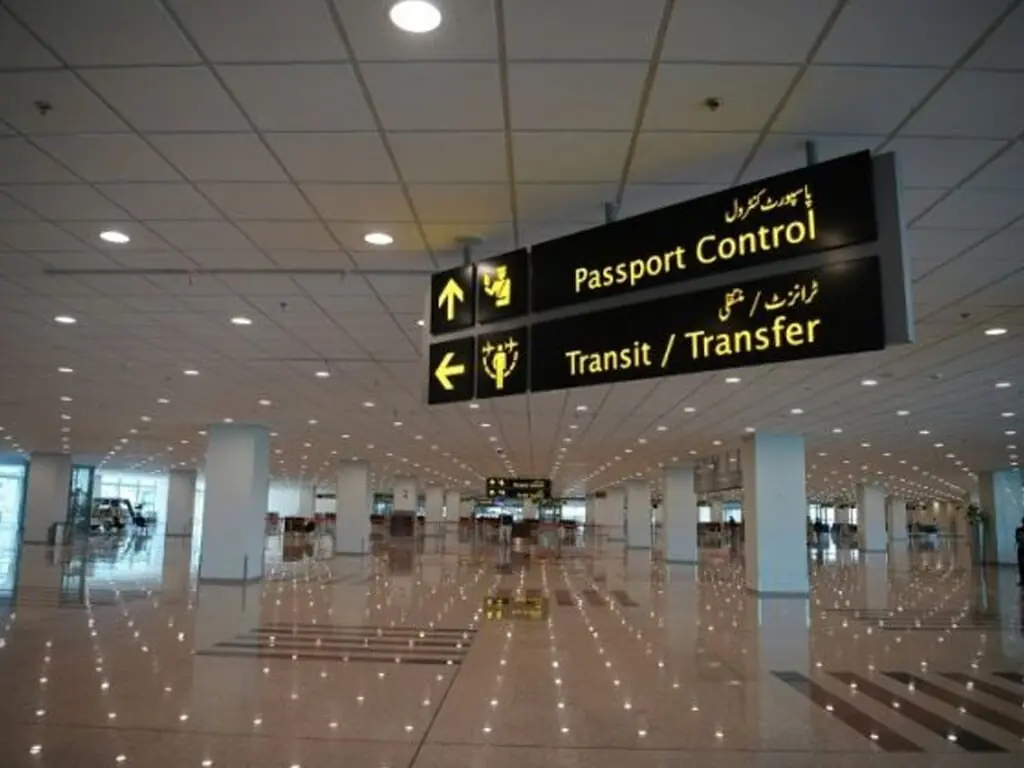

ISLAMABAD: Pakistan’s Automated Border Control (ABC) E-Gate project of Pakistan Airports Authority (PAA) has come under scrutiny after procurement records revealed a shift from open international competition to a single-entity procurement under Rule 42(f) of the PPRA Rules, 2004, raising questions over transparency and the project’s procurement strategy.
The procurement history began in 2020, when the then Civil Aviation Authority (now Pakistan Airports Authority) issued an international Request for Proposal (RFP) for an integrated border management solution comprising ABC E-Gates, API, PNR, biometric verification and passport authentication. International firms participated, and a formal technical evaluation was completed. However, despite completion of the evaluation process, the procurement did not proceed to contract award.
In 2024, PAA initiated a fresh Expression of Interest (EoI), under which three firms were short-listed. The Authority later appointed a German engineering consultant to prepare the technical specifications and procurement framework. Industry participants expected the final RFP to be issued to the short-listed firms. Instead, the final RFP was issued exclusively to AXI Systems (Private) Limited, a State-Owned Enterprise, by invoking PPRA Rule 42(f).
Transparency Inter-national Pakistan (TIP) subsequently questioned the applicability of Rule 42(f), procurement transparency, price reasonableness, beneficial ownership, and the transition from competitive procurement to a single-entity process. The PPRA subsequently sought procurement records from PAA through letters dated 11 May, 21 May and 03 June 2026. PPRA noted that the requested information had not been furnished.
In its response dated 03 July 2026, the Ministry of Defence stated that the project was being undertaken through “indigenous resources” due to data and national security considerations, that no contract had yet been awarded, and that publication of evaluation reports and other procurement obligations would arise at later stages. However, the response does not explain how the present procurement model aligns with the earlier procurement history, which was based on international competition for established ABC, API, and PNR technologies.
It has also clarified that the amount mentioned/ quoted in the TIP letter, i.e. Rs 20 billion, does not reflect the current status and particulars of the project.
Several key questions therefore remain unanswered: (i) why was the internationally competitive procurement initiated in 2020 abandoned after completion of the technical evaluation, and why was a fresh EoI issued in 2024?; (ii) Why was an international consultant appointed to prepare the procurement framework if the final RFP was to be issued directly to a single SOE under Rule 42(f)?; (iii) What legal, technical, and commercial assessments justified invoking Rule 42(f), and who approved the departure from the earlier competitive procurement process?; (iv) If the procurement fully complies with the PPRA Rules, why have the key procurement records, evaluation reports, and Rule 42(f) justifications not been disclosed despite repeated requests from PPRA and other oversight authorities? And (v) how was compliance with Rule 42(f), including SOE eligibility, own-resource execution, and price reasonableness, established before adopting direct contracting?
TIP is of the view that the rule was misapplied, as the executing entity reportedly lacks the in-house technology, expertise, and capacity to independently deliver the E-Gate system — technology it claims is not available with any SOE.
Under Rule 42(f), procurement through SOEs is permissible only if the entity executes the project entirely through its own resources without involving private sector partners, joint ventures, or subcontractors. The complaint alleges that this condition was violated, potentially rendering the procurement non-compliant.
TIP further noted that where more than one eligible SOE exists, PPRA rules require limited competition among them through transparent procedures, along with proper price reasonableness checks—requirements it claims were not fulfilled.
The Ministry of Defence letter to the Prime Minister’s Office has further stated that the matter relating to price reasonableness, disclosure and beneficial ownership, execution of Integrity Pact, and submission of performance security are the topics of contract agreement and shall be addressed in accordance with the applicable regulatory framework at the relevant stage.
Copyright Business Recorder, 2026




















Comments