


Pakistan eyes fully Shariah-compliant financial sector from 2028
Pakistan aims to fully convert its financial system to Shariah-compliant by December 2027, eliminating interest while ensuring financial stability and honoring existing contracts through a gradual transition.
- Pakistan's roadmap for a fully Shariah-compliant financial system.
- Gradual transition plan for banks, debt, and government financing.
- Development of Islamic public finance infrastructure and Sukuk issuance.
- Legislative and regulatory reforms supporting the transition.
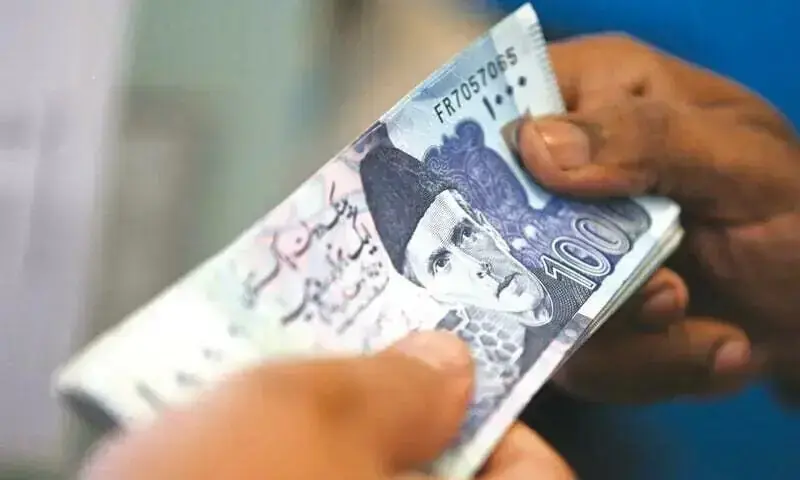

ISLAMABAD: The government has unveiled a strategy to transform Pakistan’s financial sector into a fully Shariah-compliant system after December 31, 2027, pledging a gradual transition that safeguards financial stability, honours all existing contracts, and avoids disruption to banking, capital markets and public finances.
The ‘Post-2027 Financial System in Pakistan’ strategy paper, released by the Finance Division, outlines a roadmap for eliminating interest (Riba) from the country’s financial system in line with the Federal Shariat Court’s 2022 judgment and the 26th Constitutional Amendment, which requires the complete elimination of Riba before January 1, 2028.
The government has assured investors and financial institutions that all existing domestic and foreign debt obligations contracted before the end of 2027 will continue to be serviced under their original terms, while conventional financing will be replaced with Shariah-compliant instruments only upon maturity.
The strategy signals a fundamental shift in government borrowing, with Islamabad planning to raise all fresh domestic financing through Shariah-compliant instruments after 2027. Further, it aims to secure future foreign financing through Islamic modes wherever commercially viable, while maintaining debt sustainability and honouring commitments to multilateral, bilateral and commercial lenders.
Recognising that the banking industry remains the backbone of Pakistan’s financial system, the paper states that most domestically-owned banks are expected to convert into Islamic institutions, while banks with majority foreign ownership will be allowed to decide voluntarily whether to convert or continue offering both conventional and Islamic products.
To support the transition, the government has placed heavy emphasis on developing a robust Islamic public finance infrastructure.
One of the key initiatives is the establishment of an Assets Registry Company (ARC) under the Finance Division, which will maintain a database of federal government assets to facilitate regular Sukuk issuance. The strategy notes that a new hybrid Sukuk structure combining Ijarah and Murabaha has already been approved, and the first Rs109 billion hybrid Sukuk was issued in April 2026.
The government also plans to introduce sovereign Sukuk of three, six and twelve months’ maturity to strengthen liquidity management and support Islamic monetary operations.
On the regulatory front, authorities say a comprehensive review of banking and commercial laws is nearing completion.
Most amendments required in banking legislation are described as ‘minor,’ while reviews of remaining federal and provincial laws will conclude during 2026 before legislative changes are enacted in 2027.
The strategy further reveals that the State Bank of Pakistan (SBP) has already operationalised Shariah-compliant open market operations for liquidity injection and plans to introduce additional Islamic liquidity absorption facilities once sufficient sovereign Sukuk become available.
Another significant challenge addressed in the paper relates to the retained earnings of conventional banks seeking conversion.
A dedicated SBP working group, comprising regulators, Shariah scholars and banking executives, has developed multiple Shariah-compliant options enabling banks to retain accumulated earnings after conversion, removing one of the industry’s major concerns.
The strategy concludes that information technology will not be a major obstacle, as most conventional banks already possess Islamic banking infrastructure through their existing Islamic banking windows.
Officials have also prioritised large-scale training, awareness campaigns and capacity building for bankers, regulators, parliamentarians, government officials, academia and media to ensure institutional readiness before the deadline.
While acknowledging significant implementation risks—including conversion of public debt, issuance of sufficient Sukuk, legal reforms and institutional preparedness—the government maintains that coordinated efforts by the Finance Division, SBP, the Securities and Exchange Commission of Pakistan (SECP) and other stakeholders will ensure that Pakistan completes the transition to a Shariah-compliant financial system without compromising financial stability or investor confidence.
It further noted that the transition towards the Riba-free financial system will be gradual, smooth, and without any major disruption, ensuring financial system stability and conformity with international prudential and supervisory standards.
The majority of domestically owned financial institutions are expected to pursue transformation in line with the prevailing legal, regulatory, and business environment and availability of shariah-compliant liquidity management systems, whereas the majority of foreign-owned banks and financial institutions may opt to offer both Islamic and conventional products.
The SBP monetary policy formulation and implementation will also be undertaken in Shariah-compliant modes.
The government, SBP, SECP, and other relevant stakeholders will work in close coordination to initiate and implement the actions envisaged in the post 2027 strategy, i.e.
- Legislative amendments as envisaged in the FSC judgement.
- Development of Shariah-compliant infrastructure for public finance.
- Arrangements with multilateral & bilateral institutions for raising Shariah-compliant foreign currency financing.
- Review of regulatory and supervisory framework.
- Strengthening of Shariah-compliant financial safety nets.
- Development of a Shariah-compliant monetary policy framework.
- Awareness creation and capacity building.






















Comments