


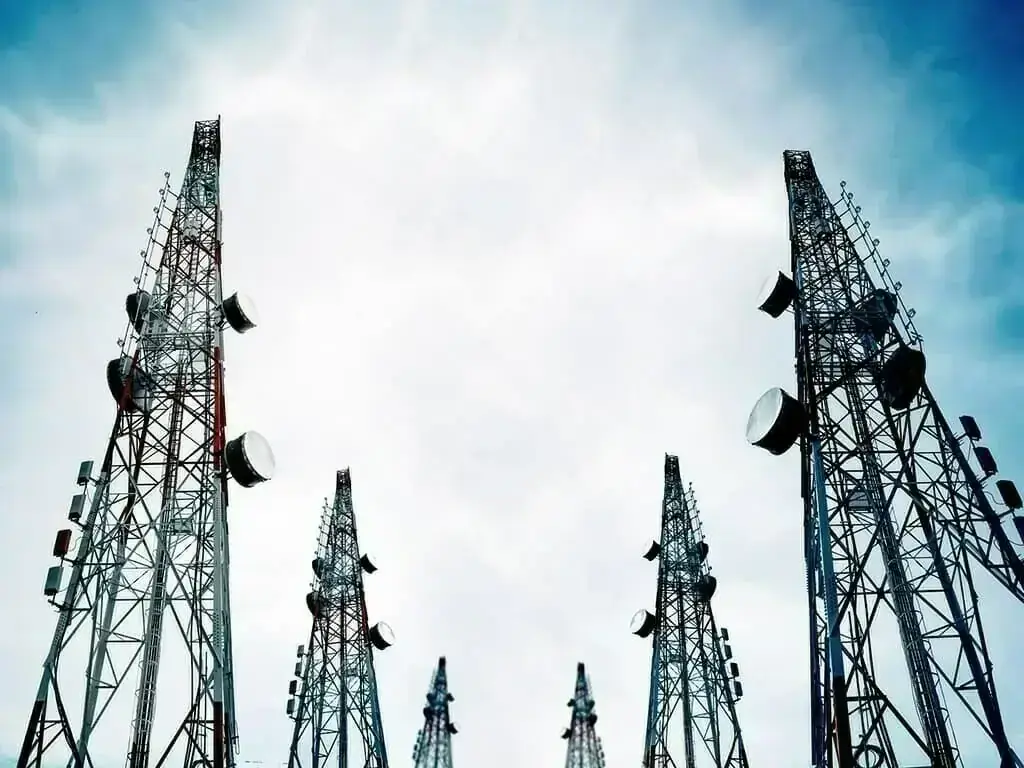

Pakistan’s Parliament managed, in a single fortnight, to pass a telecom bill through the National Assembly without serious scrutiny, watch it collapse in the Senate amid a constitutional firestorm, and scramble to fix the wreckage through an in-camera committee while the Prime Minister’s own coalition partner publicly withdrew support.
The Pakistan Telecommunication (Re-organisation) Amendment Bill 2026 cleared the lower house on 11 June. What senators found when they actually read it stunned them. As journalist Rauf Klasra put it: how did the National Assembly pass such a dangerous bill without a single one of its 340 members bothering to read the text?
The constitutional objections are specific. The existing definition of Right of Way in the 1996 Telecom Act covered a limited right — “to pass over land or property” to provide services. The bill replaces this with the right to enter or use premises. That word-change opened a legal gap that critics and senators quickly drove through. Under the new Section 27A, every licensee acquires these access rights “notwithstanding any contrary law, regulation or contract” — subordinating existing agreements, zoning rules, and housing society bylaws to telecom operators’ needs. Section 27B backs this with fines of up to Rs 50 million on any owner or tenant who “obstructs or delays” access. The sharpest problem is the deemed approval mechanism: for housing societies and commercial estates, a property owner’s failure to respond to two notices is automatically treated as consent for towers or fibre on their land. Senate Standing Committee Chair Senator Palwasha Khan was unambiguous: “In its current form, the bill conflicts with Articles 23 and 24 of the Constitution.” PPP’s Sherry Rehman announced the coalition partner would not support it, adding that PPP’s National Assembly members had been told the draconian clauses were removed before the vote. They were not.
The IT Ministry’s underlying diagnosis is correct — Pakistan’s fiberisation has been throttled for years by fragmented permissions, arbitrary fees, and local authority obstruction. The USD 507 million 5G spectrum auction of March 2026 tripled Pakistan’s assigned spectrum and requires extensive fibre backhaul to deliver. Without fibre, 5G is theatre. But the law was badly drafted and passed carelessly. A PM-constituted review committee has recommended mandatory owner consent and appellate rights. A redrafted bill is expected shortly.
Here is what is missing from the debate entirely.
The government is urgently trying to build more towers while simultaneously, and with far less urgency, delaying a technology that requires no towers at all.
Starlink received a temporary No-Objection Certificate from Pakistan’s regulators on 21 March 2025. The IT Minister told parliament in April 2025 that it would be operational by November or December of that year. It was not. In February 2026, approval was put on hold — officially over data monitoring concerns, but also, per the Express Tribune, over the Trump-Musk political fallout and anxiety about how approving a Musk company might affect Islamabad’s relationship with Washington. The PTA finally cleared all regulatory hurdles in April 2026. Commercial service is now possible before the end of 2026 — four years after the process began.
Look at what happened everywhere else in South and Southeast Asia during those four years.
Bangladesh licensed Starlink in 90 days and launched commercial service in May 2025, offering speeds up to 300 Mbps to a country where over 60 percent of the population lives in rural areas lacking reliable fibre. Sri Lanka licensed Starlink in August 2024 and launched in July 2025. India — after a contentious spectrum debate in which Jio and Airtel initially opposed satellite operators, then reversed course and signed distribution partnerships with Starlink — received final regulatory approval in Q1 2026. Vietnam was licensed in February 2026 for up to 600,000 terminals. The Philippines partnered with Globe Telecom to become Southeast Asia’s first country to pilot Starlink’s Direct-to-Cell service, which turns each satellite into a cell tower in space, connecting ordinary LTE phones with no ground infrastructure — testing focused specifically on remote islands, mountainous areas, and disaster-prone zones. In Indonesia, data from Opensignal shows nearly 60 percent of Starlink users are in rural areas where fibre is absent and mobile coverage patchy.
Pakistan’s immediate neighbours — India, Bangladesh, Sri Lanka — have all moved. Starlink operates in 166 countries as of mid-2026. Pakistan is not among them.
None of these countries chose satellite instead of terrestrial infrastructure. They chose both, because they understood what each technology does well.
India is simultaneously running one of the world’s most ambitious 5G rollouts and distributing Starlink through those same operators’ retail networks. The logic, reached after years of debate, is straightforward: laying fibre in remote terrain can cost tens of millions of rupees per kilometre. With only 36 percent of India’s towers connected by fibre, satellite does not compete with the terrestrial network — it complements the parts that terrestrial economics can never reach. India treats satellite broadband as mainstream telecom: revenue sharing, lawful interception compliance, local data storage. Sovereignty concerns addressed through frameworks, not delay.
Indonesia’s state carrier Telkom is both a Starlink distributor and a terrestrial operator — taking margin on satellite subscriptions while continuing to build ground infrastructure in Java. This is not a contradiction. It is a sensible division of labour. The Philippines treats satellite explicitly as a resilience technology: when floods or typhoons damage ground infrastructure, satellite keeps emergency response connected. Pakistan is no less disaster-prone. The 2022 floods affected a third of the country and knocked out terrestrial telecoms across vast stretches of Sindh and Balochistan. Satellite connectivity in those circumstances is not a luxury. It is redundancy.
The reasons for Pakistan’s hesitation are not entirely opaque. Officials feared satellite internet could bypass Pakistan’s monitoring infrastructure. Pakistan retains control over conventional internet flows because PTCL holds majority stakes in the undersea cable network. That leverage disappears with satellites. Officials worried specifically about Balochistan — about losing the ability to impose the blanket internet shutdowns that Pakistan has normalised as a security instrument, 18 times in 2024 alone at an estimated economic cost of USD 1.62 billion.
These concerns deserve a direct answer. Internet penetration in Balochistan is roughly 15 percent against a national average of 57 percent. Some districts went years without connectivity. The province’s students were left behind during COVID. The security instrument Pakistan has been protecting carries a USD 1.62 billion annual economic cost and a developmental cost that is harder to quantify but almost certainly larger. The answer to satellite sovereignty concerns is not indefinite delay — it is the framework approach that India, Indonesia, and the Philippines adopted: local gateway requirements, data localisation, lawful interception protocols. The question is why it took Pakistan four years to get there.
The telecom bill and the Starlink delay are the same institutional failure in different forms. The bill tries to solve a terrestrial infrastructure problem by granting private companies coercive powers over private property — constitutionally unsound, as the Senate correctly found. The Starlink delay tries to solve a sovereignty problem by treating connectivity itself as the threat — surrendering four years of rural development while Bangladesh, Sri Lanka, India, and Vietnam moved ahead.
Both errors share a common root: optimising for state control rather than coverage, and treating the two as a trade-off when they are not.
Pakistan needs fibre, and Right of Way reform done properly. It needs to complete its 5G rollout. And it needs satellite broadband operating commercially, under a proper regulatory framework, without further delay. The future of connectivity is not fibre or satellite. It is fibre and satellite — towers and dishes, spectrum and orbit, layered infrastructure for a country whose geography, population distribution, and disaster exposure demand all of it.
Some other Asian countries understood this years ago. A revised telecom bill and the Starlink licence are both overdue. They should arrive together.
Copyright Business Recorder, 2026

























Comments