


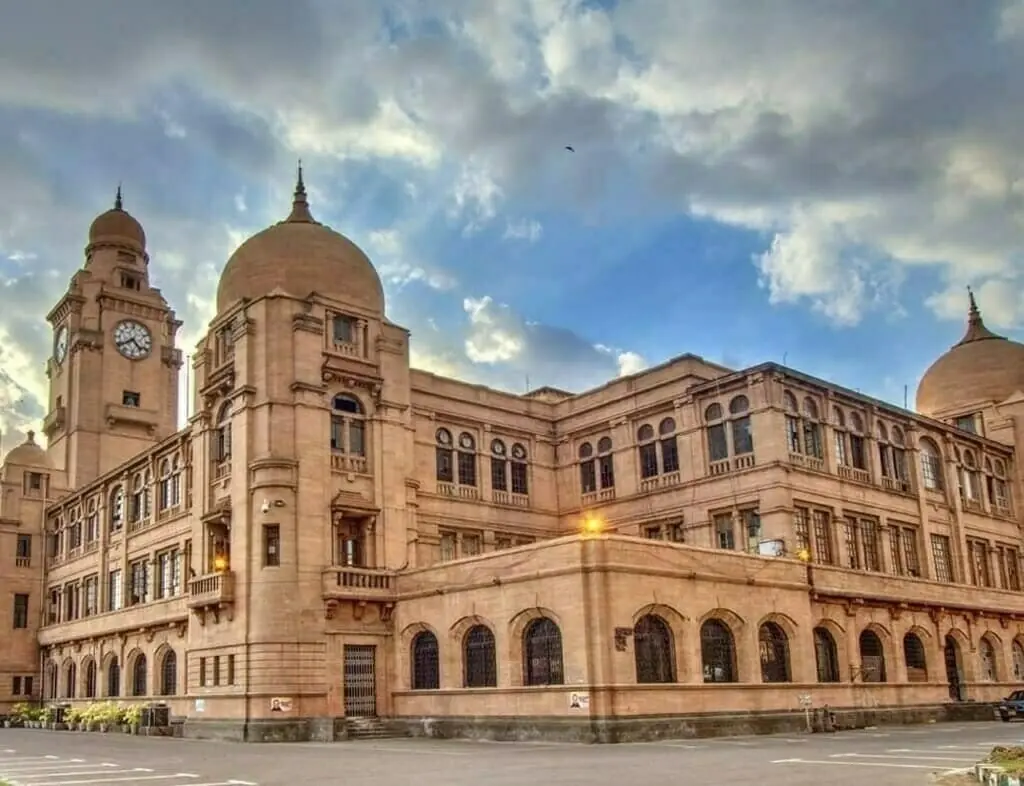
KARACHI: Jamaat-i-Islami’s opposition bloc in the Karachi Metropolitan Corporation (KMC) on Saturday unveiled a Rs300 billion shadow budget for 2026-27, saying the city’s proposed Rs60 billion outlay fell far short of its actual needs.
Addressing a press conference at Faran Club, KMC Opposition Leader Saifuddin Advocate said Karachi’s budget was negligible compared to those of major regional cities. He said Delhi, with a population of around 15 million, had an annual budget of Rs520 billion, while Mumbai’s stood at Rs2.2 trillion. Even a Rs300 billion budget for Karachi, he added, would be seven times smaller than Mumbai’s.
Presenting the shadow budget, Saifuddin demanded that KMC receive a minimum allocation of Rs300 billion for the new fiscal year. He called for revenues generated through the motor vehicle tax, infrastructure cess and betterment charges to be transferred to local government institutions.
He recalled that former Karachi mayor Abdul Sattar Afghani had led a historic campaign for the transfer of motor vehicle tax revenues to the city government and urged the provincial government to act on that demand.
Saifuddin said Karachi generated around Rs180 billion annually through infrastructure cess and argued these funds, along with betterment charges, should accrue to local governments. He also demanded that Octroi Zila Tax, other grants and Provincial Finance Commission transfers — amounting to roughly Rs100 billion — be provided to KMC.
He said KMC currently raised only around Rs6 billion from its own sources and urged the civic body to grow that figure to Rs10 billion. Combined with the proposed transfers, he said, the total budget could reach Rs300 billion.
Saifuddin also called for fiscal decentralisation, saying funds should flow down to town administrations and union committees, with each union committee receiving at least Rs100 million annually.
Turning to Mayor Murtaza Wahab, the opposition leader rejected the mayor’s claim of making KMC financially self-reliant, saying own-source revenues accounted for only about 20 percent of the civic body’s budget.
He referred to former city nazim Naimatullah Khan, saying that after adjusting for the dollar exchange rate, the budget presented in 2005 was nearly three times larger than the current KMC budget.
Saifuddin said Murtaza Wahab had spent Rs201 billion since 2021 — including his tenure as administrator before becoming mayor — yet Karachi’s civic conditions had continued to deteriorate. He blamed the provincial government and KMC for widespread corruption and mismanagement, saying most public funds were lost before reaching citizens.
He also criticised the provincial government’s control over key municipal institutions, including the water utility and solid waste management system, arguing they should function under the elected city government in line with the Constitution and Supreme Court directives.
He further noted that the budgets of the Karachi Water and Sewerage Corporation and the Sindh Solid Waste Management Board were not reflected in the KMC budget, even though funds meant for towns and union committees were being used for their operations.
A short documentary on the struggle for local government elections and devolution of powers was screened ahead of the press conference. KMC Deputy Parliamentary Leader Junaid Makati, Fazal Ahad, Taimur Ahmed, and several union committee chairmen and vice-chairmen also attended.
Copyright Business Recorder, 2026




















Comments