


Neelum Jhelum Hydropower Company: Audit unearths serious irregularities
The Neelum Jhelum Hydropower Company faces severe financial and administrative irregularities, including unauthorized payments, operational failures, and significant revenue losses, jeopardizing its viability.
- Unauthorized payments to consultants and weak financial discipline.
- Persistent underperformance, structural failures, and revenue shortfalls.
- Unsettled insurance claims and uninsured project assets.
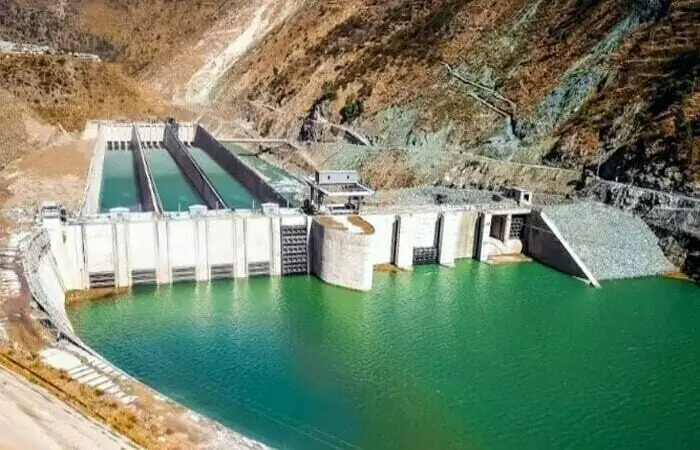

ISLAMABAD: Serious financial and administrative irregularities have been unearthed in the 969 MW Neelum Jhelum Hydropower Company (NJHPC), including unauthorised payments to consultants and unjustified expenditures on temporary employees, according to official audit findings that raise alarm over governance failures and weak financial discipline within the state-owned entity.
The audit report paints a troubling picture of the multi-billion-rupee Neelum Jhelum Hydropower Project (NJHP), highlighting systemic issues in contract management, human resource practices, and operational efficiency, all of which have undermined the project’s financial sustainability and performance.
According to the audit, while the company exhibited relative financial stability during the period from FY2018-19 to FY2021-22, it failed to achieve its core objectives, including financial viability, commercial efficiency, and designed power generation targets as outlined in the approved PC-I.
Persistent underperformance in electricity generation, coupled with regulatory and operational setbacks, significantly weakened the project’s economic outlook.
The powerhouse has consistently fallen short of its annual generation target of 5,150 GWh since commissioning, even during years when it remained fully operational.
The situation worsened following major structural failures, including the collapse of the Tail Race Tunnel (TRT) in July 2022 and the Head Race Tunnel (HRT) in May 2024. These incidents led to prolonged shutdowns, resulting in substantial loss of generation and revenue during FY2022-23 and FY2024-25.
The audit further revealed that NJHPC suffered a major financial setback due to the non-approval of its reference tariff by the National Electric Power Regulatory Authority (NEPRA). This issue stemmed from the company’s failure to conduct the Third Party Validation (TPV) of project costs, despite repeated directives from the Executive Committee of the National Economic Council (ECNEC). Instead, a much lower provisional tariff was approved, leading to an estimated regulatory revenue shortfall of Rs77.346 billion.
The combined impact of under-generation and tariff discrepancies resulted in severe revenue erosion. Additionally, prolonged outages caused business interruption losses amounting to Rs99.18 billion during FY2022-23 to FY2024-25. During these periods, the company’s revenue largely depended on Late Payment Surcharge (LPS) receipts rather than income from electricity generation, reflecting a breakdown in its core operational function.
Financial indicators deteriorated sharply from FY2022-23 onwards. The company reported negative operating margins, losses before and after tax, and declining return ratios. Its liquidity position also remained critically weak, with current liabilities exceeding current assets by Rs307.894 billion as of June 30, 2025. This imbalance was primarily driven by defaults on debt repayments and the reclassification of long-term loans into current liabilities.
The project also failed to meet its planned payback period. By FY2024-25, only Rs180.17 billion had been recovered against a total approved project cost of Rs418.885 billion, raising serious concerns about its financial viability.
The audit highlighted significant weaknesses in receivables management, noting that approximately 69 percent of receivables were overdue by more than 120 days. Moreover, risk management practices were found lacking, with assets worth approximately Rs267 billion remaining uninsured during the review period.
Under Chapter 5, titled “Project Planning,” the audit concluded that NJHP failed to achieve its intended objectives, including securing Pakistan’s priority water rights on the Neelum River. The project was marred by serious planning and design deficiencies, leading to repeated design changes, cost escalations, and time overruns.
Operational inefficiencies were also evident. Since May 2024, the powerhouse has remained non-operational, and management has yet to restore functionality or finalise investigations into the tunnel collapses. Responsibility for these failures has not been fixed, reflecting weak accountability mechanisms.
The audit further disclosed that an insurance claim worth Rs41.964 billion related to the TRT collapse remains unsettled. Compounding the issue, the project’s insurance policy — covering assets valued at Rs415.8 billion — expired in 2023 and was not renewed, exposing the company to significant financial risk.
In terms of contract management, auditors identified irregular payments amounting to Rs94.545 million made to consultants for services rendered beyond the approved agreement period. The Consultancy Services Agreement (CSA), initially signed in May 2008 at a cost of Rs4.07 billion, had undergone multiple extensions, with the latest valid until June 30, 2024. However, payments continued even after the expiry of the agreement, despite the fact that Amendment No. 8, which was intended to extend the contract, had neither been finalised nor formally approved at the time. The auditors termed these payments a clear violation of contractual provisions.
Copyright Business Recorder, 2026





















Comments