


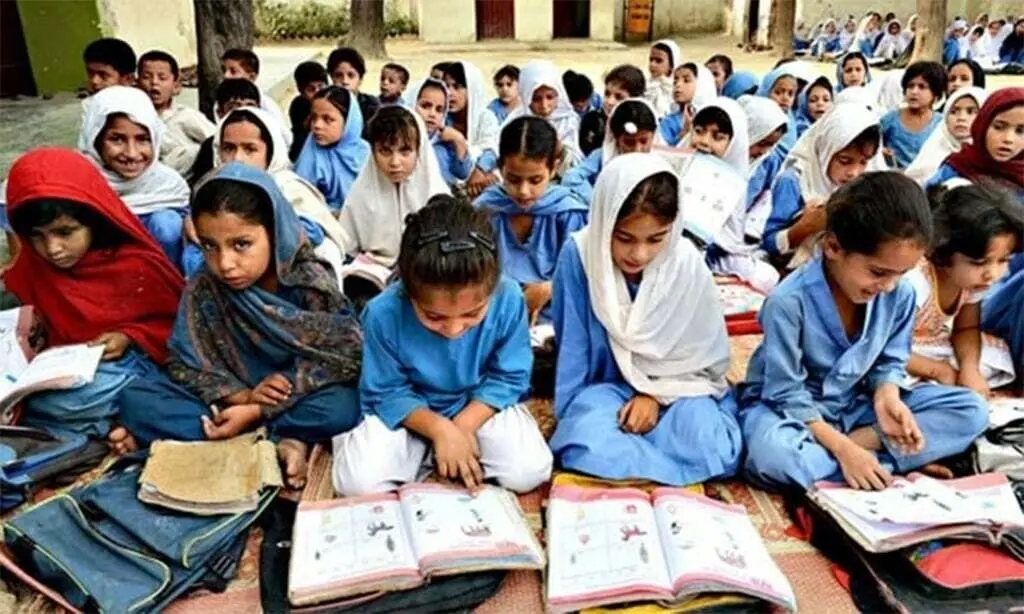

ISLAMABAD: Over 760,000 children in Balochistan accessed quality education through expanded learning opportunities and strengthened education systems, under the Balochistan Education Support Programme II (BES-II), funded by the European Union in partnership with the Government of Balochistan’s School Education Department and UNICEF.
The five-year programme concluded on Tuesday with a high-level ceremony held in Quetta.
Building on the achievements of the Balochistan Basic Education Programme (2016-2021), BES-II advanced the next phase of education reform in the province through €17.4 million in funding from the European Union from 2021-2026. The programme expanded access to education while strengthening more resilient, inclusive, and data-driven education systems. Nearly 335,000 girls benefited from improved learning opportunities, underscoring the importance of girls’ education for social and economic development in Balochistan.
“A decade of partnership with the European Union and UNICEF has significantly strengthened education systems and transformed the lives of children across the province,” said Chief Minister of Balochistan, Mir Sarfaraz Ahmed Bugti. “We deeply appreciate their unwavering commitment and look forward to building on this strong foundation until quality education is accessible to every child.”
The programme introduced innovations that improved planning, accountability, and evidence-based decision-making. These included Balochistan’s first digital school census, real-time school monitoring systems, and the establishment of a Virtual Academy that trained more than 10,600 teachers. In addition, over 4,000 teachers received professional development support, while 3,000 Parent-Teacher School Management Committees were activated, engaging more than 16,000 community members in school governance and improvement.
These system-level investments enabled tangible improvements in access to education across the province. More than 20,000 out-of-school children at the primary level and over 2,200 children at the middle level were brought back into education through Accelerated Learning Programmes, most of girls.
Improvements in 1,230 schools created better learning environments for over 150,000 children, helping to enhance school participation and retention. In addition, more than 6,100 adolescents gained skills to support their future education and employment opportunities.
“For the EU, investing in education and skills development means investing in Balochistan’s future. Over the past decade, our partnership has helped expand access to basic education and strengthen the foundations of the education system. We are proud of what has been achieved together, and we remain committed to supporting Balochistan in delivering better opportunities for every child,” said Dr. Sébastien Lorion, Acting Head of Cooperation, European Union delegation to Pakistan.
BES-II also helped children continue learning during crises. More than 6,600 flood-affected children received support to remain in school, while over 72,000 adolescent girls and 26,000 children accessed health, hygiene, and screening services that contributed to their well-being and learning.
“With this impactful partnership between the Government of Balochistan and the European Union, hundreds of thousands of children have been given a second chance to catch up on learning and skills development that is supporting their pathway towards earning a living in the future. The programme’s progress shows what is possible when government leadership drives investment in children, their communities, stronger education systems, and future-ready skills, with technical support from UNICEF and the steadfast partnership of the European Union,” said Pernille Ironside, UNICEF Representative in Pakistan.
Copyright Business Recorder, 2026

























Comments