


A long-overdue harvest of common sense
Pakistan's new National Agricultural Biotechnology Policy aims to reverse years of agricultural decline and outdated practices, crucial for modernizing the sector, boosting productivity, and addressing climate challenges.
- The collapse of cotton production and its economic impact.
- Pakistan's agricultural productivity compared to regional competitors.
- Challenges in implementing the new biotechnology policy effectively.
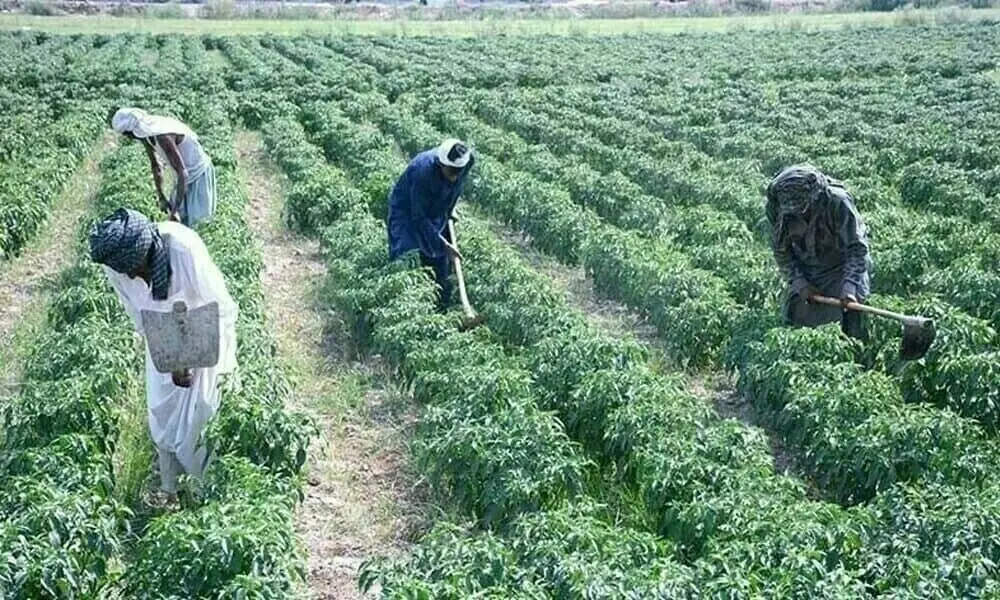
EDITORIAL: Pakistan’s decision to adopt a National Agricultural Biotechnology Policy comes after years of declining productivity, shrinking competitiveness and repeated warnings that the country’s agricultural model is falling dangerously behind the rest of the world. The approval of the policy deserves support because it finally acknowledges a reality that should have been obvious long ago: modern agriculture cannot be sustained with outdated practices while competitors continue embracing science, technology and innovation.
The decline in cotton production alone illustrates the scale of the problem. Pakistan once regularly produced between 12 and 15 million bales annually. In recent years, output has collapsed to around five million bales, among the lowest levels in decades. That decline carries consequences far beyond the farm sector. The textile industry, which remains the backbone of the country’s export earnings, requires around 16 million bales annually.
The gap must therefore be filled through imports, placing additional pressure on foreign exchange reserves and increasing production costs for exporters.
The damage extends across the broader agricultural landscape. For decades, Pakistan has spoken of agriculture as the foundation of the economy while failing to modernise the sector in any meaningful way.
Irrigation systems remain inefficient, water management practices remain outdated and technology adoption continues to lag behind regional competitors. Policymakers regularly acknowledge these weaknesses, yet meaningful reform has often arrived years after the need became obvious.
The result is visible in comparative performance. India, operating under similar climatic conditions across much of the subcontinent, consistently achieves significantly higher yields across a wide range of crops.
While numerous factors contribute to that difference, the gap reflects a willingness to adopt improved seeds, biotechnology, mechanisation and modern farming practices at a scale Pakistan has struggled to match.
This is why the biotechnology policy matters. Agricultural biotechnology is no longer an experimental field reserved for advanced economies. It has become an integral part of modern farming systems around the world.
Improved seed varieties, genetically modified crops where appropriate, disease resistance and productivity enhancements have helped many countries raise output while coping with climate pressures, water constraints and growing populations.
The irony is that Pakistan possesses many of the ingredients needed to benefit from these advances.
According to the Ministry of National Food Security, the country already has a regulatory framework, biotechnology research centres and a sizeable pool of scientific expertise. What has been missing is a coherent strategic direction capable of translating research and policy intentions into practical outcomes.
That absence of direction reflects a broader governance failure. Agriculture has often been treated as a sector that can somehow continue functioning through inertia while policy attention shifts elsewhere.
Meanwhile, structural problems accumulate. Water scarcity intensifies, productivity stagnates and farmers struggle with rising input costs while receiving limited support in improving yields and efficiency.
Climate change makes these weaknesses even more dangerous. Pakistan faces increasing heat stress, water shortages and weather volatility. Maintaining agricultural output under such conditions will require better seeds, improved technology and more efficient use of resources.
Continuing to farm largely as previous generations did is no longer a viable option.
Still, policy approval is only the beginning. Pakistan has no shortage of strategies, frameworks and declarations that generated headlines but produced little measurable change on the ground.
The success of this initiative will depend entirely on implementation. Research institutions, provincial governments, regulators and the private sector will all need to work together if biotechnology is to move beyond official documents and reach farmers in a meaningful way.
There must also be transparency and public confidence. Biotechnology often generates legitimate questions regarding regulation, safety and environmental impact. A credible framework requires rigorous oversight, clear standards and continuous scientific evaluation.
The larger lesson, however, is difficult to avoid. Pakistan’s agricultural decline was never inevitable. It was the product of years of neglect, delayed reform and resistance to modernisation. The collapse in cotton output merely exposed the consequences more dramatically than most crops.
The biotechnology policy therefore represents something more than an agricultural initiative. It is an opportunity to begin reversing a pattern of decline that has weakened both rural livelihoods and the country’s export base.
The opportunity is real. The challenge now is ensuring that it does not become another promising policy that arrives years late and delivers too little.
Copyright Business Recorder, 2026




















Comments