



KARACHI: Chief Organiser of the Pakistan Business Forum (PBF), Ahmad Jawad on Saturday, said that the Federal Budget 2026-27 presents a critical opportunity for Pakistan to identify new engines of economic growth.
As policymakers grapple with the challenge of increasing exports, attracting investment, creating jobs, and strengthening foreign exchange reserves without imposing additional burdens on businesses and citizens, the country’s vast Blue Economy with a annual potential of USD15 billion remains one of the most underutilised assets capable of transforming Pakistan’s economic future.
He said for decades, successive governments have relied on traditional sectors such as agriculture, manufacturing, services, and taxation reforms to steer economic growth, while these sectors remain important, Pakistan must now broaden its economic vision and embrace a largely untapped frontier capable of delivering long-term prosperity—the Blue Economy.
Jawad said the upcoming budget must mark the beginning of a national maritime transformation. It must contain dedicated allocations, incentives, and policy measures aimed at unlocking the enormous potential of Pakistan’s maritime resources. At the same time, the Ministry of Maritime Affairs (MoMA) must emerge as a leading economic ministry by aggressively promoting investment opportunities in Pakistan’s maritime sector at home and abroad.
The reality is simple that Pakistan has spent decades looking inward, while much of the world’s economic growth is increasingly linked to oceans, ports, shipping, fisheries, coastal tourism, renewable energy, and maritime logistics.
“Pakistan possesses all the ingredients needed to become a regional maritime economy. What have been missing are vision, investment, and execution.”
According to international estimates, Jawad breifed that the global Blue Economy generates more than USD2.5 trillion annually and supports hundreds of millions of jobs worldwide. If the oceans were treated as a national economy, they would rank among the world’s largest economic systems. Pakistan’s share of this opportunity remains disappointingly small. Our country enjoys a coastline of approximately 1,050 kilometres along the Arabian Sea and possesses an Exclusive Economic Zone (EEZ) covering nearly 240,000 square kilometres. Following the approval of Pakistan’s extended continental shelf by the United Nations, the country’s maritime jurisdiction expanded to almost 290,000 square kilometres — an area larger than the total landmass of many countries. This vast maritime territory contains fisheries, mineral resources, tourism destinations, logistics opportunities, renewable energy potential, and shipping routes that remain significantly underutilised. Unfortunately, country’s blue economy contributes only a fraction of its true potential to national GDP.
The upcoming federal budget must therefore recognize the Blue Economy not as a peripheral sector but as a strategic pillar of economic development. As one of the most promising segments is fisheries and aquaculture. The Pakistan’s coastal waters are rich in commercially valuable fish species, including tuna, shrimp, lobster, crab, mackerel, and sardines. Yet annual seafood exports remain far below their potential.
Countries with smaller coastlines have developed billion-dollar seafood industries through modern processing facilities, cold-chain systems, advanced fishing fleets, and international quality certifications and we can do the same.
The June 10th budget must allocate funds for modern fish harbours, seafood processing zones, cold storage facilities, testing laboratories, and export certification centres. Such investments would significantly improve product quality and enable exporters to access premium markets in Europe, East Asia, the Gulf, and North America.
Equally important is the development of aquaculture. Globally, aquaculture now accounts for more than half of all seafood consumed by humans. Pakistan’s coastal and inland waters provide enormous opportunities for fish farming and shrimp cultivation. Yet investment in this sector remains limited.
Similarly government should establish a dedicated Blue Economy Development Fund that provides concessional financing to investors in fisheries, aquaculture, seafood processing, and related industries.
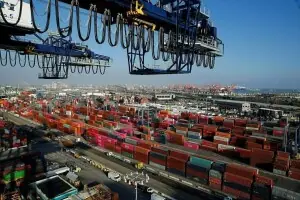
Another major area deserving attention is maritime logistics and shipping. Nearly 95 percent of Pakistan’s international trade volume moves through maritime routes. Karachi Port, Port Qasim, and Gwadar collectively handle the lifeline of Pakistan’s imports and exports.
However, despite being heavily dependent on maritime trade, Pakistan continues to rely extensively on foreign shipping lines. This results in substantial foreign exchange outflows every year. The federal budget must include incentives for expanding Pakistan’s merchant fleet, encouraging ship ownership, promoting ship leasing, and supporting local shipbuilding and ship repair industries. The shipbuilding sector alone can generate thousands of skilled jobs while creating a domestic industrial ecosystem involving steel, engineering, electronics, fabrication, and logistics.
Countries such as South Korea, Singapore, China, and Türkiye transformed their maritime sectors into powerful economic engines through targeted government support and long-term policy consistency and Pakistan must learn from these examples.
He also said the strategic importance of Gwadar Port cannot be overstated. While Gwadar has often been discussed from a geopolitical perspective, it must now be viewed through an economic lens. The city possesses the potential to become a regional logistics, warehousing, transshipment, and industrial hub connecting South Asia, Central Asia, the Middle East, and Western China.
The budget should allocate resources for road connectivity, industrial zones, logistics infrastructure, water supply projects, digital connectivity, and vocational training programmes linked specifically to Gwadar’s economic development. Investors seek certainty and infrastructure. Without both, opportunities remain unrealised.
The Ministry of Maritime Affairs must therefore adopt a far more proactive role in marketing Gwadar and Pakistan’s broader maritime economy to global investors. Rather than waiting for investors to come, the MOMA should actively organize international roadshows, investment conferences, business delegations, and maritime investment forums across the Gulf region, Europe, East Asia, and North America.
Pakistan’s maritime opportunities should be presented with the same energy and professionalism that successful investment destinations employ. Special investment packages should be developed for fisheries, port services, logistics, warehousing, coastal tourism, renewable energy, and marine technology sectors.
The Blue Economy also offers a remarkable opportunity for employment generation. Pakistan’s youth population continues to grow, creating immense pressure on the labour market. Maritime industries can absorb thousands of skilled and semi-skilled workers in fishing, logistics, shipping, tourism, engineering, transportation, shipbuilding, port operations, hospitality, and marine services.
Copyright Business Recorder, 2026












Comments