


Widening trade deficit
Pakistan's trade deficit significantly widened in July-May 2026 due to shrinking exports and rising imports, exacerbated by regional crises and domestic anti-export policies, despite a slight May improvement.
- Impact of regional crises on Pakistan's trade performance.
- Domestic policies contributing to an anti-export bias.
- IMF's critical role and recommendations for economic reform.
- Shifting incentives towards high-tech export industries.
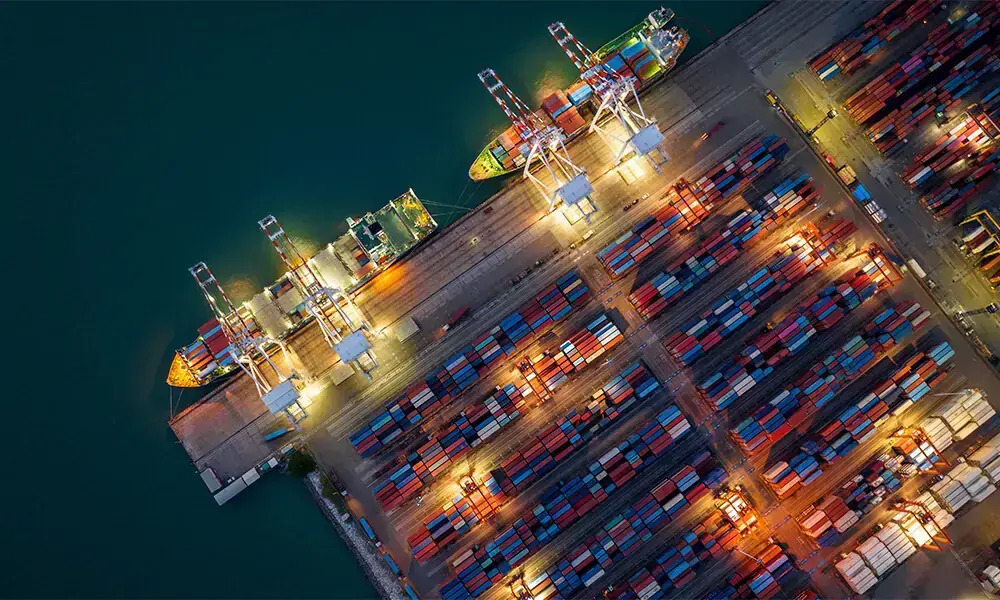
EDITORIAL: Trade deficit July-May 2026 widened to negative 34.758 billion dollars against negative 29.585 billion dollars in the comparable period the year before, a 17.48 percent rise, though the May 2026 deficit shrank to negative 2.582 billion dollars against negative 2.99 billion dollars in May last year.
Exports shrank during the first eleven months of the current year by 5.61 percent – from 29.563 billion dollars in 2025 to 27.9 billion dollars in 2026 while imports rose from 59.1 billion dollars July-May 2025 to 62.66 billion dollars in the comparable period this year – a rise of nearly 6 percent. For May exports rose this year to 2.7 billion dollars against 2.67 billion dollars May 2025 while imports declined from 5.66 billion dollars in May 2025 to 5.287 billion dollars in May 2026.
The question is whether the May data can be seen as a turnaround for Pakistan rather than an aberration fuelled by supply disruptions as a consequence of the Middle East crisis that includes oil, LNG, fertilizers and minerals that include helium, within the context of the entire fiscal year.
On 2 June 20-26 Secretary Ministry of Commerce clarified to the national assembly committee on commerce on a calling-attention notice that the country’s exports face a dual shock: tensions with Afghanistan that have wiped out exports and transit earnings of 850 million dollars while the Middle East crisis has raised the dollar cost of critical imports while throttling exports.
He also highlighted an entire range of domestic policies that he claimed had an anti-export bias, including high energy costs (due to the International Monetary Fund’s condition to ensure full cost recovery), high taxes (with the Fund not allowing zero taxation under the ongoing programme), cheap transport (the supply disruptions have raised costs of transport within and without the country) and high financing costs (with the policy rate at 11.5 percent at present which is more than double the regional average barring Afghanistan). These factors account for poor productivity compared to regional competitors.
The IMF programme is critical for the country to avert the threat of default and this is evident from the fact that the bulk of our 17.14 billion-dollar foreign exchange reserves as on 22 May 2026 stem from debt, including more than 10 billion dollar roll-overs from two friendly countries – Saudi Arabia and China – who have explicitly linked an annual rollover to staying on the IMF programme.
The Fund’s rationale for ending what the Secretary Commerce refers to as the anti-export bias is irrefutable notably: “The tax system has been extensively used to provide non-transparent support through exemptions for privileged sectors like real estate, agriculture, manufacturing, and energy, as well as, through the proliferation of Special Economic Zones (SEZs).
The government’s intervention in price setting, including for agricultural commodities, fuel products, power, and gas (biannual), combined with high tariff and non-tariff protection tilted the playing field in favour of selected groups or sectors. Despite all this support, the business sector has failed to become an engine of growth, and the incentives eventually weakened competition and trapped resources in chronically inefficient (including perpetually “infant”) industries.”
The government must desist from extending incentives to those that have been the recipients of incentives at the taxpayers’ expense for a long period and are at present as well, clamoring for restoration of the incentives.
What is required is for the government to begin to extend incentives to those industries that are high-tech and guide them into competing abroad. Unless the productive base is changed the country’s export targets, however ambitious they are, will not be met.
Copyright Business Recorder, 2026























Comments