


Pakistan Tobacco Company calls for tax stability to boost formal sector
- Ongoing reforms in tax administration centred on people, processes, and technology, says Aurangzeb
* PTC acknowledges recent actions against illegal and non-compliant operators
- Government's fiscal reform and enforcement initiatives.
- Tobacco sector's excise taxation and illicit trade challenges.
- Export potential and investment opportunities in tobacco.
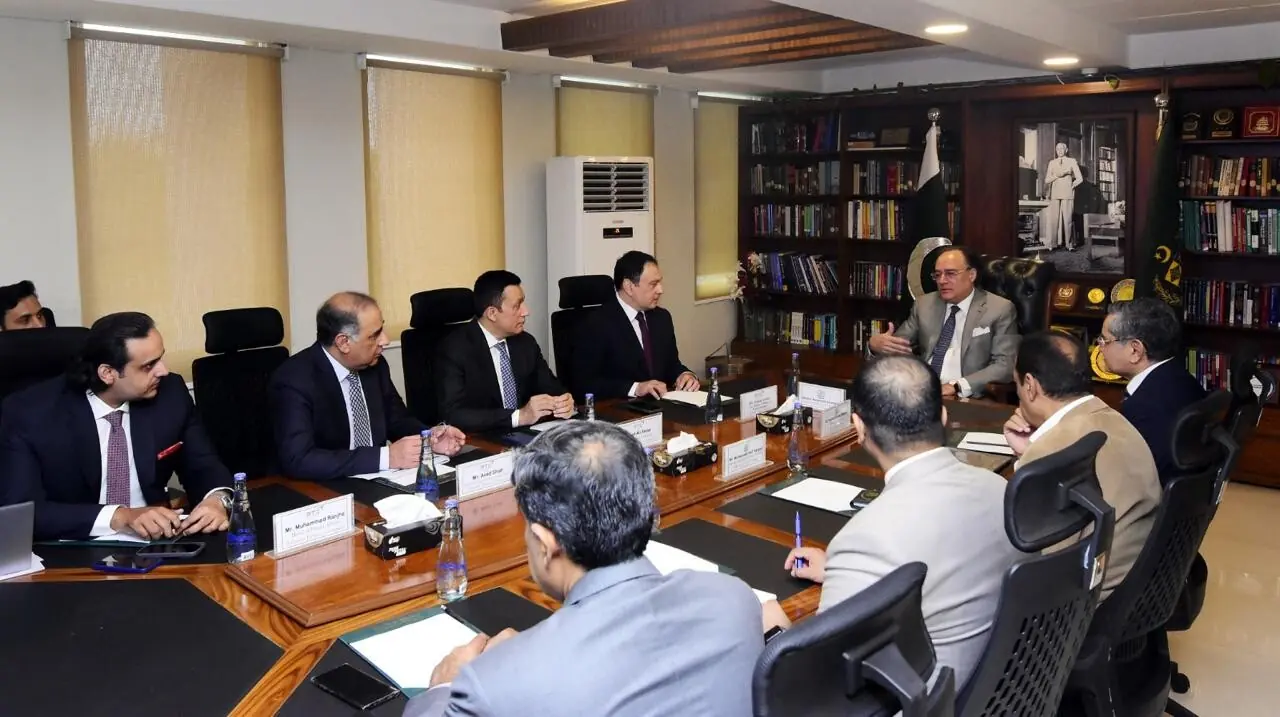
In a meeting with Finance Minister Muhammad Aurangzeb, the Pakistan Tobacco Company (PTC) has called for a stable and predictable taxation framework to promote the growth of the formal sector.
The development came during a meeting between Finance Minister Muhammad Aurangzeb and a delegation of PTC at the Finance Division on Monday.
The delegation was led by Usman Zahur, Area Director (APMEAC) & General Manager Pakistan, and included senior representatives from marketing, corporate affairs, and fiscal affairs.
During the meeting, the finance minister outlined the government’s broader fiscal reform agenda focused on strengthening revenue mobilisation, broadening the tax base, improving enforcement, and enhancing transparency through technology-driven systems.
He noted that ongoing reforms in tax administration centred on people, processes, and technology are aimed at improving compliance, reducing leakages, and ensuring fair revenue collection across the economy.
The minister highlighted that enhanced enforcement measures, supported by digitisation, technology-based monitoring systems, and coordinated operations by relevant agencies, are contributing to improved compliance and revenue collection in several sectors.
He noted that enforcement actions in industries including sugar, cement, beverages, textiles, and tobacco are helping address illicit and undocumented economic activity.
The PTC delegation appreciated the government’s reform and enforcement initiatives and shared views on the tobacco sector, including excise taxation, illicit trade, market dynamics, and export competitiveness.
The delegation acknowledged recent actions against illegal and non-compliant operators and emphasised the importance of a stable and predictable taxation framework to support formal sector growth and sustainable revenue generation.
Discussions also covered regulatory and taxation issues, sectoral competitiveness, market trends, and the importance of strengthening enforcement to reduce the share of illicit products operating outside the documented economy. Both sides exchanged views on coordinated enforcement mechanisms involving federal and provincial authorities.
The finance minister reiterated that revenue mobilisation and effective enforcement remain central to the government’s fiscal reform agenda.
He emphasised that while the government is committed to ensuring policy consistency and strengthening compliance, all sector-specific proposals would be evaluated in line with broader fiscal objectives and economic priorities.
The meeting also discussed export potential and investment opportunities within the tobacco sector and related value-added products.
The delegation highlighted Pakistan’s role as a regional manufacturing and export base for certain product categories and shared perspectives on international market opportunities.
Discussions further included regional experiences relating to enforcement, taxation models, and regulatory practices in comparable markets.
Aurangzeb appreciated the delegation’s input and reaffirmed the government’s commitment to continued engagement with the formal business sector to support investment, exports, industrial activity, and sustainable economic growth.
He stated that the government would continue pursuing reforms aimed at improving the ease of doing business, strengthening compliance systems, and creating a more transparent and competitive economic environment.
















Comments