


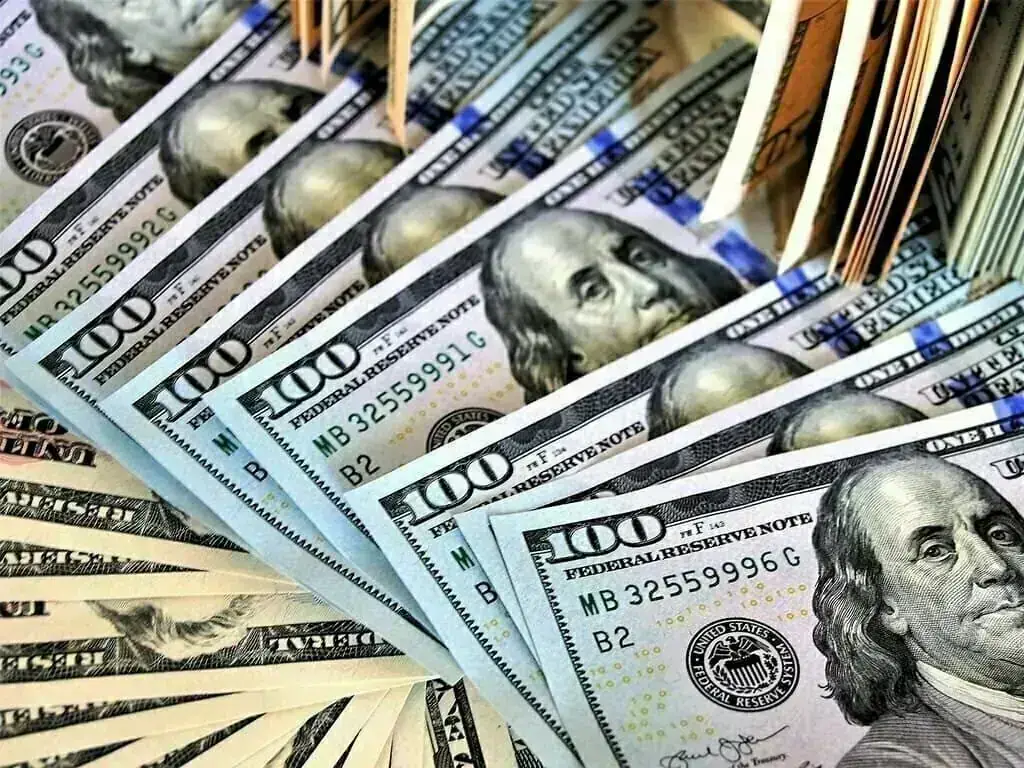

NEW YORK: The dollar climbed for a fourth straight day on Thursday, after economic data kept expectations intact that the Federal Reserve was unlikely to adjust interest rates this year, while investors awaited the upshot of talks between the US and China.
The Commerce Department said retail sales rose 0.5 percent last month, matching the estimate of economists polled by Reuters, after a downwardly revised 1.6 percent jump in March.
“It’s very difficult for FX traders or investors in general to place bets right now when the outcomes from a fundamental standpoint haven’t shifted all that much,” said Karl Schamotta, chief market strategist at Corpay in Toronto.
“It’s remarkable the extent to which there was no surprise in today’s print… when we look at the fundamentals here, American consumers are still spending. They are telling pollsters that they’re more cautious, but at the same time, they’re not walking the talk, they’re spending as they have.”
Separately, the Labor Department said weekly initial jobless claims rose by 12,000 to a seasonally adjusted 211,000, slightly above the 205,000 estimate, indicating the job market remains stable.
In addition, the Labor Department said import prices increased 1.9 percent last month, well above the 1.0 percent estimate, after an upwardly revised 0.9 percent rise in March, with the cost of fuels posting the largest increase in four years. The increase comes after strong readings on both consumer and producer inflation earlier this week.
The dollar index, which measures the greenback against a basket of currencies, rose 0.14 percent to 98.60, with the euro down 0.13 percent at USD1.1695. The greenback was on track for a fourth straight day of gains, its longest run since late March.
Markets have largely priced out any chance of a rate cut this year, with expectations for a hike in 2027 slowly increasing as the Iran war drags on, keeping oil prices elevated as the Strait of Hormuz remains largely shuttered, and recent comments from Fed officials flagging inflation concerns.
Kansas City Federal Reserve President Jeffrey Schmid said on Thursday that inflation is the biggest risk to a US economy that has shown “remarkable resilience” in the face of numerous challenges, and the job market is stable.
The US Senate on Wednesday approved Kevin Warsh as chair of the Federal Reserve and now awaits final White House signatures on paperwork sent by the Senate.
US crude rose 0.11 percent to USD101.13 a barrel and Brent fell to USD105.57 per barrel, down 0.06 percent on the day after Iran’s state media said about 30 vessels had crossed the Strait of Hormuz.
Crude prices and the dollar briefly dropped after the Financial Times reported Saudi Arabia had floated a Middle Eastern non-aggression pact with Iran.
Xi told Trump trade talks were making progress at the start of a two-day summit on Thursday, but cautioned that disagreement over Taiwan could send relations down a dangerous path and even lead to conflict.
The dollar weakened 0.03 percent to 6.784 versus the offshore Chinese yuan, on track for its eighth straight daily decline.
Against the Japanese yen, the dollar strengthened 0.02 percent to 157.88. Bank of Japan board member Kazuyuki Masu said earlier that the central bank should move to raise interest rates promptly if there are no clear signs of an economic slowdown.
Japanese authorities are believed to have intervened several times in the past couple of weeks to temper the dollar’s strength, but with increasing expectations for a potential Fed hike, the yen has resumed softening.

























Comments