


Focus on industrialisation: Pakistan now entering decisive phase of CPEC: Qaiser
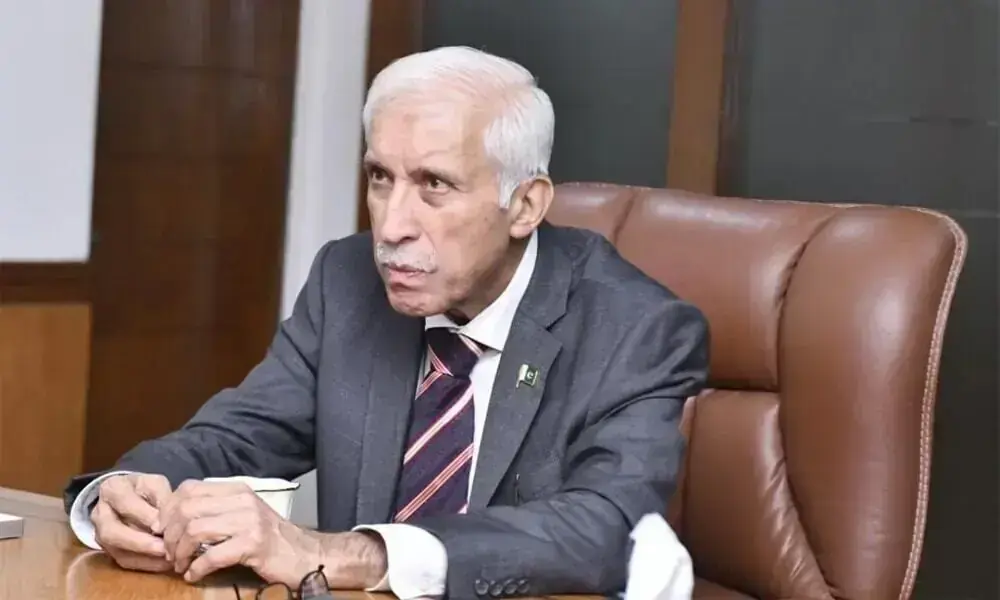

ISLAMABAD: Federal Minister for the Board of Investment Qaiser Ahmed Sheikh emphasised that Pakistan is now entering a decisive phase of the China-Pakistan Economic Corridor (CPEC), shifting its focus toward industrialisation, export-led growth, and enhanced business-to-business (B2B) partnerships.
Addressing the ‘Pakistan-China Industrialisation Dialogue’ in Islamabad on Tuesday, the minister said that four key SEZs are located in Rashakai in Khyber Pakhtunkhwa, Allama Iqbal Industrial City in Punjab, Dhabeji in Sindh, and Bostan in Balochistan.
Pakistan also signaled a strategic shift toward export-driven growth and deeper B2B collaboration with China, as policymakers and industry leaders gathered for the high-level dialogue aimed at shaping the next phase of bilateral cooperation.
The dialogue highlighted that while China has remained Pakistan’s largest trading partner for over a decade, there is a pressing need to address the trade imbalance by increasing Pakistan’s exports through value-added manufacturing.
The Minister has acknowledged that Pakistan fell short of its targets to attract more than USD8 billion in foreign direct investment (FDI) and create 500,000 jobs in Special Economic Zones (SEZs) between 2018 and 2024, highlighting gaps in the country’s investment performance.
The minister described Pakistan and China as “iron brothers,” united by a shared vision of development. He said that since its launch in 2015 with an initial outlay of USD46 billion, the China-Pakistan Economic Corridor has grown into Pakistan’s largest foreign investment initiative, with around USD30 billion already invested and over 261,000 jobs created.
He said that under CPEC, nine SEZs were designated in the first phase, targeting sectors including food processing, ceramics, textiles, pharmaceuticals, and auto assembly.
Sheikh emphasised that Pakistan is now entering a decisive phase of CPEC, shifting focus toward industrialisation, export-led growth, and enhanced B2B partnerships.
“Pakistan has immense potential, but we must transition from an import-driven economy to one that produces and exports value-added goods,” he said.
The minister added that the Joint Cooperation Committee (JCC), at its meeting in Beijing last September, proposed government-to-government SEZs in Karachi and Islamabad, specifically targeting the relocation of Chinese industries in electronics, textiles, pharmaceuticals, and electric vehicles.
He said the first phase of CPEC focused on infrastructure and connectivity, adding more than 8,000 megawatts of electricity to the national grid and laying the foundation for industrialisation through an expanded road network. He added that Pakistan is now entering CPEC Phase-II, where the focus is shifting to industrial development, export growth, and B2B partnerships.
He further stated that Pakistan has proposed government-to-government industrial parks aimed at attracting Chinese manufacturing in electronics, electric vehicles, pharmaceuticals, and textiles, as China’s domestic production costs continue to rise.
Copyright Business Recorder, 2026




















Comments