


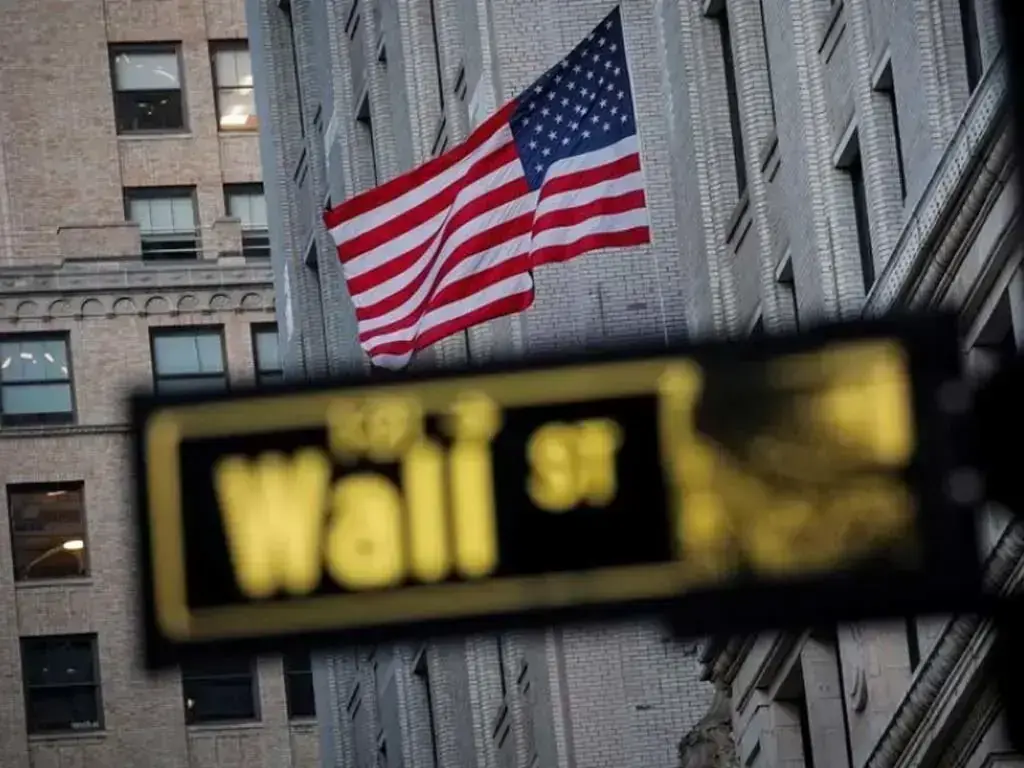

NEW YORK: Wall Street’s main indexes declined on Monday after conflicting reports about a US warship near the Strait of Hormuz led to heightened tensions in the Middle East, dampening optimism from the previous week’s earnings.
Tehran said it had forced a US warship to turn back after it attempted to enter the Strait of Hormuz. Iran’s semi-official Fars news agency said two missiles had hit the warship, but the United States denied the report.
The United Arab Emirates also said it had intercepted three missiles fired from Iran over its territorial waters, with a fourth one crashing into the sea.
The turmoil was enough for investors to pause following a strong earnings run last week, as they assessed the aggressive rhetoric between Washington and Tehran and the risk of renewed escalation.
The conflict, now in its third month, has continued to weigh on the global economy as oil prices stay elevated. Brent crude futures rose 5.4 percent on Monday and are trading above USD114 a barrel.
“The longer oil prices stay elevated above USD100 a barrel, the more the fiscal stimulus from the tax cuts passed in 2025 shifts from being a stimulus to acting as a shock absorber,” said Brock Weimer, analyst, investment strategy, at Edward Jones.
At 12:00 p.m. ET, the Dow Jones Industrial Average fell 429.90 points, or 0.87 percent, to 49,069.37, the S&P 500 shed 32.63 points, or 0.45 percent, to 7,197.49, and the Nasdaq Composite lost 101.96 points, or 0.41 percent, to 25,012.49.
“After a 10 percent gain in the S&P 500 in April, a period of consolidation is reasonable to expect, and perhaps a slower pace of gains over the next couple of weeks,” Weimer said.
Ten of the 11 main S&P sectors were in the red. The CBOE Volatility Index, Wall Street’s “fear gauge”, was up 1.44 points at 18.39.
Markets are also bracing for a historically weaker six-month stretch for stocks starting in May. Since 1945 through April 2026, the S&P 500 has gained an average of about 2 percent from May to October, according to data from Fidelity. That compares with an average gain of about 7 percent from November through April.
“Seasonal patterns can offer useful historical perspective, but they aren’t always a reliable guide for what lies ahead,” said Adam Turnquist, chief technical strategist at LPL Financial.


























Comments