


Blue Origin marks first landing of reused New Glenn rocket booster, ratcheting up SpaceX rivalry
- The mission was key to demonstrating that New Glenn has a reliable booster reuse capability and can compete with SpaceX Falcon 9 rocket
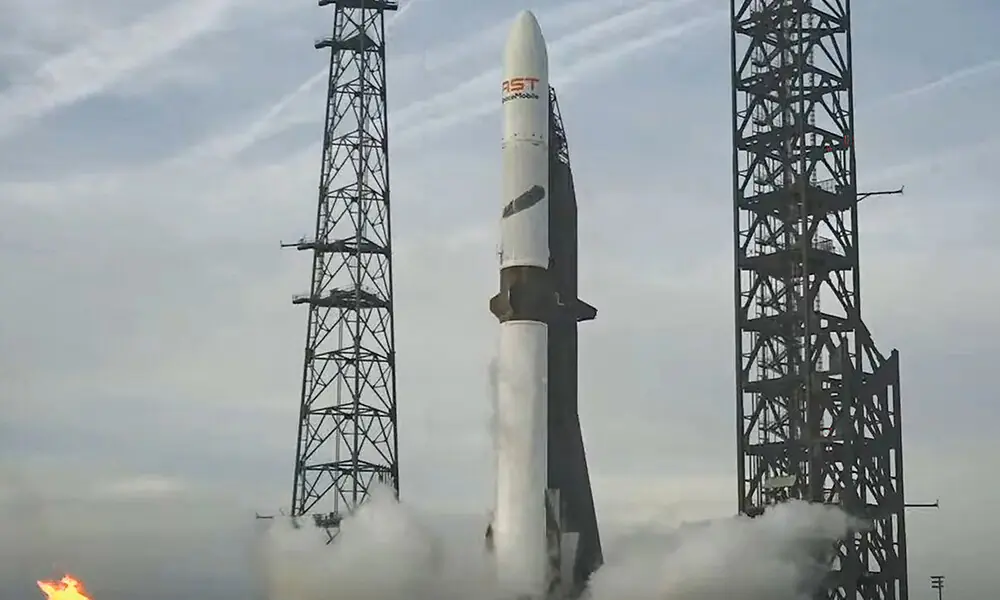

Jeff Bezos’ Blue Origin on Sunday said its New Glenn rocket booster touched down after its launch, marking its first landing of a reused booster.
The rocket, which had a launch window of 6:45 a.m. to 12:19 p.m. ET on Sunday, lifted off at around 7:25 a.m. ET (1125 GMT) from Cape Canaveral, Florida, and the booster touchdown happened about 10 minutes later.
New Glenn carried AST SpaceMobile’s BlueBird 7 satellite to low-Earth orbit in a flight that marks a pivotal step for the company.
The mission was key to demonstrating that New Glenn, a 29-story heavy-lift rocket, has a reliable booster reuse capability and can compete with Elon Musk’s SpaceX Falcon 9 rocket.
READ MORE: After Artemis II, NASA looks to SpaceX, Blue Origin for Moon landings
The rocket’s booster, dubbed “Never Tell Me the Odds,” previously flew on the NG-2 mission in November and was recovered, setting up this week’s milestone attempt.
The booster’s name is a nod to a Han Solo line in the film “Star Wars: The Empire Strikes Back.”
Following a series of delays earlier this month, the mission comes amid a surge of activity in the space sector, including the successful NASA Artemis II lunar flyby that took humans further from Earth than any had traveled before.
Blue Origin had said in November that it would build a bigger, more powerful variant of its New Glenn rocket, called New Glenn 9x4.
AST satellite constellation
New Glenn is designed for the higher end of the commercial launch market with a seven-meter (23-foot) nose cone allowing it to carry bulkier payloads, including multiple satellites in a single mission.
AST SpaceMobile’s BlueBird 7, carried into orbit on NG-3, is the second satellite in its next-generation Block 2 constellation. The satellite features what the company describes as the largest commercial communications array deployed in low-Earth orbit.
Designed to connect directly with smartphones, the satellite is part of an effort to build a space-based cellular broadband network, similar to Amazon’s Leo or SpaceX’s Starlink.
AST SpaceMobile is targeting a constellation of 45 to 60 such satellites by the end of 2026.


























Comments