



With European Union’s €400 billion Global Gateway investment programme in focus, Islamabad is all set to host the bloc’s first-ever high-level ‘EU–Pakistan Business Forum’ on April 28-29.
Attached to this happening is the official enthusiasm that this opportunity could be a turnaround for Pakistan’s move from the prevailing much of trading partnership to more of strategic and investment partnership with the EU in investment, trade and businesses.
This enthusiasm needs a reality check and an understanding: What European Union’s €400 billion Global Gateway investment programme is all about and what it means for Pakistan.
The European Union’s €400 billion Global Gateway initiative is often perceived as Europe’s answer to China’s Belt and Road Initiative—but that shorthand misses its real intent. At its core, Global Gateway is less about headline infrastructure spending and more about de-risking supply chains, securing strategic resources, and exporting European regulatory and sustainability standards into partner economies.
Announced in 2021, the programme aims to mobilise up to €300–400 billion by 2027 through a blend of public funds, development finance institutions, and private capital. Unlike traditional aid or even China’s state-driven financing model, Global Gateway is structured around “bankable” projects—those that meet strict criteria on governance, transparency, environmental compliance, and financial viability. Priority sectors include clean energy, digital infrastructure, transport corridors, healthcare systems, and education.
For countries like Pakistan, the proposition is both attractive and demanding. The EU is not merely offering capital; it is offering integration into its economic ecosystem—albeit on European terms. That means compliance with ESG frameworks, legal predictability, contract enforcement, and policy continuity. In return, partner countries gain access to European markets, technology, and long-term investment flows.
Against this backdrop, Islamabad hosting the first-ever high-level EU-Pakistan Business Forum signals a deliberate recalibration. The shift from a trade-centric relationship—historically anchored in GSP+ preferences—to an investment-led partnership reflects a recognition that preferential tariffs alone are insufficient to reposition Pakistan in evolving global supply chains.
However, the realism of this opportunity must be assessed against Pakistan’s current investment climate. European investors in Pakistan are not new entrants; they are legacy stakeholders with decades of operational experience. Their recent posture—characterised by downsizing, cautious capital allocation, or outright exits—is not driven by cyclical concerns but by structural issues. Persistent policy volatility, foreign exchange repatriation constraints, regulatory unpredictability, and governance deficits have eroded investor confidence.
In this context, Global Gateway does not represent a fresh pool of unconditional capital waiting to be deployed. It is, in effect, a filter. Only those jurisdictions that can demonstrate reform credibility, institutional stability, and project readiness will attract meaningful flows. Pakistan’s challenge is not access to European capital per se, but qualification for it.
There are, nevertheless, areas where Pakistan can align credibly with Global Gateway priorities. The energy transition is one such domain. Europe is actively seeking to diversify its green energy partnerships, particularly in solar, wind, and hydrogen. Pakistan’s renewable energy potential—especially in wind corridors and solar capacity—offers a plausible entry point provided regulatory frameworks are stabilised and circular debt risks are addressed.
Similarly, digital infrastructure and IT-enabled services present another avenue. Pakistan’s growing tech talent base can integrate into European digital value chains, but this requires robust data protection regimes and cross-border digital agreements aligned with EU standards.
Transport and logistics infrastructure is a more complex proposition. While Pakistan’s geographic location offers theoretical connectivity advantages linking South Asia, Central Asia, and the Middle East, realising this potential demands regional stability and internal infrastructure coherence—both of which remain works in progress.
There is a theoretical argument that the prevailing supply chain disruptions or capital reallocation away from the Gulf could redirect attention toward alternative markets like Pakistan. In practice, however, capital does not flow into uncertainty. If geopolitical risk in the Gulf rises, global investors typically move toward safer jurisdictions, not risk-equivalent or higher-risk markets.
That said niche opportunities could emerge. For instance, if logistics routes or operational bases in parts of the Gulf become constrained, Pakistan’s port infrastructure—particularly in Karachi and Gwadar—could see incremental interest. Similarly, sectors such as food security, where Gulf countries seek external partnerships, may open limited windows for Pakistani agribusiness exports or joint ventures.
The real take-away from the EU’s Global Gateway and the upcoming business forum is not the scale of announced capital, but the conditionality embedded within it. Europe is effectively signalling: capital is available, but it will flow only where risk is priced appropriately and governance meets defined thresholds. These thresholds could in fact put more checkpoints on the GSP+ preferences currently being enjoyed by Pakistan.
For Pakistan, this is less a windfall moment and more a stress test. The opportunity is real, but it is neither automatic nor immediate. It demands a shift from transactional engagement to structural reform—particularly in areas of policy consistency, investor protection, and institutional credibility.
If Islamabad can use this moment to signal—and more importantly, implement—such reforms, Global Gateway could become a meaningful channel for integration into European-led supply chains.
Copyright Business Recorder, 2026
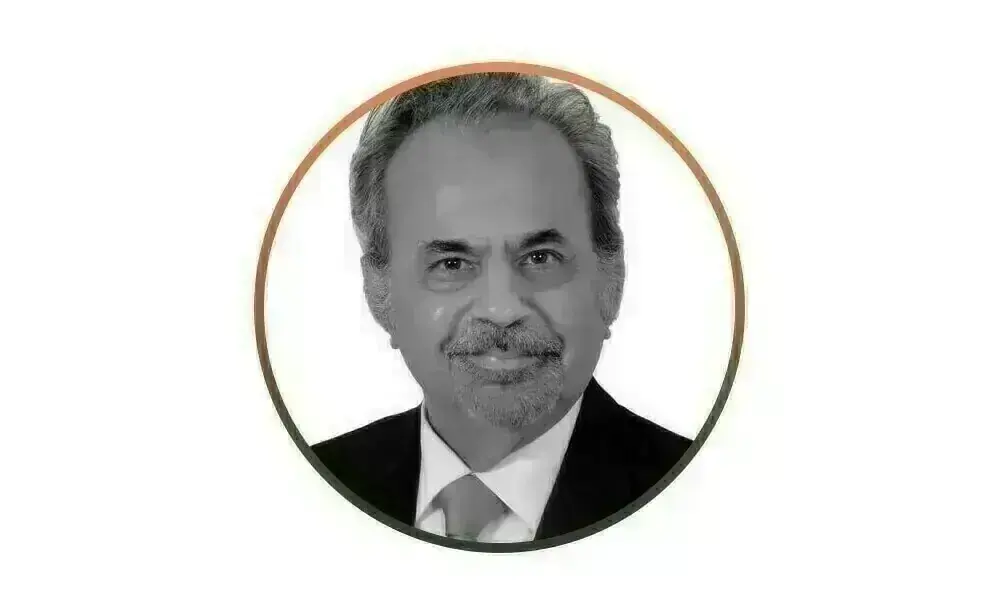
The writer is a former President OICCI; Global Business Leader and Strategic Affairs Analyst

























Comments