


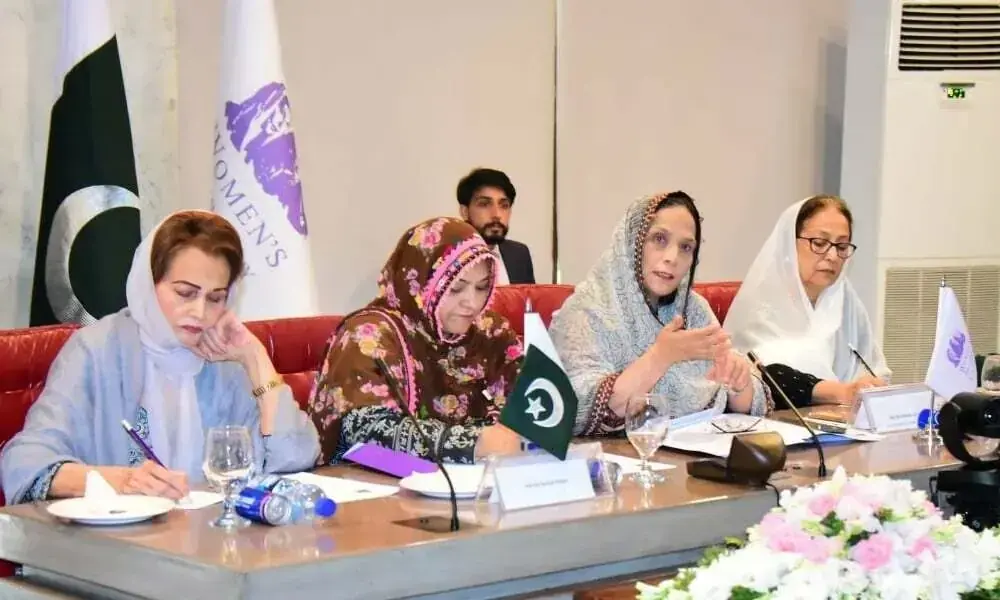
EDITORIAL: The latest report by the Free and Fair Election Network (Fafen) on the performance of women legislators presents a revealing picture of proceedings in the National Assembly. Though women constitute less than 22 percent of the House, they accounted for 48 percent of the regular plenary agenda during the parliamentary year 2025–26. This disparity alone challenges persistent stereotypes about women’s political engagement and productivity in legislative institutions.
On a per-capita basis, the difference is even more striking. Female MNAs submitted agenda items at a substantially higher rate than their male colleagues.
On average, each woman legislator submitted 16 agenda items during the year, compared with five submitted by male members. This level of engagement underlines the seriousness with which women parliamentarians approach their legislative responsibilities.
In many ways, they confirm a pattern often associated with women in public service: diligence, responsiveness, and a strong sense of accountability.
Equally significant is the breadth of subjects addressed by female lawmakers. Contrary to a common assumption that women legislators tend to focus mainly on gender-related issues, the report shows that the agenda submitted by them covered a wide range of policy areas. These included economic management, taxation, national security, local governance and parliamentary procedures, alongside legislation related to women’s rights and social protection.
Indeed, about 72 percent of the agenda items submitted by female MNAs dealt with national-level policy matters.
The evidence clearly refutes the notion that women’s parliamentary engagement is confined to a narrow social policy domain.
The report also employs the Gender Responsiveness Score (GRS) to assess how frequently the House addresses agenda items submitted by women compared with those submitted by male legislators. An overall GRS of 1.0 suggests that the Assembly addressed women lawmakers’ agenda at a similar rate as that of male members. Yet the details point to some imbalance.
Private members’ bills, motions for public interest discussion and proposals to amend the Assembly’s rules submitted by women were taken up less frequently than those submitted by their male counterparts. The gap may not be dramatic, but it indicates that procedural equality does not always translate into equal attention.
Another important distinction highlighted by the Fafen report concerns the difference between women elected on general seats and those inducted through the reserved quota. Those elected directly from constituencies participate in debates far more regularly than the ones nominated on reserved seats.
The explanation appears fairly straightforward. Legislators who derive their mandate directly from voters tend to have greater confidence and political legitimacy within the House.
Political parties therefore need to move beyond tokenism and allocate a meaningful share of general seats tickets to women candidates.
It is worth noting that most citizens cast their votes primarily on the basis of party affiliation rather than the gender of the candidate.
In that sense, the electorate is already more open to greater female representation than party strategists tend to assume.
The challenge, therefore, lies less with public attitudes and more with the willingness of political parties to translate this reality into meaningful opportunity.
Copyright Business Recorder, 2026




















Comments