


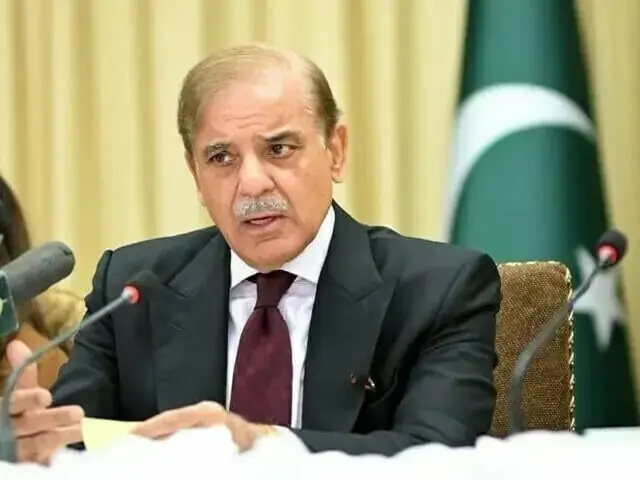

ISLAMABAD: Prime Minister Shehbaz Sharif on Wednesday urged an immediate end to hostilities in the Middle East and a return to normalcy, emphasising that stabilising the regional situation required unity and harmony within the ranks of the Ummah, “now needed more than ever before.”
The prime minister made the remarks during a telephonic conversation with Saudi Crown Prince Mohammed bin Salman (MBS), in which he reiterated Islamabad’s “strong condemnation” of recent attacks on Saudi Arabia and conveyed Pakistan’s “complete solidarity and unequivocal support” for Riyadh and its people, according to a statement issued by the Prime Minister’s Office.
Sharif commended the Kingdom’s leadership for exercising remarkable restraint in the current crisis and assured that Pakistan would always stand by Saudi Arabia, just as the Kingdom has consistently supported Pakistan “through thick and thin.”
He reiterated the call for unity within the Muslim world, describing harmony among the ranks of the Ummah as essential amid escalating regional tensions.
He briefed MBS on Pakistan’s constructive diplomatic outreach to all parties, urging de-escalation and the resolution of differences through dialogue and diplomacy.
According to the statement, Prince Salman, in turn, “deeply appreciated” Pakistan’s peace efforts, and both leaders agreed to maintain close coordination between the two countries at all levels. Separately, the prime minister took to X to say he had spoken with “my dear brother Crown Prince Mohammed bin Salman” to convey warm Eid-ul-Fitr greetings to “the custodian of the two holy mosques, King Salman bin Abdulaziz Al Saud, the royal family, and the brotherly people of Saudi Arabia.”
In his post, he reaffirmed Pakistan’s condemnation of the recent attacks on the Kingdom and reiterated the urgent need for de-escalation, an end to hostilities, and unity among the Ummah.
The developments come against a backdrop of rising regional tensions following attacks on Iran by the United States and Israel on 28 February, which prompted retaliatory strikes on US bases across the Gulf, including in Saudi Arabia.
Pakistan and Saudi Arabia, which signed a landmark Strategic Mutual Defence Agreement (SMDA) last September, are bound by a pact that treats an attack on either nation as an act of aggression against both.
Meanwhile, Prime Minister Shehbaz Sharif on Wednesday praised Qatar’s restraint amid ongoing regional hostilities and briefed the Gulf state’s leader on Islamabad’s diplomatic outreach and peace efforts.
In a telephone call with Sheikh Tamim bin Hamad Al Thani, Amir of Qatar, Sharif expressed serious concern over the violence and reiterated Pakistan’s strong condemnation of attacks against Qatar and other Gulf countries.
He conveyed condolences for the loss of lives and extended prayers for the injured, while assuring Qatar of Islamabad’s full solidarity during the crisis. Sharif emphasised that Pakistan had consistently urged all parties to de-escalate tensions and resolve differences through dialogue and diplomacy.
The Qatari Amir welcomed Pakistan’s diplomatic efforts to promote regional peace. Both leaders agreed to maintain close contact in the coming days. During the conversation, Sharif also conveyed Eidul-Fitr greetings to Sheikh Tamim and the people of Qatar, which were warmly reciprocated.
In a related initiative, Sharif has offered to host talks between the US and Iran, contingent on their agreement, to facilitate a comprehensive settlement of the ongoing Middle East conflict.
US President Donald Trump highlighted Sharif’s offer on his Truth Social platform, following his statement that the US and Iran had engaged in “very good and productive” conversations aimed at a “complete and total resolution” of hostilities. Over the past 48 hours, Pakistan has played a pivotal role in back-channel diplomacy, working closely with Turkey and Egypt to relay messages between Washington and Tehran to prevent further escalation and maintain regional stability.




















Comments
Comments are closed for this article.