


Pakistan committed to responsible development of energy, mineral resources: Asim
- Says Pakistan has launched targeted initiatives to accelerate exploration, development of critical minerals
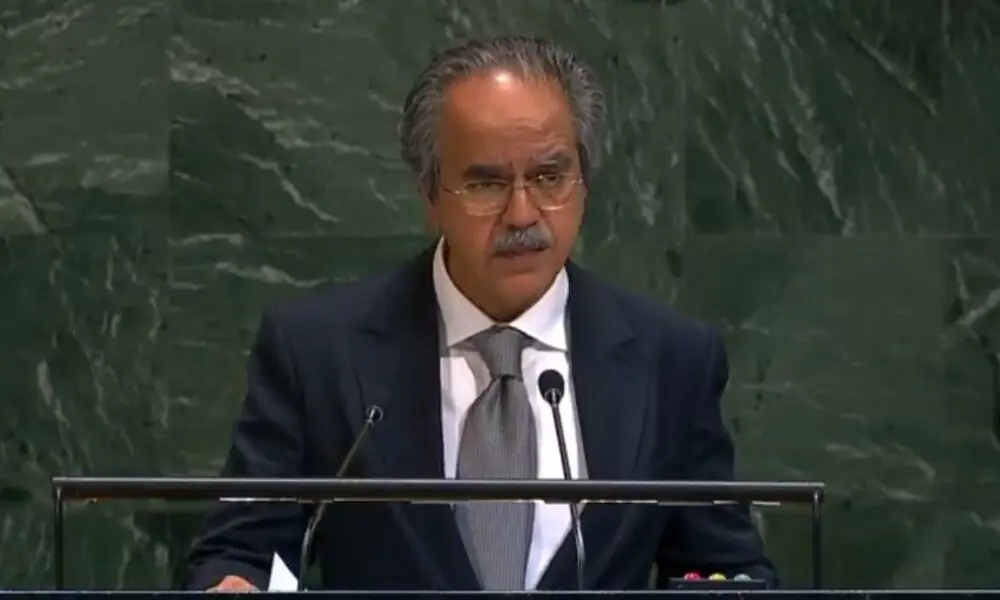

At the United Nations, Pakistan has said it stands ready to work with all members of the UN Security Council and beyond to ensure that critical minerals become catalysts for sustainable development, progress and stability.
This was stated by Permanent Representative of Pakistan at the United Nations, Ambassador Asim Iftikhar at the UN Security Council briefing on “Energy, Critical Minerals, and Security” in New York.
He said Pakistan is committed to the responsible development of its energy and mineral resources.
Ambassador Asim said the government of Pakistan has launched targeted initiatives to accelerate exploration and development of critical minerals.
“We are strengthening our regulatory frameworks, modernising geological mapping, improving licensing transparency and promoting environmentally responsible mining practices,” he said.
The permanent representative of Pakistan at the UN said our objective is to ensure that our resource potential translates into industrial growth and social development.
“The production and trade in critical minerals must respect national ownership, domestic priorities, and the right of developing countries to pursue value addition and industrialisation, with a view to transforming them from mere raw material exporters to integrated hubs for processing and refining,” he added.
The envoy said the concentration of critical minerals supply chains, price volatility, export restrictions and geopolitical competition are creating new vulnerabilities in global energy and economic security framework.
Efforts to secure supply must not devolve into bloc-politics, economic coercion or exclusionary arrangements, thereby ensuring that supply chain diversification does not become a tool for geopolitical containment, he said, adding that fragmentation of global markets will undermine both energy transition objectives and collective security.




















Comments
Comments are closed for this article.