


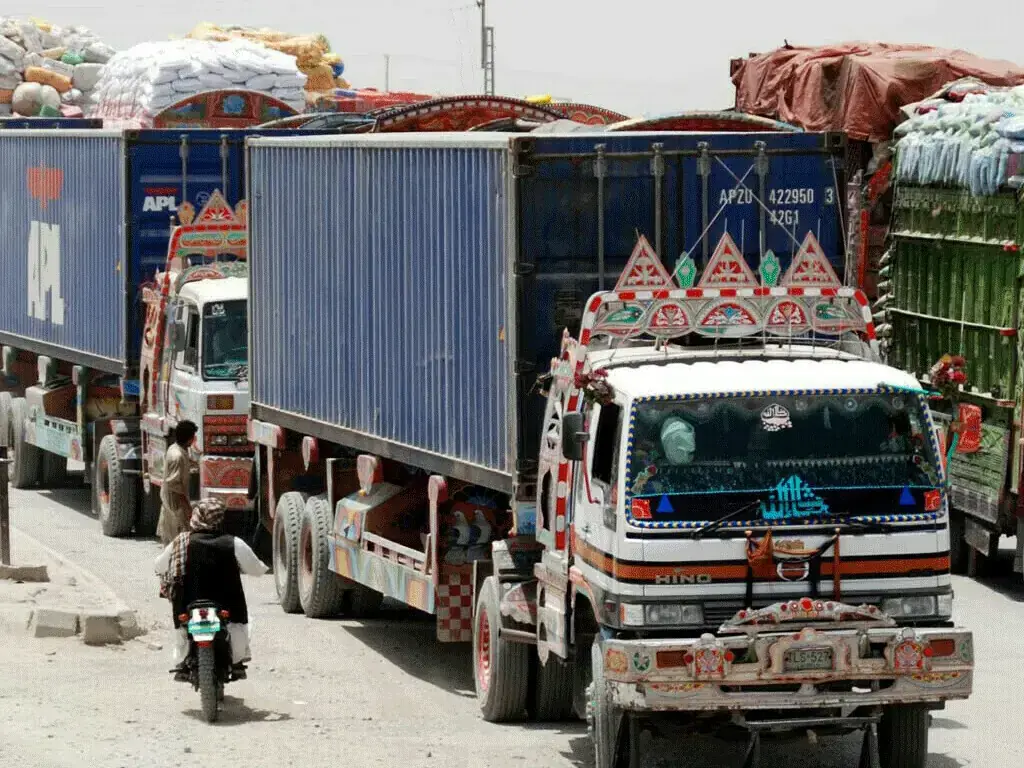

There are plans to set up schools to train drivers of heavy vehicles so they can eventually get licence for driving HTVs, the heavy transport vehicles, and LTVs, the light transport vehicles. This programme will train a hundred thousand drivers in five years, which will include 62,500 light transport vehicles and 37,500 heavy transport vehicles.
This plan was announced at the 50th meeting of public private partnership policy board presided upon by the Chief Minister of Sindh Syed Murad Ali Shah, which underscores the importance of this decision.
The important part of this announcement was that nearly half of the drivers so trained will be from Karachi.
Initially, I got the impression that this scheme was in response to the rising number of accidents in Karachi where entire families were being wiped out due to the non-professional attitude and reckless driving of LHT and LTV vehicle drivers.
Not to be but the main aim of this programme is to meet the rising international demand for drivers in which Pakistan is already a party having only recently exported more than a hundred and fifty thousand drivers officially and around thirty thousand unofficially.
The share of Sindh in the export of drivers seems unreasonably low and perhaps this is what prompted this training scheme in the first place. Going through the programme, it seems very impressive and high class and would require a raised level of attention and certainly some basic education.
The programmes will be conducted under the supervision of four Sindh technical education and vocational training institutes at Karachi, Dadu, Sukkur, and Naushero Feroze. There will be multimedia class rooms, computer-based theory labs, HTV and LTV simulators.
Very high class programme, which will not only require some basic education but an understanding of modern terminology and technology.
Any step taken to improve the driving situation on our roads is very commendable but than this kind of training should be imparted not only with an eye on offshore employment but also with the intention of improving the conditions on our roads. It will not be a bad idea to simultaneously start training of drivers who are already on the roads locally to enhance their skills so that precious lives are saved that are wasted daily with no improvement in sight.
Also desperately required is an eye on the mechanical fitness of heavy vehicles on our roads, which are in a state of great neglect. Many of the accidents happen because of failed brakes. Those planning the training of drivers for export should also improve the situation within the country and, specially, in the city of Karachi. As according to reports the intended countries for export of our drivers include European states, Australia, China, Turkey and the GCC countries it will be advisable to also hold language courses of the most popular languages spoken in these countries.
As far as the conditions on our own roads are concerned I am afraid that it will take a lot more than mere training in classy classrooms.
The very first and basic thing is the driver’s license. This basic object required for driving on our roads should be available only through due training and impartial testing and should be frequently checked to ensure that the drivers on the road have legally passed the required test.
Another most important item is a well-documented safety checklist. I remember that all commercial vehicles had to undergo a safety check which in Karachi used to be held in the open ground outside the mausoleum of Quaid-e-Azam. This was a thorough check and mandatory for all these vehicles.
At least once a year it was ensured that the brakes, lights, etc., of public vehicles were in order. This was one of the reasons that we did not have the daily dance of death on our streets.
Something that we should remember is that the persons we export and who will be working and mingling with the population of other countries overseas will be our ambassadors.
In the past we have also earned a bad name due to the[D1] antics of these individuals so while we ensure that the thousands we export to these countries are technically sound we should also make sure that they are morally sound and can proudly represent Pakistan.
Good luck to the pioneers of this scheme to export Pakistani drivers overseas. So far this is only a scheme but hopefully it will materialize to benefit many young men and help ease unemployment in the country.
Copyright Business Recorder, 2026
The writer is a well-known columnist























Comments
Comments are closed for this article.