


The quiet revolution: the birth of Pakistan’s cashless safety net
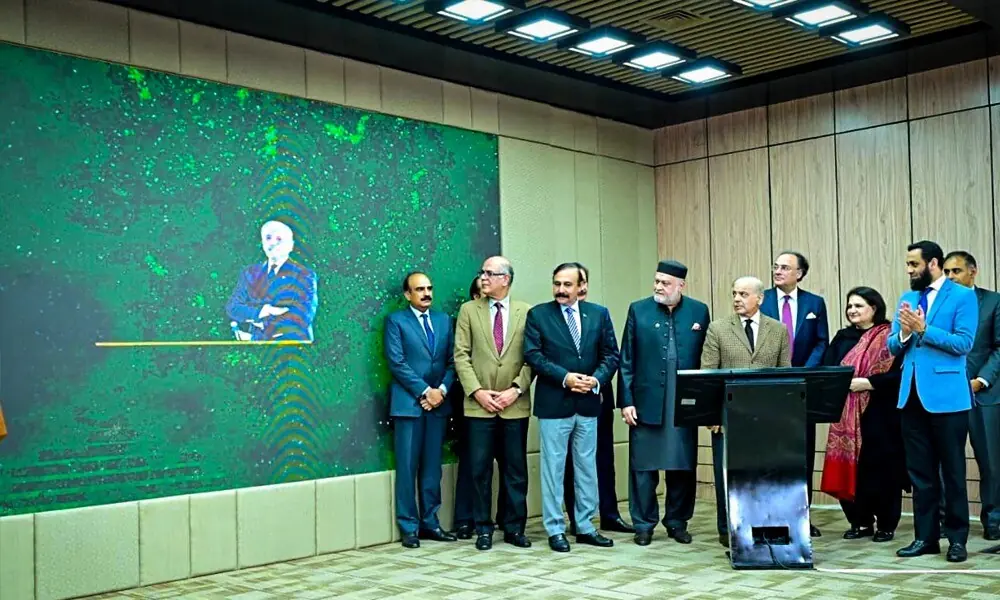

There is a moment in every country’s story when the government stops treating its poorest citizens as a logistical problem and starts treating them as people who deserve dignity. For Pakistan, that moment arrived during Ramadan 2025, when Prime Minister Shehbaz Sharif made a decision that was equal parts courageous and common sense: shut down the corruption-plagued Utility Stores model and put money directly into the hands of those who need it, through their phones.
It was not a popular decision at the time. The Utility Stores Corporation had been around for decades. People knew where their nearest store was, even if the shelves were half empty and the flour was stale. Politicians had built careers around ribbon-cutting at USC outlets before every Ramadan.
Fast forward to Ramadan 2026, and the results speak for themselves. The Prime Minister’s Ramadan Relief Package has grown into a nearly Rs40 billion programme reaching over twelve million families. Each household receives Rs13,000 through digital wallets and bank accounts. No queues. No middlemen. No expired cooking oil being passed off as a government gift. Just a notification on your phone, and money in your account.
But the Ramadan package is really just the most visible expression of something larger. What the government is quietly building is the infrastructure for a permanent cashless social safety net. The plumbing is already in place. The Benazir Income Support Programme (BISP) maintains the beneficiary database. The National Database and Registration Authority (NADRA) provides identity verification. The Pakistan Telecommunication Authority (PTA) ensures telecom connectivity. The State Bank of Pakistan (SBP) oversees the financial settlement layer.
Also read: Pakistan govt closes all state-owned utility stores
And private sector players like JazzCash and EasyPaisa handle last-mile delivery. This is not a temporary Ramadan arrangement. This is a national digital stack that can be activated for any crisis, any season, any programme.
To understand how significant this is, look at what other developing countries have done. Brazil spent years building its Pix instant payment system, which now reaches 151 million users and has become the backbone for disbursing Bolsa Familia welfare payments. Before Pix, only 35% of Bolsa Familia beneficiaries had bank accounts. Today that number is around 90%.
Kenya went a different route, leveraging the M-Pesa mobile money platform to deliver government cash transfers under its Inua Jamii programme. What took Brazil a dedicated central bank project and Kenya a decade of private sector led mobile money growth, Pakistan is achieving through a public-private partnership that stitches together existing government systems with commercial fintech infrastructure. It is a pragmatic, distinctly Pakistani solution.
Indonesia offers another useful comparison. Its Program Keluarga Harapan began digitising welfare payments in 2017, transitioning from post office cash handouts to bank account transfers. But even after years of effort, studies found that nearly 40% of beneficiaries did not know their government card was linked to a savings account, and a third did not know how to use it.
Pakistan’s approach of using wallets people already have on their phones, platforms they already use to buy phone credit or pay electricity bills, sidesteps that adoption problem entirely. The government is meeting people where they are, not asking them to learn a new system.
The outreach numbers alone tell a story of institutional seriousness. Over 6.2 million robocalls and 6.1 million SMS alerts were dispatched to inform eligible families. A 24/7 control room monitored disbursements through a real-time dashboard. More than 200,000 calls were handled in the opening days of Ramadan.
When a daily wage earner in the country receives Rs13,000 on his phone during Ramadan without standing in line for hours, something fundamental shifts. The state becomes trustworthy. It becomes present in people’s lives in a way that is supportive, not extractive.
There are challenges ahead, of course. Digital literacy is uneven. Women in many households still do not have SIM cards in their own names. Rural connectivity has gaps. Biometric verification fails for labourers with worn fingerprints. These are problems that need honest attention, not denial. But the direction of travel is unmistakable, and it is the right one.
What Pakistan is building with this Ramadan Relief Package is not just a seasonal handout. It is the scaffolding of a modern welfare state, one that uses technology to deliver dignity at scale. PM Shehbaz Sharif deserves credit for seeing that possibility when others saw only risk, and for having the patience to build it properly, one Ramadan at a time.
The author is poverty reduction strategist at PRSP




















Comments
Comments are closed for this article.