


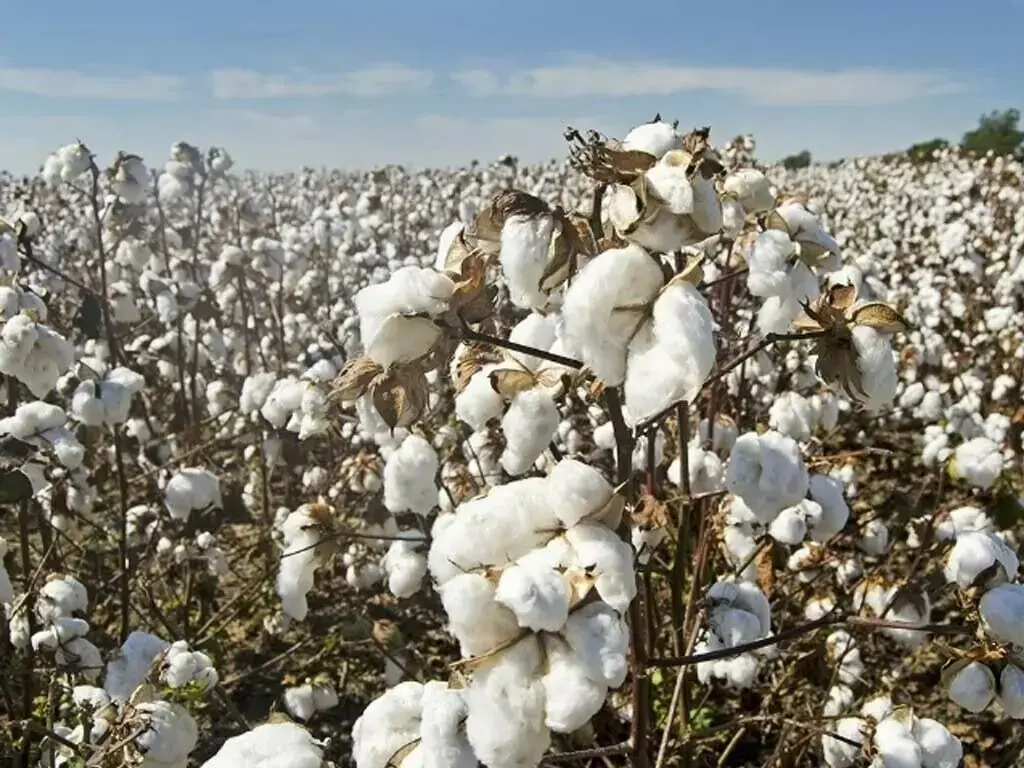
EDITORIAL: While the past decade has seen cotton cultivation in Pakistan battered by escalating climate shocks – intense heatwaves, erratic monsoons, prolonged dry spells and destructive floods – it is not the volatility of the weather alone that has pushed the crop into retreat. The deeper crisis lies in man-made distortions and administrative frailties: weak pest surveillance, substandard seed, underinvestment in mechanisation and the politically-driven diversion of prime cotton acreage to water-hungry sugarcane.
Climate stress may have tightened the noose, but it is governance failure that has left the sector grappling for stability. This is the entirely valid premise advanced in a recent study by a local think tank, which contends that regulatory lapses and institutional inertia have amplified climate risks, drastically eroding Pakistan’s comparative advantage in cotton. Once self-sufficient, the country now imports USD2-3 billion of cotton annually to bridge the gap between shrinking domestic output and industrial demand.
Weak seed regulation in particular has been a major drag on yields and fibre quality. Pakistan’s cotton landscape is dominated by genetically modified Bt varieties that have gradually lost pest resistance as these require continuous upgrading to counter evolving insects and climate change. But limited research, weak oversight and poor agronomic support have left seed quality stagnant. Farmers report that Bt varieties often fail under local stresses, as rising temperatures worsen pest resistance, and reduce output and quality. Against this backdrop, the Seed (Amendment) Act 2024, while promising tighter certification requirements, digital traceability of the cotton crop throughout the supply chain and stronger enforcement under a centralised regulator has triggered fresh anxieties.
Concerns persist that its stricter compliance and intellectual property regime could favour large private seed firms, and without safeguards for farmer seed rights or phased implementation for smaller players, it risks consolidating market power rather than revitalising seed innovation, potentially aggravating the vulnerabilities the cotton crop faces.
Moreover, institutional fragmentation in the sector remains a major constraint, with the study noting that there is no single body accountable for national cotton outcomes. For a crop that remains central to the agrarian economy and textile exports, this should be unacceptable. This governance vacuum has led to poor data integration, weak risk-sharing mechanisms and inadequate export compliance systems, allowing inefficient practices to persist: low mechanisation, limited agronomic advisory support for farmers, inadequate crop insurance and insufficient traceability that hampers seed verification, pest monitoring and quality enforcement. What is also lacking is smarter water management, integrating efficient drip irrigation in place of traditional flood irrigation methods to protect yields under rising climate and water pressures.
Arguably, the most pernicious consequence of these persistent governance gaps has been the steady erosion of Pakistan’s cotton base in favour of a water-guzzling sugarcane crop, particularly in southern Punjab, where even a traditional cotton stronghold like Rahim Yar Khan has steadily ceded ground to its expansion. This transformation of the agricultural landscape has been driven by politically connected, powerful sugar mill owners whose short-term gains have consistently been prioritised over broader agricultural, economic and environmental concerns. Their far-reaching influence within the power corridors, combined with sugarcane’s multi-year cultivation cycle and guaranteed mill demand, locks prime irrigated land for up to three seasons, reducing cotton acreage, straining water resources and threatening fertile land with salinisation.
A path forward demands a centralised, accountable governance framework for cotton, underpinned by robust data integration to guide policy and monitor outcomes. Inefficient farming and irrigation practices must be phased out, seed quality and agronomic support strengthened, and most importantly, agricultural priorities reset in a way that limits the dominance of entrenched interests that have prioritised sugarcane at cotton’s expense, eroding natural resources and the industrial base. Without that, it will be exceedingly difficult to restore the agriculture sector’s ecological balance and economic resilience.
Copyright Business Recorder, 2026




















Comments
Comments are closed for this article.