


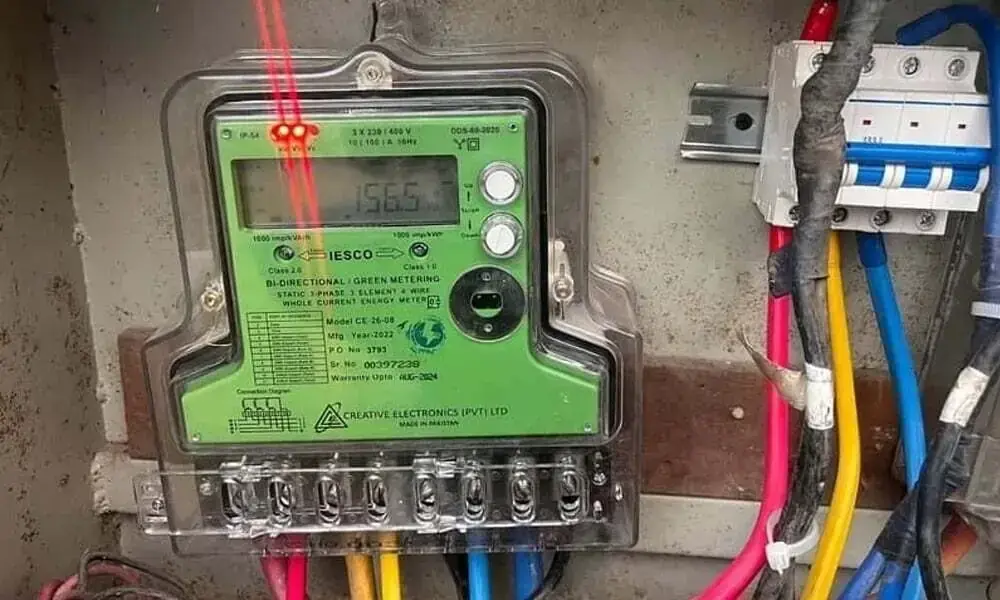

The recent controversy surrounding amendments to the prosumer regulations by the National Electric Power Regulatory Authority (NEPRA) has been framed as a struggle between regulators and solar consumers. But like most policy debates, this is ultimately about equity — and about how the poor and marginalized are repeatedly left behind.
In Pakistan, public policy too often privileges a small, affluent minority at the cost of millions of ordinary electricity users.
Pakistan today has roughly 460,000 to 470,000 net-metering consumers. One could argue that, given the high upfront capital cost, it was mostly affluent individuals who were able to adopt rooftop solar early on, when the policy needed to be incentivized.
Yes, farmers are using tubewells on solar, but the real issue is not daytime consumption. It is the night — when the sun doesn’t shine — and the grid is effectively forced to act as storage and backup for solar producers, while also being expected to buy electricity it cannot afford, particularly when surplus already exists in the system.
Now consider the other side. More than 35 million grid-dependent consumers rely entirely on the national electricity system, with no realistic ability to invest in rooftop solar. Under the net-metering regime, a few hundred thousand prosumers were allowed to sell surplus electricity back to the grid at retail tariff rates — tariffs that include transmission, distribution, and capacity costs.
The outcome was predictable: solar households drastically reduced or eliminated their electricity bills, while the fixed cost of running the power system was shifted onto everyone else — those already burdened by high taxation and inflationary pressures.
System-level analysis shows that in FY2024–25 alone, nearly Rs200 billion in grid fixed costs were shifted from solar prosumers to non-solar consumers, adding roughly Rs2 per unit to the bills of ordinary households. This was not an incidental effect; it was a structural subsidy flowing from the many to the few — a textbook case of elite capture. Left uncorrected, this burden was set to grow rapidly as rooftop solar installations continued to expand.
This distortion has now been acknowledged publicly at the highest levels of government. Power Minister Awais Leghari has stated that allowing a few hundred thousand consumers to avoid grid costs would inevitably raise tariffs for millions of others. He is right. A power system cannot function if it is treated as free backup and storage by those who can afford alternatives, while its costs are socialized across those who cannot.
The Prime Minister’s Office, having taken notice of the regulatory changes, must view this issue through the same equity lens.
The Prime Minister’s direction to seek a review and protect existing contracts is understandable and necessary for legal certainty. But it is equally important that this process does not succumb to pressure from a vocal elite seeking to preserve disproportionate benefits. Public policy must serve the silent majority — not just the most articulate or affluent minority.
Pakistan is not alone in facing this challenge. Countries that once celebrated generous net-metering regimes have been forced to reform them once cost-shifting became evident.
California reduced export compensation under NEM 3.0, Australia introduced two-way pricing to discourage midday dumping of solar power, and Germany tightened export and inverter rules to protect grid stability. These reforms were not anti-solar; they were pro-fairness and pro-system sustainability.
NEPRA’s shift from net-metering to net-billing for new consumers follows this global trajectory. Existing solar users are protected, while future growth is aligned with the real economic value of electricity and the unavoidable cost of maintaining the grid. This is not a rollback of renewable energy — it is a correction of an inequitable subsidy structure.
At a time when electricity affordability is a national concern, the question policymakers must ask is simple: should 400,000-plus consumers continue to benefit at the expense of tens of millions? Or should Pakistan’s energy transition be grounded in fairness, where incentives for clean energy do not translate into hidden taxes on the poor?
The answer should guide the Prime Minister’s approach. Supporting a balanced transition, rather than yielding to elite-driven narratives, is not just good economics — it is sound governance. Policies must evolve with changing realities.



















Comments