


Ukraine, IMF ease conditions on new $8.2 billion loan program
- As the war with Russia grinds into its fifth year, Ukraine relies on Western financial aid to sustain its defences
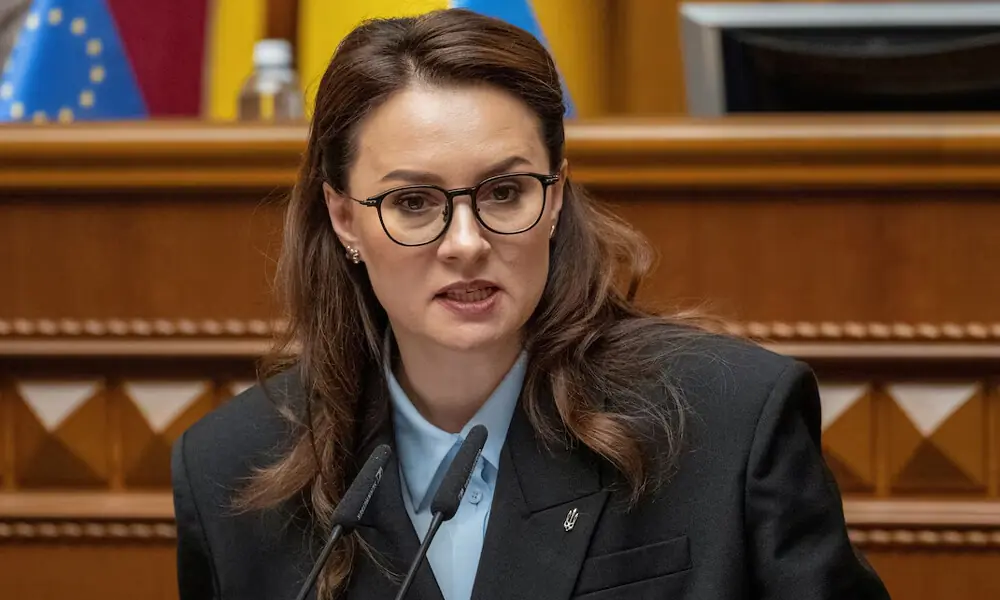

KYIV: Ukraine’s government and the International Monetary Fund have agreed to ease some conditions, including sensitive tax increases, for a new $8.2 billion lending programme, Prime Minister Yulia Svyrydenko said on Saturday.
She said the IMF board was expected to review the programme at its next meeting, noting its approval was crucial for unlocking other international support, including a 90‑billion‑euro ($106.8 billion) EU loan.
As the war with Russia grinds into its fifth year, Ukraine relies on Western financial aid to sustain its defences, keep the economy running, and pay wages and pensions.
After discussions, “the mission has simplified the agreements reached in November” and revised some structural benchmarks, Svyrydenko said, in remarks released by her office on Saturday.
In November, the IMF and Ukraine reached a staff-level agreement on the new four-year program. A key prior action for board approval was raising taxes for individual entrepreneurs.
Economic situation deteriorates due to Russian strikes
In recent months, Ukraine’s economic situation has worsened as intensified Russian airstrikes have battered the energy system and infrastructure, cutting power, heat and water for millions in bitterly cold winter temperatures.
Costly energy imports and generator-produced electricity kept Ukrainian businesses running, but many cut working hours and output, prompting a review of economic forecasts.
The central bank lowered its 2026 GDP growth forecast to 1.8% from 2% due to larger-than-expected energy deficits.
Svyrydenko said the most sensitive part of the IMF programme was taxing individual entrepreneurs.
The government agreed to introduce a value-added tax for them, raising the revenue threshold to 4 million hryvnias (85,000 euros) from 1 million hryvnias.
Analysts now expect about 250,000 entrepreneurs to be affected by the increase, instead of over 600,000 in earlier plans.
The government was discussing the changes with lawmakers as it prepared draft legislation with other tax increases, Svyrydenko said.




















Comments
Comments are closed for this article.