


EDITORIAL: Eighteen months on from a bloody uprising against the then prime minister Sheikh Hasina’s 15-year-long repressive rule, it appears that Bangladesh has finally turned the page on an era marked by fear, curtailed freedoms and contested mandates. In largely peaceful general elections held on February 12, the Bangladesh Nationalist Party (BNP) led by Tarique Rahman has trumped its rivals, with preliminary results showing a clear mandate being handed to the party by an electorate tempered by understandable trepidation, yet cautiously hopeful of a democratic renewal grounded in accountability and institutional reform.
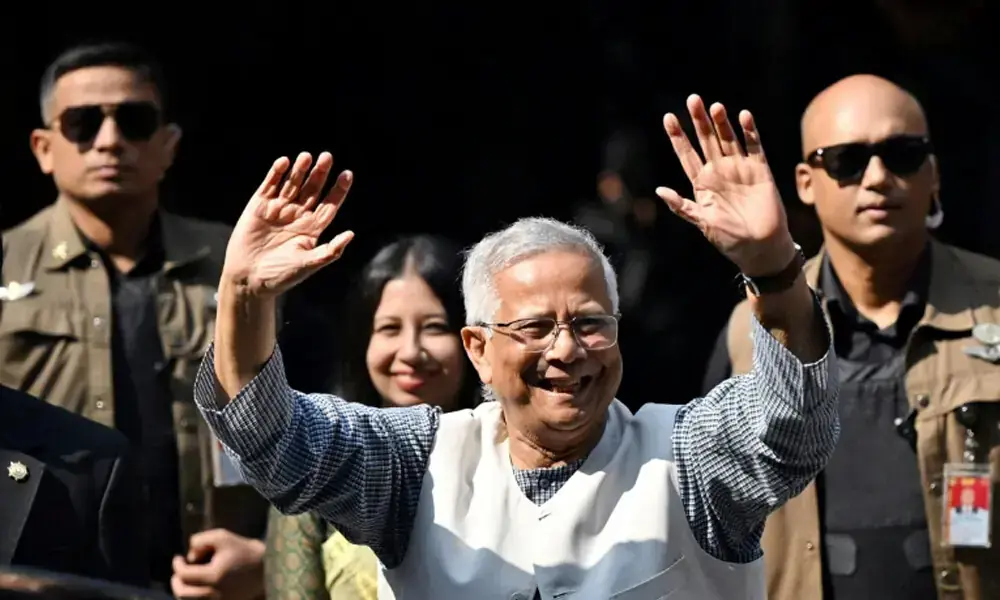
The outcome, in fact, signals more than just a change in leadership. As was aptly put by the country’s interim leader Muhammad Yunus, the moment marks the end of a “nightmare” and a fresh start for Bangladesh’s troubled democratic journey. From a popular uprising against Sheikh Hasina’s rule to her ouster, the installation of an interim administration and its fraught attempts to steady a deeply divided polity, and ultimately to the holding of the polls, this sequence of events reflects the determination of the Bangladeshi people to reclaim democratic space, restore institutional balance and reset a political culture that had come to be defined by polarisation and repression. One now hopes that the incoming government has absorbed the central lesson of the recent past: authority must derive its legitimacy from the ballot, and not from coercion.
Some reservations have been expressed by the Jamaat-e-Islami (JI) — projected to have secured the second-highest number of seats in parliament after the BNP — about the “integrity of the results process”, and these deserve careful consideration instead of being dismissed out of hand. Nevertheless, despite pre-poll surveys suggesting a better outcome for the JI, which was contesting the elections in alliance with the youth-led National Citizen Party whose leaders were instrumental in Sheikh Hasina’s ouster, its underwhelming performance likely reflects public apprehensions over its controversial positions on women and minority rights. The electorate’s concern over these issues should now help the BNP set a clear governing agenda for itself. It must ensure that the rights of marginalised communities are fully protected, apart from taking on the huge task of rebuilding public trust in institutions, restoring the credibility of democratic governance structures and genuinely representing the will of the populace, particularly the youth, whose disillusionment had sparked a blood-spattered revolt. The party has a tough challenge ahead in pursuing an inclusive agenda grounded in equality, democratic freedoms and broad-based economic prosperity for all Bangladeshis.
It is important to note that the Bangladeshi people did more than elect a new government. They have also endorsed, through a simultaneous referendum, a reform charter drafted by the caretaker government, outlining far-reaching governance measures. These include term limits for the prime minister, enhanced presidential powers and the establishment of an upper house of parliament, among other initiatives designed to strengthen a system of checks and balances, and prevent the concentration of authority in a single institution, party or individual, which is what had defined Sheikh Hasina’s tenure.
The coming months and years will test Bangladesh’s capacity for political maturity and consensus-building. Beyond policy and governance, the nation must cultivate a culture of dialogue, respect for dissent and civic engagement. How leaders navigate competing interests and socio-economic pressures will shape the country’s long-term trajectory. If approached wisely, this moment holds the potential to do more than just reshape Bangladesh. It could offer a blueprint for other deeply divided polities, showing how political friction can be transformed into purposeful collaboration and meaningful progress. The country, therefore, now has the chance to stand as a testament that a society scarred by conflict and mistrust can turn adversity into positive, lasting impact.
Copyright Business Recorder, 2026




















Comments
Comments are closed for this article.