


Interview with Muzaffar Narejo, Chief of Staff – BusCaro: ‘Mobility can’t scale without enforcement’
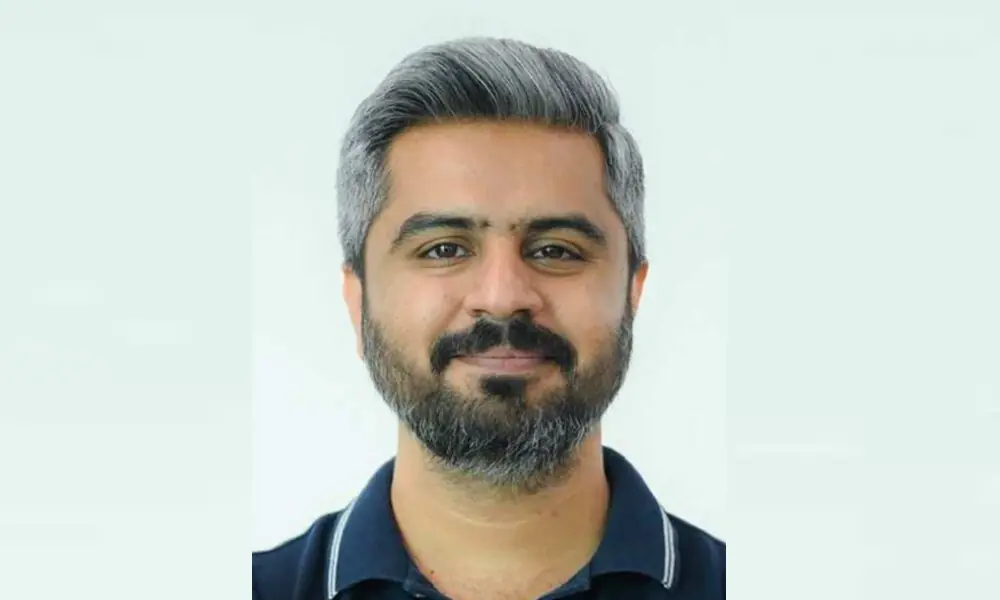

Muzaffar Narejo is the Chief of Staff at BusCaro, working across product, operations, finance, and expansion to drive day-to-day execution. A founding team member since 2022, he has helped build the company’s operating structure as it scaled B2B mobility services across multiple cities.
Before BusCaro, he spent three years at Swvl in Pakistan and Kenya, leading performance and quality functions and driving operational improvements. He has also worked with Careem and Cheetay Logistics, with experience in multi-city launches, supply growth, logistics operations, and performance management across Pakistan, Kenya, and Egypt.
Muzaffar holds a master’s in economics and brings a practical, data-driven perspective on scaling mobility operations in informal markets.
Following are the edited excerpts of a recent conversation BR Research had with him:
BR Research: Pakistan’s mobility market is growing fast — but what is the core failure in the system: cost, reliability, or lack of structure?
Muzaffar Narejo: In my view, the core failure is a lack of structure. Transport services in Pakistan are still extremely fragmented, and the ecosystem operates without unified governance or a coherent operating model. Pricing is often undefined or inconsistent, and service delivery is rarely built around predictable frameworks. As a result, schedules remain unreliable, and routes frequently fail to match real travel demand. The reality is that rapid urbanization has outpaced both planning and capacity, and the system has not evolved quickly enough to keep up with the scale and complexity of modern commuting needs.
BRR: From your on-ground experience, what has changed most in urban commuting in Pakistan over the last 2–3 years?
MN: Over the last few years, one of the most visible changes has been the improvement in public transportation, especially in Lahore and in certain parts of Karachi. Lahore has expanded and strengthened its in-city train and bus services, while Karachi has introduced the Peoples Bus Service, which has added meaningful capacity to the system. These are important steps, and they reflect a shift toward addressing mobility at a larger scale.
However, despite these improvements, the number of private vehicles has continued to rise sharply. That has increased congestion, pushed commute times higher, and added pressure to already constrained road infrastructure. At the same time, sustainable and shared transport modes still struggle to gain widespread adoption at the pace required. So, while there is progress in public transport, the broader commuting landscape remains heavily shaped by growing private vehicle dependence and increasing traffic density.
BRR: Why is B2B mobility emerging as a serious category in Pakistan — and what gap does it fill that ride-hailing and public transport don’t?
MN: B2B mobility is emerging because it addresses an extremely specific and very real need that other models are not designed to solve. Corporates, factories, schools, and industrial zones typically require fixed routes, fixed timings, and guaranteed vehicle availability for employees and students. These are structured, repeatable mobility needs, and they require consistency and reliability on a daily basis.
Ride-hailing, by design, is optimized for on-demand, individual trips. It works well when someone needs to travel point-to-point at a specific moment, but it is not built to deliver fixed-route commuting at scale. Public transport, on the other hand, is designed around mass coverage and general accessibility, not around employer-specific routes, timings, or operational commitments.
B2B mobility fills this gap by offering scheduled services with structured routing, dedicated fleets, centralized contracts, and integrated billing. Most importantly, it introduces service-level accountability. That means clear responsibility for safety, punctuality, and attendance — areas that matter deeply for organizations that depend on predictable commuting for their workforce or student population.
BRR: For employers, what is the real business case for organized transport: lower cost, better attendance, higher productivity, or safety?
MN: The business case is really a combination of all of these factors, but safety stands out as the most important one for employers. Organized transport creates a controlled commuting environment, and that matters because employers want their people to travel in a way that is predictable, compliant, and secure.
At the same time, structured transport also delivers strong operational value. It reduces hidden costs that often come from irregular commuting, delays, and unreliable travel options. It improves punctuality, strengthens workforce reliability, and supports attendance by reducing daily uncertainty. Over time, that also contributes to productivity because employees and students can arrive consistently and on time, with fewer disruptions.
But if you had to identify the most critical driver for employers, it would still be safety — because safety is the foundation that enables trust, stability, and long-term adoption of any organized mobility solution.
BRR: In a market as informal as Pakistan, what does it take to build operational discipline — and what breaks first when you scale?
MN: Building operational discipline in an informal market requires clear SOPs, and it requires strict enforcement of those SOPs. The market naturally tends toward inconsistency unless discipline is built deliberately into the system. That includes processes, compliance mechanisms, and operational checks that are designed to keep service delivery consistent.
When you scale, the first thing that typically breaks is compliance. As fleet size grows and operations become more distributed, maintaining consistent adherence to standards becomes harder. Once compliance starts to weaken, it quickly leads to service inconsistency. And in mobility, service inconsistency is not a small issue — it directly affects punctuality, safety, reliability, and user trust.
So, the key challenge at scale is not simply growth itself; it’s maintaining disciplined execution as complexity increases.
BRR: What is the single biggest bottleneck to scaling mobility in Pakistan: payments, fleet supply, route reliability, or enforcement?
MN: The biggest bottleneck is enforcement. Many other elements can be built relatively quickly — payments can be digitized, fleet supply can be expanded, and routes can be designed and optimized. But without enforcement, scaling becomes extremely difficult.
Enforcement is what ensures compliance, service quality, and consistency. Without it, operational discipline breaks down, and the entire system becomes harder to manage. In a market like Pakistan, where informality is deeply embedded, enforcement is what separates structured mobility from informal transport patterns.
BRR: How much does fuel price volatility impact mobility economics — and how do operators realistically manage it?
MN: Fuel price volatility does impact mobility economics, and it remains an important factor for operators. However, in shared transport, the per-user impact is relatively small because the cost is distributed across many passengers. That means that while fuel increases affect the overall cost base, the individual burden is less severe compared to single-passenger models.
For operators, though, fuel remains one of the largest and most sensitive cost drivers. Managing it requires disciplined pricing structures that reflect cost realities, as well as strong operational efficiency. Operators need to focus on utilization, route optimization, and cost controls, because even small changes in fuel costs can materially affect margins when operations scale.
So, while passengers may not feel the full impact directly, operators must treat fuel volatility as a major economic variable and manage it proactively through both pricing and operational execution.
BRR: How big is the trust and safety gap in Pakistan’s mobility ecosystem — especially for women — and what interventions actually move adoption?
MN: The trust and safety gap is very large, and for many women it is the primary reason they avoid or restrict travel, especially on public transport. Safety concerns are not secondary in this context — they are central, and they shape daily mobility choices in a very direct way.
In Karachi, a World Bank piece cites research indicating that around 80% of women have experienced harassment on public transport. That kind of reality has serious consequences. It limits mobility, reduces access to jobs, and constrains daily life. It also creates a broader trust deficit across the transport ecosystem.
Interventions that move adoption are the ones that directly address safety and trust. Stronger enforcement of compliance and driver behaviour is critical. Beyond that, safer door-to-door transport options for women can significantly improve confidence and adoption. When women can rely on a commuting system that is controlled, accountable, and safer, the impact on mobility participation can be substantial.
BRR: Pakistan has seen mobility startups rise and struggle. What separates sustainable mobility businesses from short-lived ones?
MN: The biggest differentiator is pricing and unit economics. Mobility is not a category where growth alone guarantees sustainability. Sustainable businesses are built on the ability to maintain strong unit economics while scaling. That depends heavily on high utilization and stable operating costs.
Another important factor is demand structure. Sustainable mobility businesses benefit from contracted, repeat usage, rather than one-off trips or purely on-demand demand patterns. Contracted demand creates predictability, supports utilization, and enables better operational planning. In contrast, businesses that rely heavily on irregular, one-time trips often struggle to stabilize economics, especially when costs fluctuate and operational complexity increases.
So, the long-term winners in mobility are the ones that combine disciplined pricing, strong unit economics, high utilization, and repeat demand patterns that can support scale sustainably.
BRR: BusCaro has been named among the “Top 50 startups to watch.” What do you think the market is recognizing — and what’s the next milestone BusCaro is targeting?
MN: I think the market is recognizing robust growth and strong execution in an environment that is highly informal and operationally challenging. BusCaro has demonstrated that large, distributed fleets can be managed effectively through structured routes, consistent service quality, and enforceable operational controls. That is not easy to achieve in this market, and it requires both operational discipline and strong systems.
At the same time, BusCaro has built a sustainable model around contracted demand, high fleet utilization, and controlled operating costs. That combination matters because it supports growth without compromising on safety and compliance. Maintaining safety and compliance while scaling is one of the hardest challenges in mobility, and the market recognizes that execution capability.
The next milestone for BusCaro is expansion into new markets, by replicating the operational model beyond the current footprint. The focus is on taking what has been built and proven and scaling it into new geographies with the same discipline, structure, and operational control.




















Comments
Comments are closed for this article.