


Lyari Elevated Freight Corridor: NA panel concerned at Korean Exim Bank’s Rs164bn cost estimate
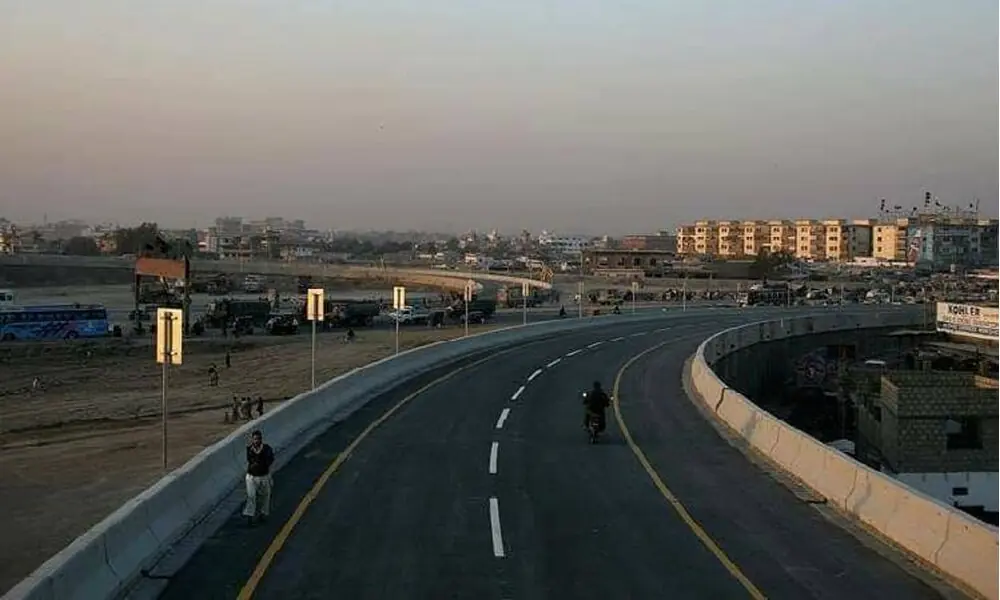
ISLAMABAD: A parliamentary panel on Tuesday expressed concerns over the Korean Exim Bank’s estimated Rs164 billion cost for the Lyari Elevated Freight Corridor (LEFC), asking the government to execute the project using its own funds.
The issue came up for discussion during a meeting of the National Assembly’s Standing Committee on Economic Affairs Division.
Emphasizing on the strategic significance of LEFC for national logistics and economic development, the parliament body stressed that the project should be undertaken through inclusion in the Public Sector Development Programme (PSDP), which seems to be the most appropriate and cost-effective financing mechanism.
During the briefing, the Committee was informed that the Korean Exim Bank had proposed financing the project at an estimated construction cost of Rs. 164 billion, while the National Highway Authority (NHA) had assessed the project’s construction cost at Rs. 88.6 billion under a locally executed model.
READ MORE: Lyari Elevated Freight Corridor not financially feasible: NHA
Although the Korean Exim Bank offered a loan for a period of 40 years at an interest rate of one percent, the Committee observed that the PSDP financing would better serve national interests by minimizing overall project cost and long-term fiscal liabilities.
The panel noted that the economic potential of the Lyari Elevated Freight Corridor is substantial, as the project would enhance freight mobility, reduce traffic congestion in Karachi, optimize the utilization of Karachi Port Trust, and make a significant contribution to national trade and economic growth.
It was further apprised that the Korean Exim Bank’s proposed model involves a heavier and more expensive design, including the construction of imported steel bridges. The estimated cost of these steel bridges alone was reported to be Rs. 61 billion. In contrast, the NHA has the technical capability to construct comparable bridges using concrete at an estimated cost of Rs. 23 billion, resulting in considerable savings to the national exchequer.
In view of the above, the Committee recommended that the LEFC project be executed through PSDP using a cost-efficient, indigenous design, ensuring optimal utilization of local resources, reduction in project cost, and protection of public funds, while advancing the country’s long-term economic and infrastructure objectives. The committee further suggested that through PSDP the cost can be divided into three years with approximately Rs. 40 billion each year to build the corridor.
The Standing Committee was briefed on the progress of the Central Asia Regional Economic Cooperation (CAREC) programme being financed by the Asian Development Bank (ADB). The Committee was informed that the progress on Tranche-I and Tranche-II has been commendable, while Tranche-III is currently under implementation. It was further apprised that Tranche-IV has not yet been initiated, as its commencement is contingent upon the completion of Tranche-III.
The NA body was informed that delays in Tranche-III were mainly due to land acquisition issues, procedural delays, and inefficiencies in contract awards and procurement processes. Taking serious notice of the slow pace of work, the Committee expressed grave concern over the delay in completion of Tranche-III and emphasized that such delays adversely affect the overall timeline and intended outcomes of the CAREC programme. The Committee strongly recommended that all outstanding issues be resolved on a priority basis and that implementation of Tranche-III be expedited to achieve the desired objectives.
The panel was also briefed on infrastructure projects being financed by the World Bank. In this context, it was informed that the Khyber Pass Economic Corridor Project is currently at the design stage; however, progress has been delayed due to procedural issues. The Committee noted the strategic importance of the project, as it aims to enhance connectivity between Pakistan and Afghanistan, reduce travel time and logistics costs, and promote regional trade.
READ MORE: KMC initiates Karachi road rehabilitation programme worth Rs5.54bn
Furthermore, the committee was apprised of the Karachi Mobility Project, which seeks to improve urban mobility. The Committee acknowledged the significance of the project in addressing the growing transportation needs of the metropolitan city.
The committee emphasized the need for timely execution of all donor-funded projects and recommended that the concerned authorities ensure effective coordination, streamlined procedures, and robust monitoring mechanisms to avoid delays and to maximize the socio-economic benefits of these initiatives.
Copyright Business Recorder, 2026













Comments
Comments are closed for this article.