


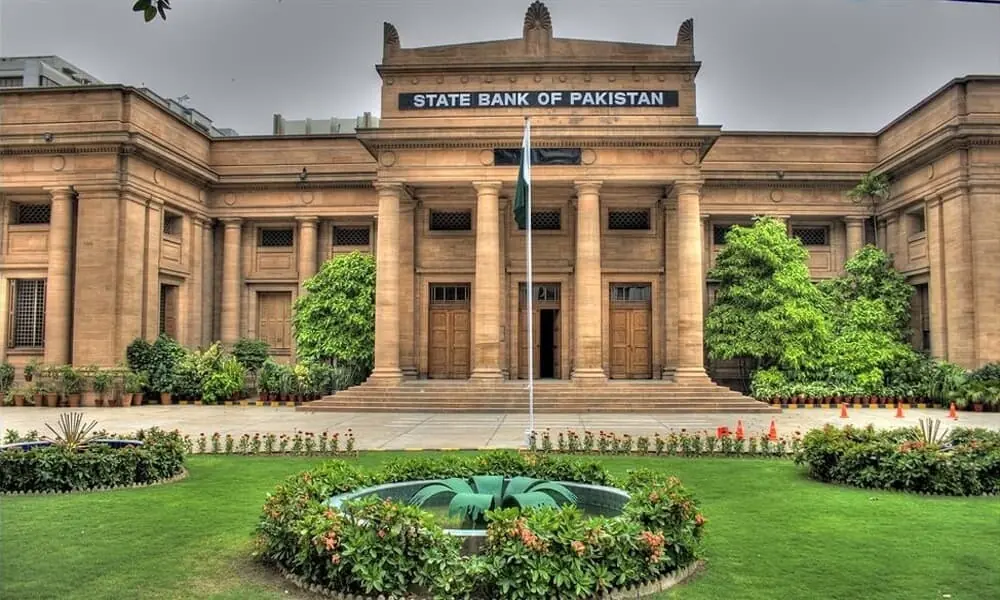

KARACHI: Despite clear signs of improving macroeconomic stability, Pakistan’s economic outlook remains vulnerable to a range of domestic and external risks, the State Bank of Pakistan (SBP) said on Monday, calling for sustained policy discipline and deep structural reforms.
In its monetary policy report, issued on Monday, highlighting risks to Pakistan’s economic outlook, the SBP stressed that deep structural reforms are essential to strengthen economic resilience and sustain higher, inclusive growth.
The SBP has underscored the need to boost productivity and exports, broaden the tax base, and address long-standing inefficiencies in the public and energy sectors to support a more durable economic recovery.
As part of continuing efforts to improve its communications with external stakeholders and to bring more transparency to monetary policy decision-making, the SBP released has its bi-annual Monetary Policy Report (MPR).
READ MORE: SBP holds policy rate at 10.5% in first 2026 MPC meeting
The report reviews macroeconomic developments and outlook that guided the Monetary Policy Committee’s (MPC) decisions since the publication of the August 2025 MPR.
According to Report, Pakistan’s near-term economic outlook remains on an improving trajectory, with inflation expected to stabilize within the medium-term target range of 5-7 percent during most of FY26 and FY27, current account deficit expected to remain range bound in line with earlier expectations of 0.-1 percent of GDP in FY26, and economic activity picking up at a faster than anticipated pace. This qualitative and consistent improvement in the economic outlook is driven by steadfast implementation of prudent monetary and fiscal policies.
However, the future macroeconomic trajectory presented in this report remains susceptible to multiple evolving short- and medium-terms risks emanating from both external and domestic sources.
The MPR also underscored evolving risks to the macroeconomic outlook. While risk of widespread impact from the recent floods have receded, uncertainty from global tariff-related developments persists, alongside volatility in global commodity prices.
Domestically, challenges from below-target revenue collection and impact of potential adverse climate events remain sources of vulnerability for the outlooks of inflation, external account and GDP growth.
In this context, it is important to speed up the progress on structural reforms to increase the economy’s resilience to adverse shocks, and to improve productivity and plug losses of state-owned enterprises.
Presently, the SBP said that, continued fiscal discipline, adequately positive real interest rates on a forward-looking basis, and improved FX reserves have helped strengthen the overall buffers and reduced the country’s vulnerability to shocks over the short term. “However, over the medium term, sustained progress on structural reforms for enhancing productivity, diversifying export base and export markets, broadening the tax base, addressing inefficiencies in the public sector, reforming the energy sector, and deepening the financial system, will be critical to improving economic resilience and supporting higher, sustainable, and inclusive economic growth”, the report said.
On the external front, while global commodity prices have turned out more favourably than anticipated in the previous report, volatility in these prices remains a key headwind for the macroeconomic outlook. The pass-through of global fuel prices to domestic energy prices can impact the outlook for inflation and economic growth.
Furthermore, Pakistan’s export earnings face mounting pressures from weak global prices, including persistently low rice prices, border disruptions with Afghanistan, subdued global demand due to trade tensions, and intensified competition in key markets. These factors could dampen export volumes and weigh on industrial output, especially in export-oriented sectors.
The SBP noted that Pakistan’s low export-to-GDP ratio, narrow export base, weak investment, limited access to finance, and inconsistent tax and trade policies remain key structural constraints on growth.
Addressing these weaknesses is critical to shifting the economy toward an investment- and export-led model, with recent cuts in industrial power tariffs and a 300-bps reduction in export refinance rates expected to support private sector credit and exporters.
The current account deficit is projected to remain contained at 0-1 percent of GDP in FY26, with a higher trade deficit partly expected to be offset by robust workers’ remittances and planned official inflows. As a result, SBP’s FX reserves are expected to rise to USD18 billion by June 2026 and increase further in FY27, reaching close to 3-months of import cover.
Economic activity has also strengthened, amidst ongoing macroeconomic stabilization, ease in financial conditions, and the recent reduction in the Cash Reserve Requirement to 5 percent.
Accordingly, economic growth prospects have improved, and real GDP growth is now projected in the range of 3.75-4.75 percent for FY26, and growth is expected to increase further in FY27.
Copyright Business Recorder, 2026
















Comments