


IMF programme: Country committed to achieving 1.6pc of GDP surplus: Aurangzeb
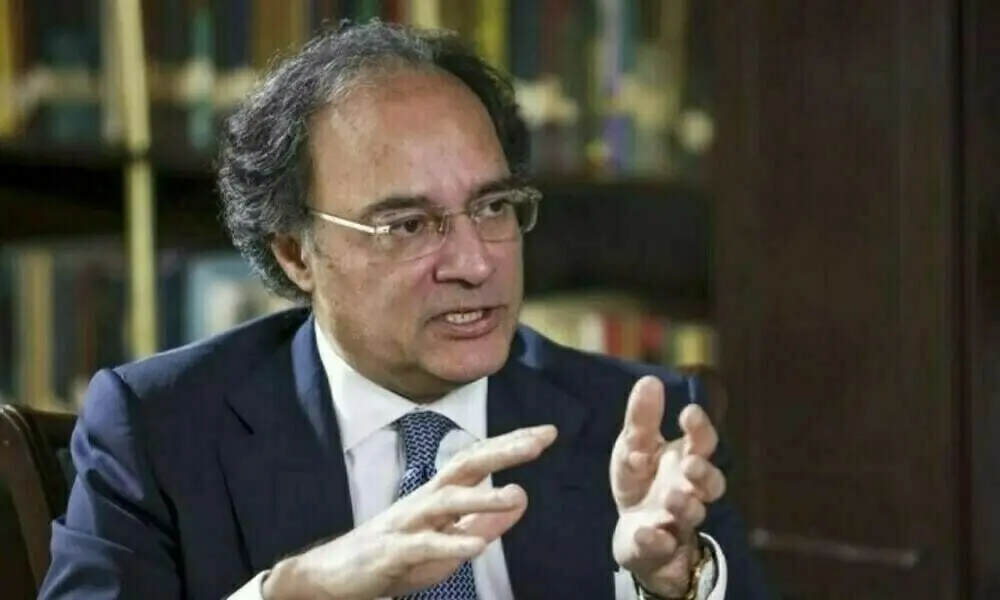

ISLAMABAD: Federal Minister for Finance and Revenue Muhammad Aurangzeb on Monday reaffirmed Pakistan’s commitment to achieving a general government primary surplus of 1.6 percent of Gross Domestic Product (GDP) under the International Monetary Fund (IMF) programme.
In a written response to a questions asked by lawmakers in National Assembly, the minister outlined the fiscal measures being adopted to meet this target.
He explained that the recent fiscal and revenue policies are shaped by the country’s budgetary needs, including debt servicing, defence, social protection, development priorities, and other essential public services.
READ MORE: DAVOS 26: Exports and productive use of debt key to economic growth, says Aurangzeb
He noted that the government’s revenue measures are designed to ensure fiscal balance and long-term sustainability, in line with national priorities.
These efforts, he emphasised, are consistent with the macroeconomic framework agreed under the IMF-supported programme, which seeks to restore stability and strengthen public finances.
While the IMF programme sets broad fiscal objectives, the minister clarified that the composition and sequencing of revenue measures remain within the sovereign discretion of the Pakistani government. “This allows the government to adapt measures based on local economic conditions, distributional needs, and administrative feasibility.”
Aurangzeb further stated that the IMF’s conditions include a focus on controlling expenditures while ensuring social protection spending is safeguarded. “Specifically, power subsidies will be contained at Rs893 billion, 0.7 percent of GDP, reflecting the reduction in the target on Circular Debt accumulation. There are commitments of not allowing fuel subsidies and cross subsidies. Similarly, it has been committed by provinces not to give subsidies on electricity and gas bills.”
Additionally, he said the disbursement of subsidies and other expenditures is being carefully managed through a quarterly release strategy and austerity measures to achieve the Primary Surplus target set by the IMF.
The minister emphasised that Pakistan’s commitment, as outlined in the Memorandum of Economic and Financial Policies (MEFP) is to maintain a primary surplus of 1.6-2.0 percent of GDP over the medium term. This target is crucial for reducing public debt, creating fiscal space for social protection, climate resilience, and growth-enhancing investments.
He added that the government expects these measures to contribute to macroeconomic stability, reduce financing pressures, boost revenue mobilisation, and enhance investor confidence. In a separate written response, Minister for Commerce Jam Kamal Khan reported a 9 percent decline in Pakistan’s exports to China during the first half of the 2025-26 fiscal.
Meanwhile, exports to the European Union saw a modest dip of 0.7 percent. However, exports to the UAE showed positive growth, increasing from USD1.654 billion to USD1.747 billion in the last financial year.
Copyright Business Recorder, 2026




















Comments
Comments are closed for this article.