


Pakistan govt may approach IMF to reduce rate of taxes on businesses, Arif Habib says
- Habib says cumulative taxes on businesses go up to 62-65%
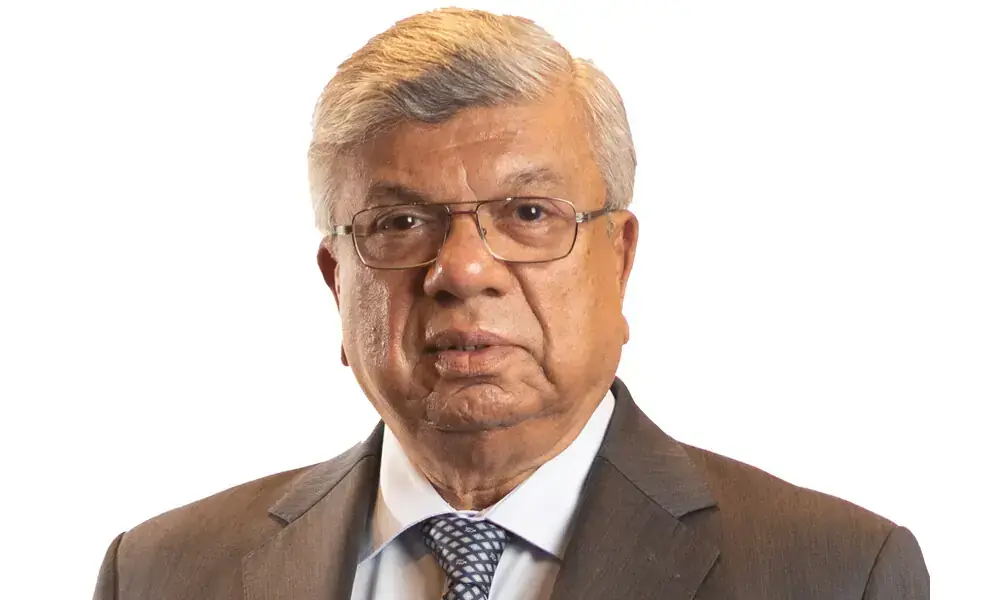

A leading businessman in the consortium that acquired 75% stakes in the Pakistan International Airlines (PIA) with management control, Arif Habib has said that the government is likely to approach the International Monetary Fund (IMF) to reduce the rate of taxes on businesses, aiming to create an enabling environment to attract local and foreign investment in the domestic economy.
Speaking at a panel discussion on ‘Why Institutions Matter? The Story of Meezan Bank’ at the 17th Karachi Literature Festival (KLF) on Saturday, he said workings suggested the cumulative rate of taxes on businesses stood “very, very high”, going up to somewhere in the range of 62% to 65%.
Also read: Pakistan needs better manufacturing and export roadmap, urges Privatisation Commission chief
“This is a combination of 29% corporate tax, super tax, inter-corporate dividend tax, dividend tax, and Section 7E tax on income from immovable property. And this is a leading cause of low local and as well as foreign direct investment’s (FDI) inflows into Pakistan’s economy,” he said.
The good news was that there was talk in the government corridors that the country was set to approach the IMF to reduce tax rates, he added.
“I myself have talked to the prime minister and chairman of the Federal Board of Revenue (FBR). They have decided that they will talk to the IMF [to reduce the exorbitant tax rates on businesses],” Habib, who is also the chairman of Arif Habib Limited (AHL), said.
He maintained that the high officials would propose the IMF to reduce the set target for the primary surplus to 1% to create a fiscal space of Rs1.3 trillion. This will offset the tax impact to arise from rate cuts for businesses.
Earlier, the IMF set the primary surplus target at 1.6% of GDP (gross domestic product) for the ongoing fiscal year 2025-26. This was recorded at 3.2% of GDP (or Rs4.105 trillion) for the first six-month (Jul-Dec) of FY26, significantly higher.
This suggests there is a room for reduction in the set target for the primary surplus.
Pakistan is operating under the IMF’s 37-month long Extended Fund Facility (EFF) worth $7 billion a present. The government consults and seeks its recommendations on almost each of its business and economic decisions – particularly on taxation – to run the programme successfully.
“Our corporate tax rate should be reduced to 27% from 29%, inter-corporate dividend tax should be abolished, abolish 7E and bring down the rate of general sales tax (GST) to 15% from 18% at present,” Habib said.
Also read: SBP revises up projection for workers’ remittances to $42bn in FY26
Besides, the reduction in the interest rate on bank financing for businesses and improvement in security were the other measures to be taken to boost confidence of local and foreign investors on the domestic economy. The central bank should bring down its key policy rate into a single digit from 10.5% at present, he stressed.
State Bank of Pakistan (SBP) former governor Dr Ishrat Hussain said the share of Shariah-compliant banks in the industry assets had surged to 24-25% at present from zero around 23 years ago.
Meezan Bank CEO Syed Amir Ali said they were digitalising the Islamic banking. “AI (artificial intelligence) is based on algebra pioneered by Muslim scientists during the golden era Muslim rule in 900-1300 AD.”





















Comments
Comments are closed for this article.