


Revised project: Rs50.374bn NGC telecom & SCADA system upgradation approved
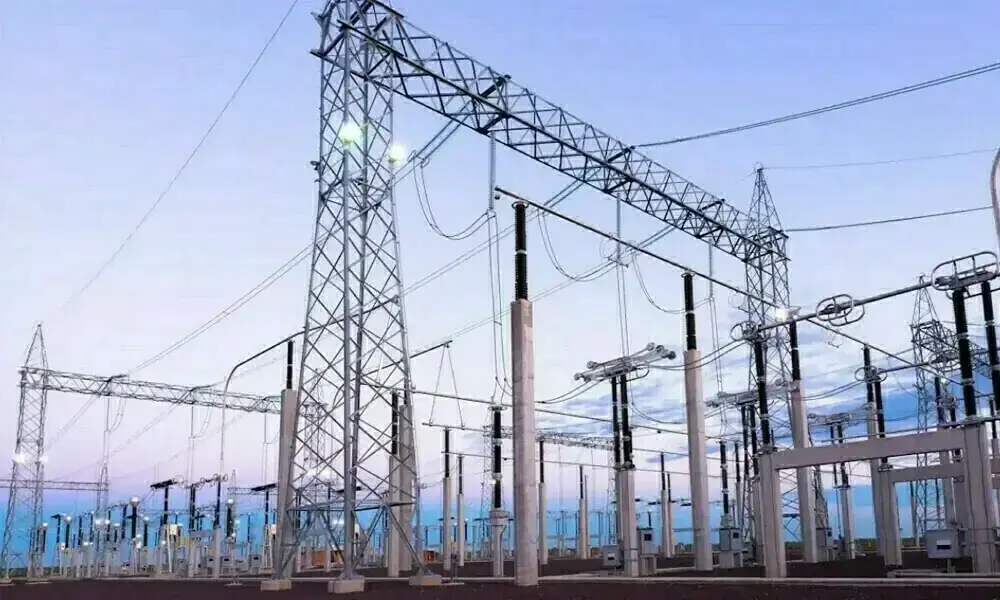

ISLAMABAD: The government has approved the upgradation of the National Grid Company (NGC) telecommunication and SCADA system under a revised project at a total cost of Rs50.374 billion, including a foreign exchange component of Rs43.515 billion, with clear instructions to the Power Division and NGC to strengthen project implementation mechanisms and fast-track execution of transmission and grid projects to avoid cost and time overruns—particularly in high-value foreign-funded schemes.
The project aims at the upgradation of the Load Dispatch System (Phase-III) along with revamping of NTDC’s telecommunication system. It seeks to interface remaining and upcoming power plants and grid stations with the existing load dispatch system while providing enhanced telecommunication facilities across the national grid.
The project scope includes installation of 115 Remote Terminal Units (RTUs) with a new SCADA system, integration of 46 remaining RTUs from LDS-II, deployment of a microwave system at 57 sites as a backup communication mode, live-line installation of 3,675 kilometers of Optical Ground Wire (OPGW), data transportation from 188 SMS meter sites over NTDC’s telecom network, and comprehensive revamping of the telecom infrastructure.
READ MORE: National Grid Company seeks 3% value-added tax exemption on machinery imports
The original PC-1 for the project was approved by the Executive Committee of the National Economic Council (ECNEC) on March 7, 2018, at a total cost of Rs11.638 billion, including a foreign exchange component of Rs8.466 billion.
Subsequently, the Power Division/NGC submitted a revised PC-I, reflecting a cost escalation of 332.8 percent over the originally approved amount.
The Planning Commission’s Energy Wing examined the revised PC-1 and raised several observations regarding the justification of the escalation, citing factors such as changes in project scope, higher equipment costs, increased import duties, exchange rate fluctuations, interest during construction, delayed contract awards, and multiple variation orders.
Additional concerns were raised over the updating of the project’s techno-economic feasibility, detailed engineering design, absence of comprehensive financial and economic analysis, approval by NGC’s Board of Directors, and the company’s capacity in terms of manpower to operate the upgraded system.
The project was discussed at length during the pre-CDWP meeting held on November 19, 2025, where it was decided to return the PC-1 to the Power Division/NGC for revision.
The forum directed that an updated PC-I be resubmitted after addressing the Planning Commission’s observations, incorporating detailed financial and economic analysis, justification of original and additional scope with physical and financial progress, expenditures incurred, reasons for delays, confirmation of financing arrangements with donor and NGC shares, and a comparative cost table of original versus revised scope.
The Project Wing of the Ministry of Planning, Development and Special Initiatives was also tasked with monitoring the project and submitting its recommendations to CDWP.
In compliance with these directives, the Power Division/NGC submitted a modified PC-I, confirming that the Asian Development Bank (ADB) is financing the project to the tune of Rs48.400 billion, while NGC’s share amounts to Rs1.957 billion.
Responding to queries regarding implementation delays, the project director informed the forum that delays were caused by late award of the contract in March 2021 with a 1,095-day completion period from the effective date (July 2021–July 2024), a global shortage of semiconductor chips following the Covid-19 pandemic (six months), non-allocation of microwave spectrum by the Frequency Allocation Board, which delayed manufacturing of microwave equipment until allocation in March 2024 (18 months), provision of bulletproof vehicles for Chinese personnel as per government directives (five months), and floods in the southern region that delayed OPGW live-line installation works (five months).
Regarding cost escalation, the project director stated that the estimated cost increased from Rs11.638 billion to Rs50.374 billion — an increase of Rs38.736 billion — due to changes in scope, higher equipment prices, increased import duties, exchange rate variation, and higher interest during construction.
As the cost increase exceeded the permissible 15 percent limit of the originally approved PC-I, the project was revised and submitted for fresh approval in line with Planning Commission guidelines.
Responding to a query by the Minister for Planning, Development and Special Initiatives, the NGC representative stated that upon completion, the project would ensure full visibility of the national power network, encompassing NTDC stations, Wapda hydropower plants, independent power producers, and wind and solar generation facilities.
The revamped telecom network and OPGW deployment would ensure fibre coverage across the NTDC network, establishment of a backup control centre at Jamshoro, data redundancy through microwave systems and fibre optic rings, and migration of the revenue metering system to NTDC’s telecom network to ensure exclusivity and accuracy.
He further informed that the revised PC-I incorporates key techno-economic elements, including demand forecasts, details of planned grid projects, justification for SCADA and telecom expansion, and updated engineering and economic analyses. Approval of the revised PC-I by NGC’s Board of Directors has also been obtained.
Additional Secretary, Power Division, informed the forum that the project is financially viable and is expected to help prevent power system blackouts. He said substantial savings are anticipated through improved functioning of the National Power Control Centre, enhanced situational awareness, and improved system stability.
While the project’s quantifiable financial benefits cannot be calculated separately, he noted that the SCADA upgrade would significantly enhance system efficiency, reliability, continuity of supply, and enable more economical and optimised power system operations through accurate and timely data.
The chair observed that early completion of the project would significantly improve the functioning of the National Power Control Centre, play a critical role in preventing future nationwide blackouts, and help save the national exchequer.
He recommended the project to ECNEC for consideration, while directing the Power Division and NGC to ensure fast-track implementation of foreign-funded projects in future to avoid cost and time overruns.
Copyright Business Recorder, 2026




















Comments
Comments are closed for this article.