


Supreme Court says all pending death sentence appeals to be decided within 45 days
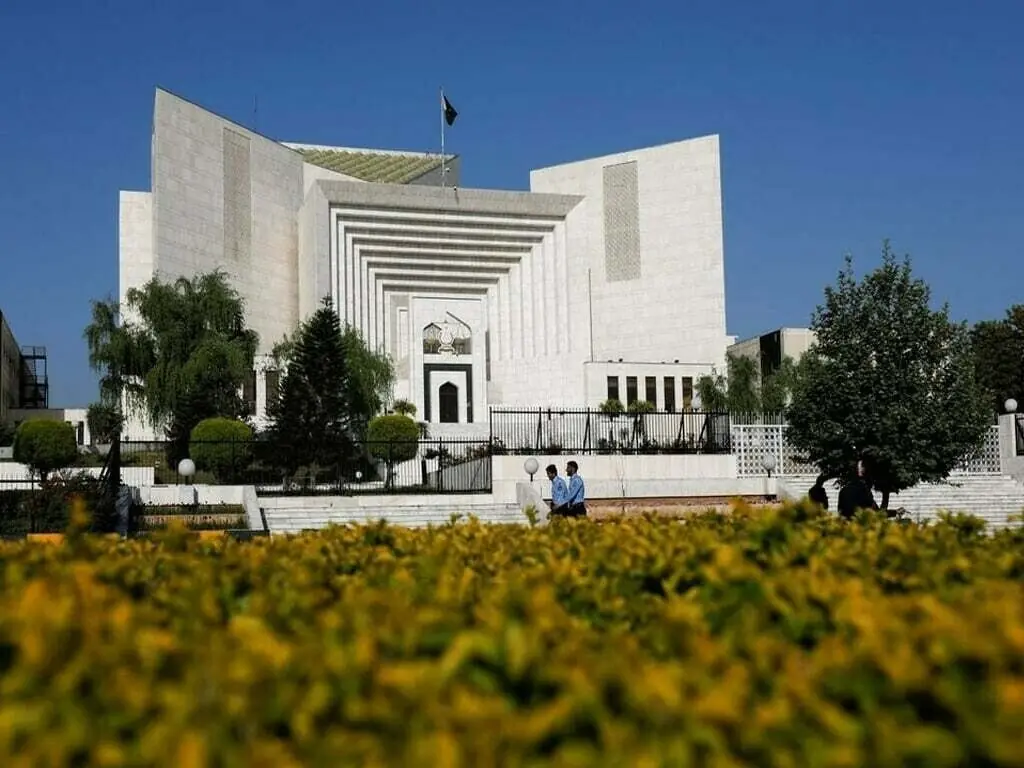

ISLAMABAD: The Supreme Court resolved that all pending death sentence appeals shall be decided within the next 45 days, to ensure timely justice in matters involving the fundamental right to life.
Chief Justice of Pakistan Yahya Afridi on Wednesday chaired the ninth interactive progress review meeting at the Supreme Court of Pakistan to assess monthly progress under the Reform Action Plan (RAP) and to issue directions on pending initiatives and key milestones aimed at modernizing judicial processes, enhancing institutional efficiency, and strengthening public-facing services.
The meeting reviewed the status of jail petitions and death sentence appeals. It noted that at the time of assumption of office by the CJP Yahya Afridi on 26thOctober 2024, the pendency of death sentence cases stood at 384.During this period, 172 new death sentence cases were instituted, while 449 cases were disposed of, therefore as of today, these were reduced to 107 cases. “The meeting resolved that all pending death sentence appeals shall be decided within the next 45 days.”
The meeting was further informed that life imprisonment cases are being fixed simultaneously. The pendency of life sentence cases, which stood at 4,160 on 26thOctober 2024, has been reduced to 3,608 cases. Upon completion of death sentence appeals, the Benches shall proceed to life imprisonment cases, with fixation volume and timelines to be determined separately.
The meeting decided that jail petitions filed by convicts aged 80 years and above shall be fixed on priority, subject to proof, without requiring the filing of an early hearing application, to ensure expeditious, humane, and accessible justice for elderly prisoners.
READ MORE: SC disposes of 238 death sentence cases in 7 months
The meeting examined progress on reducing lead time in case disposal, case categorization, digitization of records, IT integration, digitization of financial receipts and expenditures, audit mechanisms, and public facilitation initiatives.
The Chief Justice, during the meeting, observed that timely and effective adjudication is both a constitutional obligation and a moral responsibility. He reiterated the judiciary’s resolve to promote innovation, collaboration, and inclusivity in building a transparent, modern, and equitable justice system.
The updates on automation, including software enhancements, QR-coded certified copies, E-Courts, capacity-building initiatives on data management and analytics, as well as ADR and mediation programs, were also reviewed.
The chair was informed that tasks relating to e-filing and issuance of certified copies have been completed. Case categorization is underway and is expected to be finalized within two months, while the bar-coding system for tracking files will be completed within the next 15 days.
With regard to delisting of cases, it was apprised that intimation shall ordinarily be conveyed at least forty-eight hours prior to the fixed date, and advocates shall ensure timely communication to the parties. Where delisting occurs within twenty-four hours, cases shall, except on Fridays, be redistributed or re-fixed before other available Benches. Where redistribution is not feasible, such cases shall be fixed in the following week in accordance with the approved policy.
The meeting further decided that early hearing applications meeting the approved eight-point criteria and accompanied by complete supporting documents shall be fixed directly without further follow-up. The fixation process shall be further strengthened through the issuance of a proposed cause list one month in advance.
It was noted that digitization of records has largely been completed, the Public Facilitation Center is fully functional, and ADR, mediation, and e-payment initiatives are underway. Standardization and quality assurance processes are scheduled for completion by 30 August 2026.
The meeting was attended by the President and Secretary of the Supreme Court Bar Association, the Registrar Supreme Court, IT Advisor Hamayun Zafar, Section Heads of the Supreme Court, the Director General of the Federal Judicial Academy, and the Secretary, Law and Justice Commission of Pakistan (LJCP).
Copyright Business Recorder, 2026


























Comments
Comments are closed for this article.