


Pakistan’s remittance illusion: Why diaspora dollars are financing consumption, not development

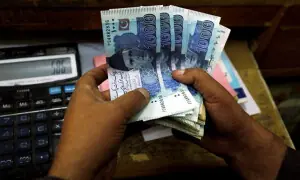
Pakistan is once again celebrating rising remittances. Overseas Pakistanis are expected to send home more than $41 billion this year — a sum that now rivals the country’s total export earnings and almost equals the annual trade deficit. In official narratives, this is presented as a sign of strength. In reality, it is a warning.
Remittances do not reflect economic vitality. They reflect sacrifice. They represent millions of Pakistanis who have left their homes, families, and often their professional identities behind in order to earn abroad and support those they left behind. That flow of money has become the backbone of Pakistan’s external account. But the way it is being used reveals something deeply troubling about the country’s economic priorities.
Pakistan’s import bill has risen sharply over the past year, crossing $64 billion, while exports have slipped to around $31 billion, pushing the trade deficit close to $35 billion. This gap has not been closed by a surge in industrial exports, nor by foreign direct investment, which remains modest at roughly $2–2.5 billion a year. It has been closed by remittances.
In effect, Pakistan’s economy is now being stabilised by the savings of its migrants. There is nothing wrong with that — until one asks how that money is being used.
Instead of being channelled into new export industries, technology upgrading, industrial clusters, or manufacturing capacity, much of this foreign exchange has gone into imports for consumption. Vehicle imports alone jumped dramatically last year, reaching more than $3 billion in the first eleven months, with dozens of new models entering the market. Fuel imports also absorbed large sums. These purchases may boost short-term demand, but they create no lasting productive capacity.
This is not how development works. A country cannot build prosperity by importing what it consumes and exporting its workforce. Yet, that is exactly what Pakistan is doing.
The missing investment ecosystem:
Pakistan often speaks about the private sector as the “engine of growth”. But an engine requires fuel, infrastructure, and direction. The reality is that Pakistan has not created a credible ecosystem in which private capital — whether domestic, foreign, or diaspora — can be deployed productively.
The architecture of the State:
Pakistan maintains a large and expensive public sector devoted to trade, investment and diplomacy. There is a Board of Investment housed in prestigious offices. There is a Commerce Ministry with trade missions across the world. There are embassies, commercial counsellors, investment conferences, and roadshows. There are delegations flying business class across continents, staying in five-star hotels, attending forums, and signing memorandums.
But what is the cost-benefit analysis of this apparatus? How much public money is spent every year on these institutions, their offices, fleets, protocol, travel and staff — and what does Pakistan get in return? Foreign direct investment remains small. Export growth remains weak. Industrial relocation into Pakistan remains negligible. New manufacturing clusters remain absent.
At the same time, overseas Pakistanis — who collectively send more foreign exchange than all exporters combined — are offered no serious institutional framework to invest productively back home. There are no large-scale, transparent, professionally governed diaspora industrial parks. There are no export-linked diaspora bonds tied to factories. There are no special manufacturing zones designed specifically to absorb diaspora capital and know-how. There is no credible one-window mechanism that protects their investments from bureaucratic harassment, regulatory chaos, and political risk.
Stark contradiction:
Pakistan spends heavily to attract a few billion dollars of foreign investment, yet provides almost no structured pathway for the $40-plus billion sent each year by its own citizens abroad.
A consumption-driven external account:
The result is an economy that uses remittances not to transform itself, but to postpone reform. High-cost electricity from distorted power purchase agreements continues to cripple industry. Complex and punitive taxation continues to discourage formal investment. Exporters remain squeezed between high energy prices, volatile exchange rates, and inconsistent policy. Yet instead of fixing these bottlenecks, the State relies on diaspora inflows to keep imports flowing and the balance of payments afloat. This is a dangerous equilibrium.
Remittances are not capital. They do not build factories. They do not create supply chains. They do not generate export momentum. They simply provide foreign exchange that allows the country to keep buying what it does not produce. And as long as that cushion exists, the urgency to undertake difficult structural reforms weakens.
Even the government’s own statements acknowledge this reality. The finance minister has publicly conceded that high taxes and energy costs are driving some firms out of Pakistan. He has spoken about reforms in the tax authority and the energy sector. He has pointed to new investors entering and to stock market activity. But the core numbers tell a different story: exports are stagnant, industrial investment is limited, and the economy remains trapped in low-growth stabilisation. However, stabilisation without transformation is simply stagnation by another name.
The diaspora paradox:
There is a deeper injustice at the heart of this model. Every remittance represents trust — trust that the country left behind will use that money wisely. Yet what do overseas Pakistanis see when they look back? They see expensive government convoys on congested roads. They see ministries housed in gleaming buildings. They see official travel, conferences, and diplomatic pageantry. They see imported official vehicles and protocol culture. They see an energy sector that rewards inefficiency. They do not see factories rising, exports surging, or jobs being created at scale.
In practice, the diaspora is financing an unreformed State. This is not sustainable. Remittances are not guaranteed. They depend on the economic fortunes of host countries, immigration policies, and the personal circumstances of migrant workers. More importantly, they depend on confidence — confidence that the country they are supporting is moving forward. If that confidence erodes, so will the flows.
A different way forward
Pakistan appears trapped in a false comfort: as long as remittances arrive, the crisis can be managed. But that is not development; it is dependence. What Pakistan needs is not more celebratory headlines about record remittances, but a serious national conversation about how to convert diaspora sacrifice into productive national capital. That means:
-
energy reform that makes manufacturing viable
-
tax reform that rewards production rather than penalising it
-
export-linked industrial policy
-
and, most importantly, a credible institutional framework for diaspora investment
Until then, the country will continue to live off the earnings of those who left, rather than creating opportunities for those who stayed.
Remittances have kept Pakistan afloat. But unless they are transformed into factories, exports and jobs, they will never make it prosperous.
And a nation that survives on the labour of its migrants without building an economy at home is not developing — it is drifting. A nation cannot outsource its economic survival to its emigrants forever.
Copyright Business Recorder, 2026
The writer is a former Add. Secretary-Executive Director General Board of Investment, Prime Minister’s Office, with extensive experience in investment policy, public governance, and corporate law. Email: [email protected]





















Comments
Comments are closed for this article.