


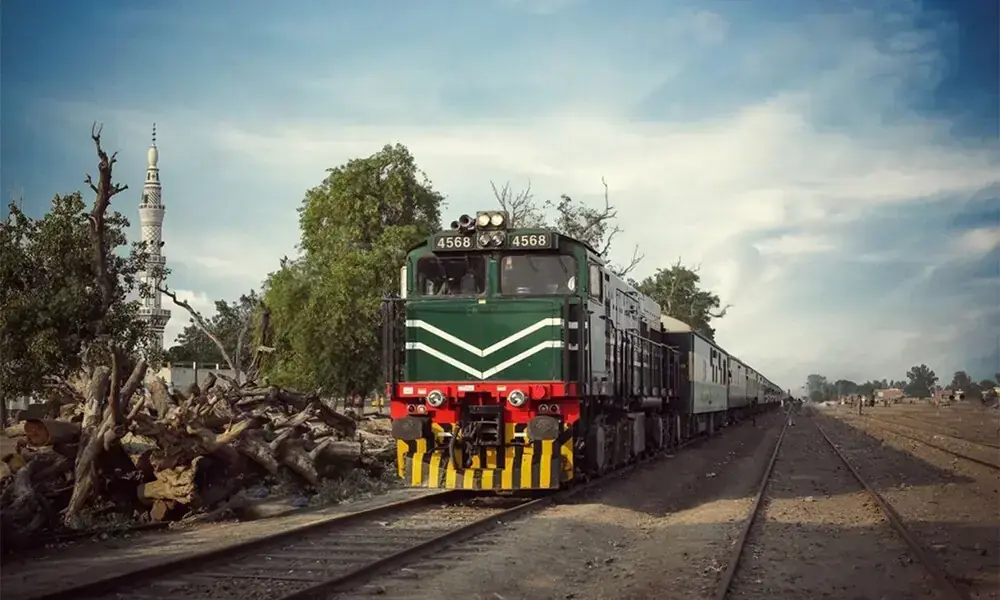
EDITORIAL: The disclosure that 63 percent of Pakistan Railways’ locomotives have exceeded their operational lifespan should have set off alarm bells in Islamabad. Out of 439 operational engines, 275 are overaged, a statistic that explains the daily reality of delays, breakdowns and service disruptions faced by passengers. This is not an isolated operational flaw but the cumulative outcome of years of neglect, deferred investment and weak oversight in one of the country’s most essential public services.
The parliamentary committee’s visible anger over the continued absence of the federal railways minister only deepens that concern. Pakistan Railways has been in decline for decades, and reversing that trajectory demands sustained political ownership.
When the minister responsible does not appear before parliament to answer questions on performance, safety and planning, it sends a damaging signal down the entire chain of command — as has been the case in too many government departments for far too long. Institutions do not repair themselves in a vacuum. Leadership matters, particularly in a sector this large and this vulnerable.
Railways is not a premium convenience. It is, for millions, the most affordable long-distance transport option available. Daily wage earners, students, lower-income families and traders rely on trains because alternatives are either unsafe or unaffordable. Allowing this system to decay therefore imposes hidden costs on the poorest segments of society.
Every delay, cancellation or mechanical failure translates into lost income, missed opportunities and greater dependence on informal transport networks.
READ MORE: PM calls for bringing railways back on track
Officials have attributed the rise in locomotive failures to the aging fleet, an explanation that is accurate but incomplete. Locomotives do not suddenly become obsolete. They exceed their lifespan because replacement schedules are ignored, procurement is postponed and maintenance budgets are stretched beyond reason; or simply squandered.
The committee was informed that failures have increased compared to previous years because more than 63 percent of locomotives are older than 20 years. That is not a technical surprise. It is the predictable result of institutional drift.
There are, admittedly, some signs of operational improvement. The shortage of passenger coaches that emerged in mid-2025 has reportedly been addressed through better workshop efficiency and restoration of under-repair units. Coach availability has risen from 1,016 in September 2025 to 1,105, marginally above current requirements, and is projected to increase further by mid-2026.
Passenger earnings reached Rs 48.832 billion in FY2024-25, with a 7 percent increase recorded in the first half of the current fiscal year. These figures suggest that demand remains strong and that internal capacity can respond when pressure is applied.
But incremental fixes do not resolve the structural problem. A national rail system cannot function reliably when most of its engines are past their designed service life. The issue of non-functional air-conditioning units in passenger coaches offers another illustration.
Failures have increased because equipment is overaged; replacements are now underway, with 153 units procured and most expected to be installed by March 2026. Necessary as this work is, it reflects a pattern of reactive maintenance rather than planned renewal.
The corrective measures outlined to parliament, improved maintenance practices, better budget allocations, staff training, third-party inspection of materials and technical assistance from original equipment manufacturers, are all sensible. But they are also basic. None of these should be presented as reform breakthroughs. The central question remains unanswered: when will Pakistan Railways begin systematic fleet modernisation on a scale that matches the problem?
That question cannot be separated from accountability. Why were replacement cycles ignored? Why did asset management fall so far behind? Where did past allocations go, and who signed off on postponements that compounded today’s crisis? If restructuring and outsourcing are being considered, they must be evaluated against clear service benchmarks and public interest outcomes. Structural change without investment will simply redistribute dysfunction.
Pakistan Railways has been sliding for too long to be treated with cosmetic fixes. This is a public service that underpins mobility, affordability and national cohesion. The overaged fleet, rising mechanical failures and ministerial absenteeism all point to the same conclusion: neglect has become institutionalised.
Reversing that requires more than committee briefings and partial upgrades. It requires political seriousness, transparent planning and sustained capital investment. Until those are put in place, the railways will remain trapped in managed decline, and the people who depend on them will continue to pay the price.
Copyright Business Recorder, 2026





















Comments
Comments are closed for this article.