


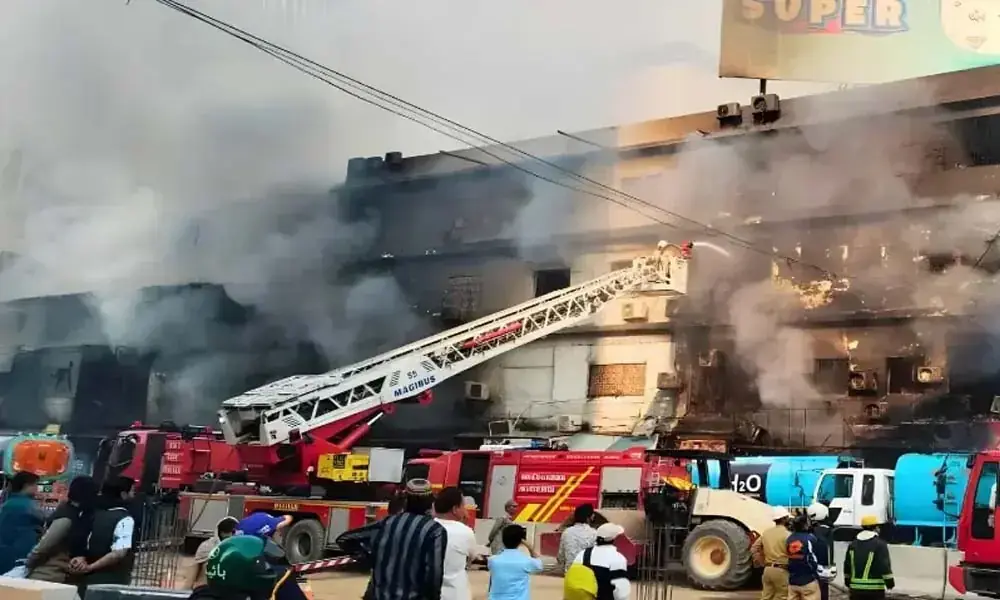
EDITORIAL: The horrific fire at Gul Plaza is a damning indictment of systemic negligence, regulatory failure, and institutional decay in Karachi’s urban governance. What unfolded over those agonising hours—from Saturday night until late Sunday evening—was a human and economic catastrophe that should never have been allowed to happen in a city of Karachi’s size, wealth, and importance.
The most haunting image from this tragedy is not the flames themselves, but the families who stood outside the burning building, praying for loved ones who never emerged. Their grief is compounded by the knowledge that these deaths were preventable. The destruction of more than 1,200 shops also represents the loss of livelihoods, pushing countless families into economic uncertainty and deepening social distress.
At the heart of this disaster lies a profound failure of prevention. Fires, especially in congested commercial centres, are not unforeseeable events; they are known risks that demand planning, enforcement, and preparedness. Yet Gul Plaza, like countless other buildings in the city, appears to have operated in blatant violation of basic safety norms. The absence of functional fire escapes, despite legal requirements, reflects a regulatory culture in which compliance is optional and enforcement weak or compromised. When authorities charged with protecting public safety fail to ensure compliance, disasters cease to be accidents—they become inevitabilities. Equally disturbing is the role of poor urban planning and unchecked commercial development. The narrow, overcrowded streets leading to Gul Plaza, which prevented fire engines from being properly positioned, are not the product of chance. They are the outcome of years of unregulated construction, encroachments, and the abdication of responsibility by the Sindh Building Control Authority. In prioritising commercial gain over public safety, regulators have effectively created conditions in which emergency responders are set up to fail before they even arrive at the scene.
READ MORE: Death toll in Karachi’s Gul Plaza fire rises to 28; over 80 still missing
The plight of the fire department exposes another layer of institutional neglect. A megacity of over 20 million people being served by roughly 30 under-resourced fire stations is nothing short of scandalous. Firefighters battling infernos with poorly maintained equipment, inadequate training, low pay, and insufficient water supplies are being asked to perform heroics under impossible conditions. The repeated shortages of water during the Gul Plaza fire—an almost unthinkable scenario—underscore the absence of basic infrastructure, such as a functioning network of fire hydrants. This is not a technical oversight but a failure of governance.
If the Gul Plaza fire is allowed to fade from public memory without accountability and reform, it will be repeated elsewhere. Meaningful change requires more than condolences and inquiries. It demands strict enforcement of building codes, sustained investment in emergency services, professionalisation of fire departments, and an end to the culture of impunity that allows unsafe structures to flourish. Until then, Karachi’s residents will continue to pay with their lives for failures that are neither accidental nor unavoidable.
Copyright Business Recorder, 2026



























Comments
Comments are closed for this article.