



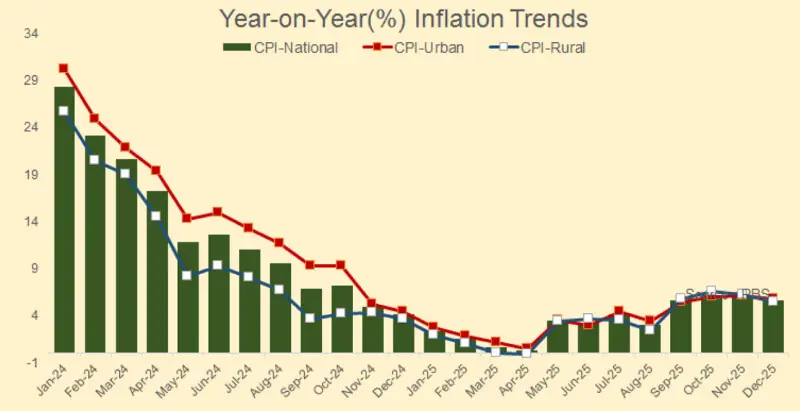
The proof of economic stabilization is in anchoring the inflationary expectations. The headline inflation averaged 3.5 percent in 2025, which is the lowest since 2015. It came a long way from three years of high double digits – peaked at 30.9 percent in 2025 and was at 13.1 percent in 2024 and now below 5 percent.
In CY25, core inflation averaged at 7.9 percent as compared to 13.6 percent in 2024. Hence, the decline is visible in core inflation too.
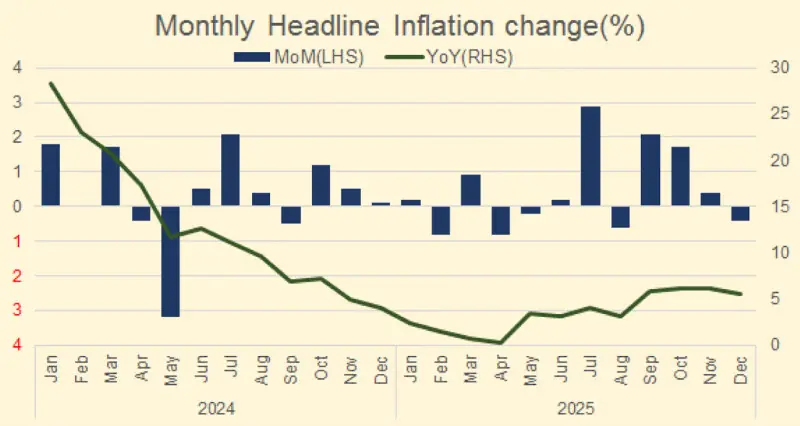
The headline inflation stood at 5.6 percent on Dec 25 to make 1HFY26 CPI at 5.15 percent as compared to 7.22 percent in the same period last year.
The MoM inflation is negative (-0.4%) as food prices (mainly perishable) are falling due to seasonal impact. Then the lower international commodity prices have brought the transportation inflation in negative, as domestic fuel prices are dipping too.
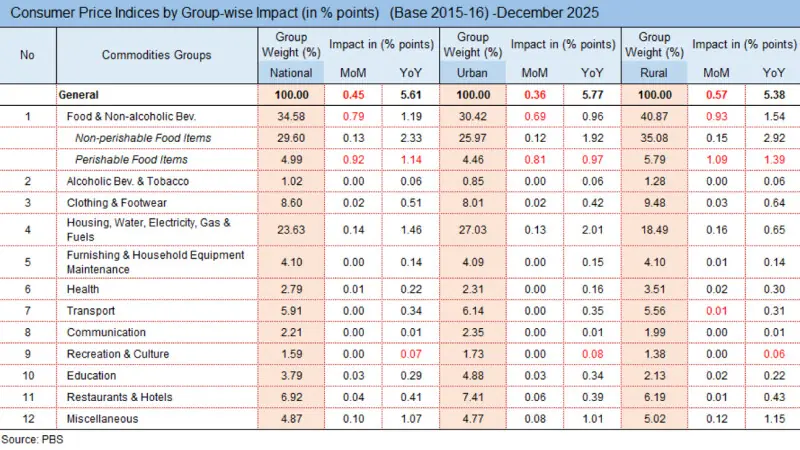
However, the core inflation is not coming down in tandem with the headline – it stood at 6.9 percent (from 6.6% in the previous month) in Urban areas where rural core is more stubborn at 8.1 percent which is slightly lower than previous month’s reading of 8.2 percent. The overall core inflation inched up to 7.4 percent and month on month its up by 0.7 percent. The higher core is due to rising gold prices.
The decline in tomatoes (45.2%), onions (33.0%), fresh vegetables (21.3%) and some other food items is resulting in fall in the monthly inflation number.
The supply chain situation has improved as impact of floods have completely weaned off and typically in December shelf life of perishable items increases and prices move the other way round. That is in play. However, the decline in wheat prices seems to be arrested, as it was up by 3.5 percent from November.
The base effect, purchasing power destruction and tight monetary policy are all in play to bring the inflation down. And the cherry on top is lower oil and it derives prices. The petroleum prices are marginally down and that is helping to arrest food and other inflation too.
Plus, that is resulting in negative FCA in electricity prices which are offsetting the higher QTAs. The lady luck is with the government, as oil prices outlook is bearish and that is to keep the month on month rises tamed.
Having said that, the base effect is to come in play during the 2HFY26, as yearly numbers may creep up, and are likely to be around 7-8 percent. One can safely say that the inflation expectations are anchored. With SBP reserves rising amid low oil prices, SBP may continue to further lower the policy rate. It fell by 50 bps in December and another 50-bps decline cannot be ruled out in January.

























Comments
Comments are closed for this article.