



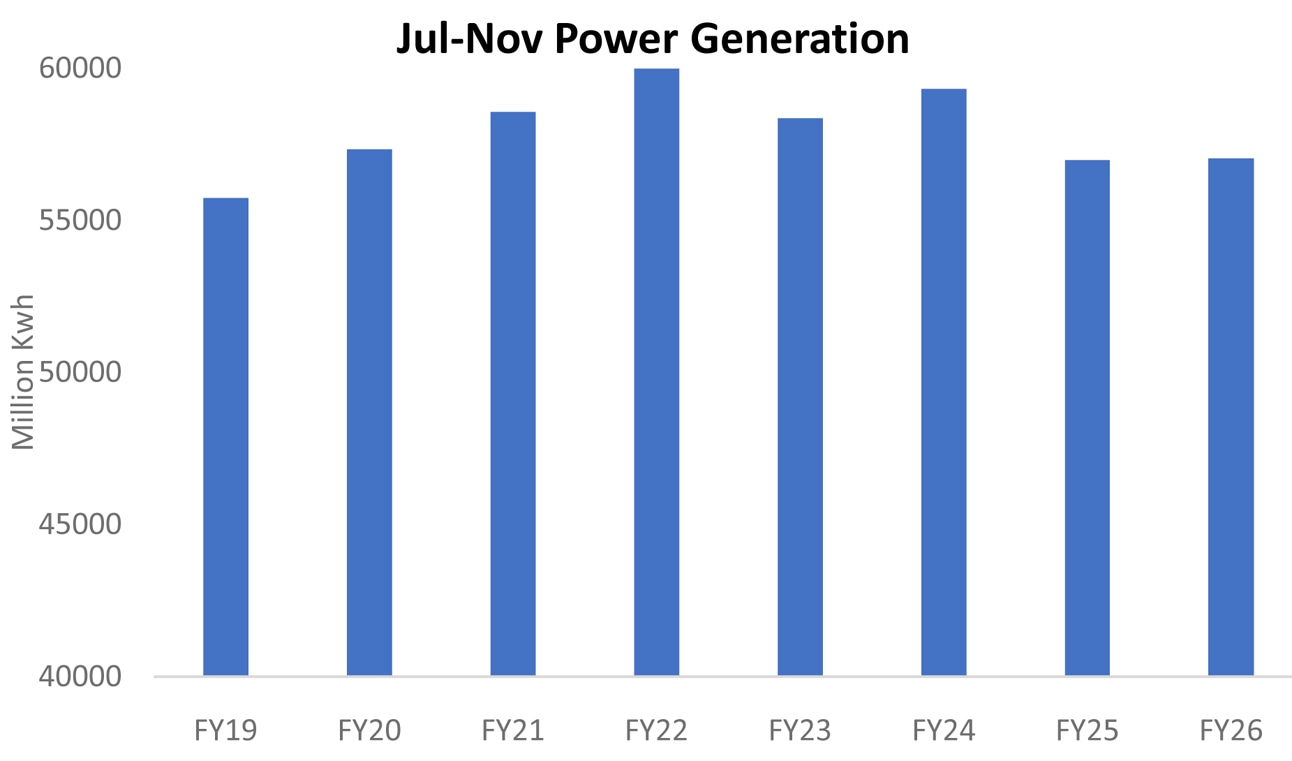
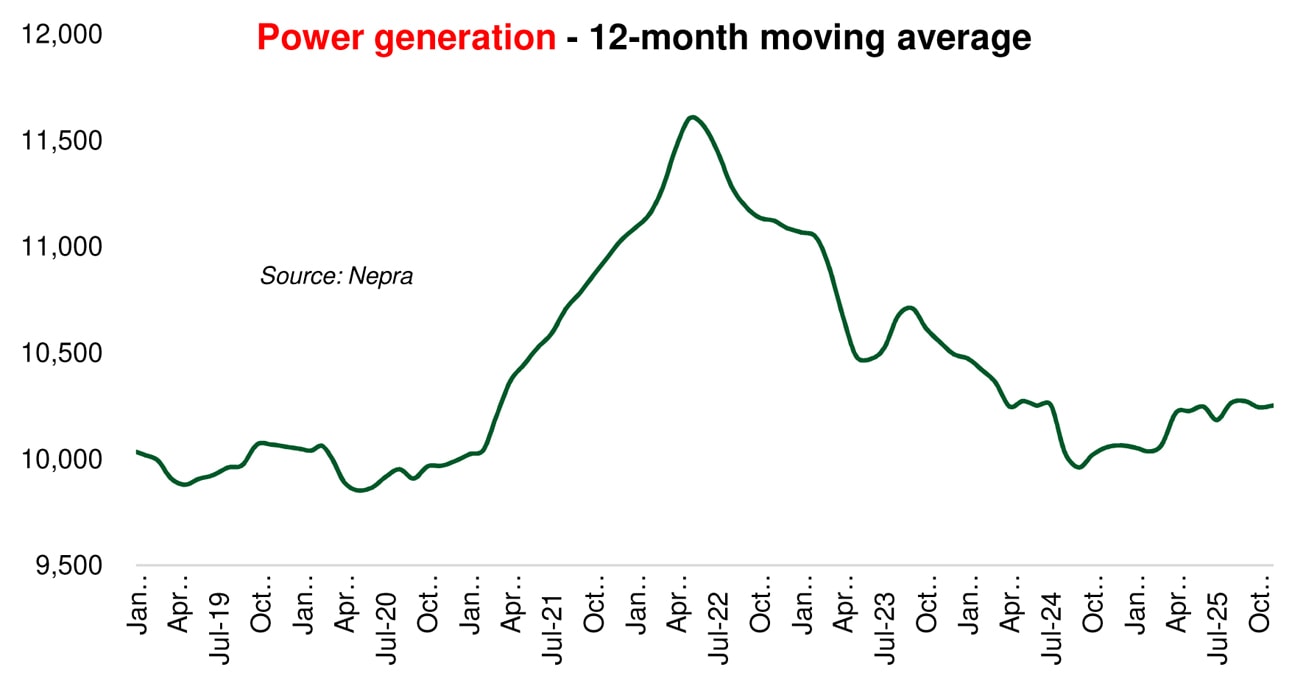
Pakistan’s national grid generated more electricity units in the first five months seven years ago than it did in 2025. Cumulative generation in the first five months of FY19 exceeded that of 5MFY26, as generation in FY26 has barely moved from a year ago and remains nearly 10 percent below the FY22 peak.
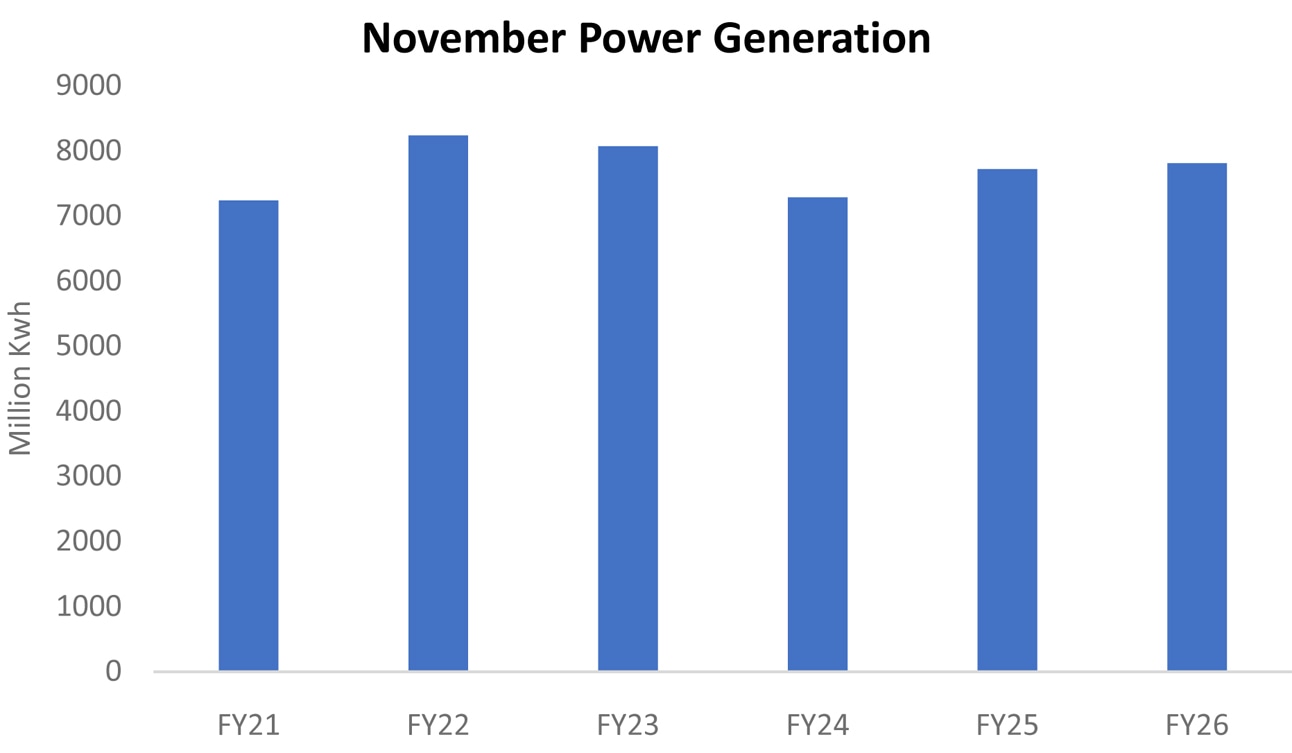
Over the last 16 months, 14 have seen actual grid generation remain below reference generation. The 12 month rolling average power generation stands at 10.2 billion units, a level first reached almost five years ago. November 2025 generation is only 1 percent higher year on year.
Viewed in the context of the ongoing transition of previously captive industrial users back to the grid, which has led to a 35 percent increase in industrial demand from the grid, the data highlight how sharply demand in other categories, mainly domestic and agriculture, has fallen.
While the overall deviation from reference generation is not particularly large, the fuel mix tells a more revealing story.
Natural gas based electricity generation is the second lowest in ten years and the lowest in five years, with a deviation of 38 percent from reference. This is despite the power sector being placed at the top of the gas supply priority list alongside domestic consumers, and despite a sizeable quantity of gas being diverted away from direct captive consumption to be redirected toward the power sector. Had hydel generation not performed significantly better than projected, the deviation in RLNG based generation would have been far higher than the current 63 percent.
Hourly load curves have also altered the grid’s ramping dynamics. As demand spikes after sunset, the burden increasingly falls on RLNG and coal plants, most of which are believed to have relatively faster ramp up capabilities.
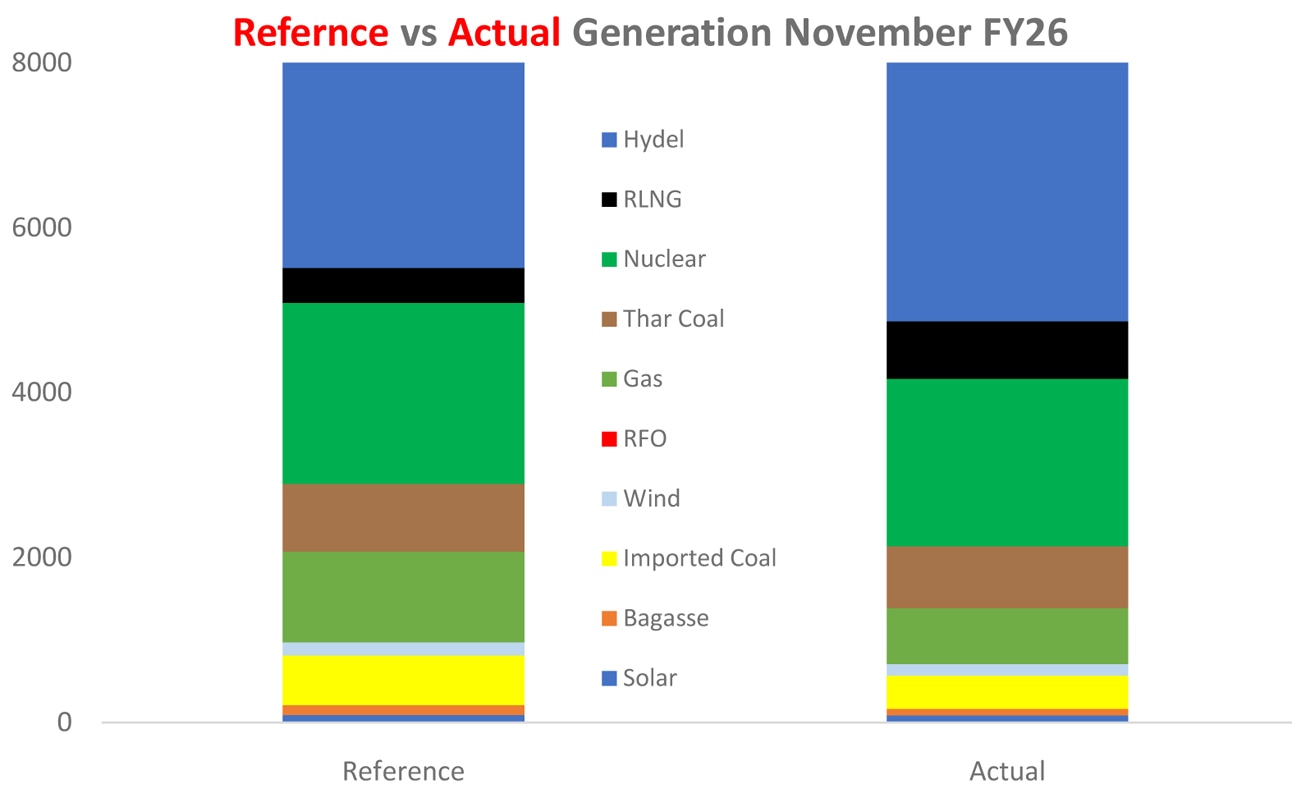
Fuel cost is perhaps the only clear silver lining. November’s fuel cost of Rs48 billion is the lowest recorded for any month in nearly five years. The combined share of hydel and nuclear generation, at 64 percent, is the highest on record and offers the prospect of another round of relief through Fuel Charges Adjustment.
With the incremental power consumption relief package for industry and agriculture now in effect, much depends on its success for grid demand to gain traction.
The industrial response so far has been one of sharp criticism, though this may be bordering on the extreme. With a large number of captive users now back on the grid and incremental consumption priced at a significant discount, momentum in industrial power demand should continue to pick up, all else equal.




















Comments
Comments are closed for this article.