


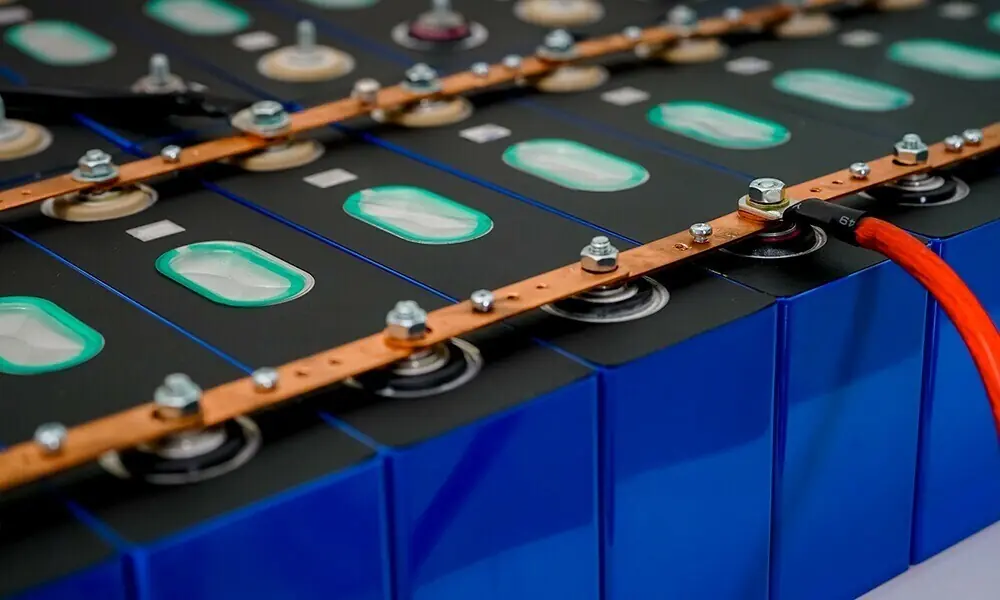

ISLAMABAD: Pakistan is planning to locally produce lithium-ion batteries as the Ministry of Industries and Production has started deliberations with relevant quarters to get the required input ahead of formulating a national policy on the subject.
In this connection, a high-level meeting on the formulation of a Lithium-Ion Battery Policy was held here on Wednesday under the chairmanship of the Special Assistant to the Prime Minister (SAPM) on Industries and Production, Haroon Akhtar Khan, which was also attended by Minister of State for Finance and Railways Bilal Azhar Kayani.
The participants held detailed discussions on promoting local manufacturing of lithium-ion batteries in Pakistan, deciding to form three working groups to consult all stakeholders before finalising the Lithium-Ion Battery Policy. The working groups have been instructed to submit their reports within two weeks.
Pakistan’s lithium battery imports soar, projected to hit 8.75 GWh by 2030: report
The participants of the meeting also include Secretary Industries Saif Anjum, Chief Executive Officer (CEO) of the Engineering Development Board (EDB), Hamad Mansoor, along with representatives from the public and private sectors.
According to the officials of the ministry, the government of Pakistan, as per the National Electric Vehicle (EV) Policy 2025–2030, has planned to convert 30 percent of all vehicles to EVs by 2030, for which, in the past few months the government has announced significant incentives, including subsidies on two-wheelers and three-wheelers, as well as, on electric cars.
In the next five years, the demand for lithium-ion batteries is expected to grow by 26 percent. One of the top global EV producers, China’s BYD, has introduced its various brands in the country and is also going to start local EV production.
Moreover, a few other Chinese EV manufacturers are also entering the Pakistani automobile market; therefore, the government of Pakistan wants to explore untapped lithium-ion batteries. The officials stated that Pakistan has significant lithium-ion resources in parts of Balochistan, Azad Jammu and Kashmir (AJK), Gilgit Baltistan, Khyber Pakhtunkhwa, and the Cholistan Desert.
SAPM Haroon Akhtar Khan stated that, in line with the directives and vision of the current government led by Prime Minister Muhammad Shehbaz Sharif, the government is formulating a comprehensive policy to encourage domestic manufacturing of lithium-ion batteries. He highlighted that currently lithium-ion cells and components are imported and only assembled locally, underscoring the need to develop full-scale manufacturing capacity within the country.
Minister of State Bilal Azhar Kayani emphasised that the adoption of modern technologies would support power conservation, industrial efficiency, and enhanced productivity.
He stressed that the upcoming policy should include concrete measures and incentives to promote local manufacturing. Officials from the Ministry of Commerce informed the meeting that the import of raw materials for lithium-ion batteries is subject to zero tax, while a 12 percent tax is levied on fully assembled batteries.
The Ministry of Science and Technology assured its support in providing facilities for testing, certification, and quality assurance of lithium-ion batteries. SAPM Haroon Akhtar Khan directed all stakeholders to actively contribute their inputs for incorporation in the new policy.
The meeting concluded with a reaffirmation of the government’s commitment to fostering innovation, reducing import dependence, and strengthening Pakistan’s industrial and energy storage ecosystem through localized manufacturing.
Copyright Business Recorder, 2025






















Comments
Comments are closed for this article.