


OPINION: Mineral economic harassment: when state processes become an investor’s biggest risk
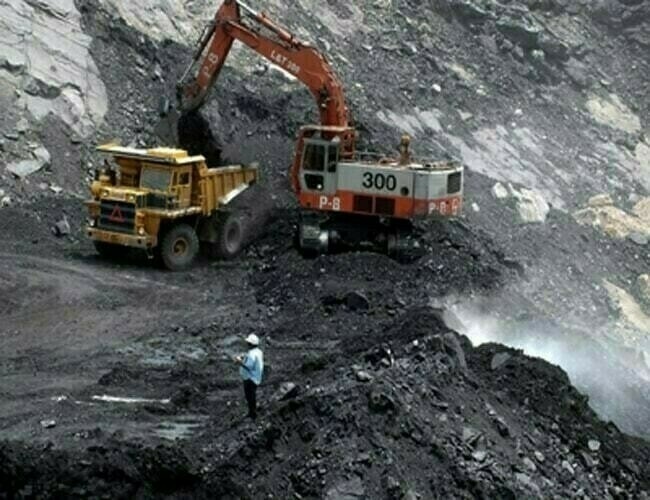

Pakistan’s mineral wealth remains trapped not beneath the earth — but within a governance maze that investors struggle to navigate.
Pakistan sits atop extraordinary geological potential. Copper, gold, chromite, iron ore, and rare earth elements together represent an estimated USD 5–6 trillion in subsoil wealth. Yet, mining contributes less than 1 percent to GDP, and foreign investment in the sector rarely exceeds USD 100 million a year. The gap between potential and performance is not driven by geology or commodity cycles. Increasingly, Pakistan’s real constraint is institutional: a regulatory environment so unpredictable that state processes themselves have become the greatest investor risk.
This reality — best described as mineral economic harassment — has become a structural deterrent. Investors confront delays, shifting requirements, overlapping mandates, and opaque decision-making. These frictions collectively create an uncertainty premium that even long-term, risk-tolerant mining companies struggle to justify.
What mineral economic harassment means?
Mineral economic harassment occurs when administrative or regulatory actions — unsupported by law or technical rationale — obstruct legitimate mining activity. The term does not imply intent; it captures the behaviour of a system where:
• Applications linger without written objection or approval
• Rules are interpreted differently across institutions
• Procedures lack timelines and standardised checklists
• Overlapping land allocations arise due to outdated maps
•Agencies impose requirements outside their statutory mandate
•Technical decisions depend on bureaucratic discretion
Pakistan’s most visible example remains the 2010 refusal to grant Barrick Gold a mining lease despite statutory compliance — a decision that ultimately led to a USD 6 billion arbitration award. Far from an anomaly, the case revealed systemic fractures still embedded across the sector.
A multi-agency governance breakdown
Mineral economic harassment is not the failure of a single institution. It is the product of a fragmented, multi-layered governance structure in which provincial, federal, district, and local actors operate with weak coordination and high discretion.
A typical mining venture must engage with:
•Provincial Mines Departments for licensing, renewals, demarcation, and royalties
• Revenue and district administrations for land records and right-of-way
• Security agencies that issue NOCs without time limits
• Utility providers whose commitments determine project feasibility
• Local governments and landholders who influence on-ground access
• Environmental, wildlife, forest, and irrigation regulators
• Survey of Pakistan and cadastral authorities for mapping
A single large-scale project may require 40–60 separate interactions. In leading mining jurisdictions — Western Australia, Chile, Botswana — comparable processes require 8–12 integrated steps, with guaranteed response times and digital tracking.
This complexity shifts investor focus from geology and operations to procedural navigation. Smaller firms withdraw early; larger firms price the risk — often rendering projects uncompetitive.
How everyday obstacles become structural risks
- Delays without reasoning
Applications remain pending for months or years, with no written explanation. Investors cannot plan, raise financing, or commit capital.
- Overlapping areas and conflicting titles
Outdated cadastral systems and poor inter-agency coordination produce multiple claims on the same land — a major cause of litigation and stalled projects.
- Changing requirements
Conditions never stated at the outset emerge late in the process, disrupting feasibility studies and project timelines.
- Excessive documentation touch points
Rather than one-window facilitation, investors face fragmented, parallel processes across departments, each with its own documentation cycle.
- Local power dynamics
Informal authority — tribal leaders, influential landholders, district actors — shapes access, security, and community approval, often beyond formal rules.
- Unstructured technical demands
Institutions often request extensive technical data but lack the capacity to assess it — while failing to conduct their own evaluations.
- Weak community benefit systems
Absence of clear frameworks for local employment, benefit-sharing, and resettlement exposes investors to local conflict and reputational risk.
The economic cost: from potential to dead capital
Pakistan’s mineral wealth remains “dead capital” — valuable but economically inert — because governance prevents it from being converted into production.
Consider the missed opportunity:
• Copper prices range from USD 9,000–12,000 per ton; global demand may jump 40–60 percent by 2035
• A single major copper project can generate USD 2–3 billion annually in exports
• Chagai’s copper belts alone could yield USD 5–8 billion in annual revenues
Pakistan likely forfeits USD 2–3 billion in unrealised mineral exports every year
• Provinces could earn PKR 300–400 billion annually in royalties and government take
• Each medium-to-large mine generates 3,000–5,000 jobs
• Mining companies also deliver significant CSR benefits, including infrastructure, schools, health, and livelihood programmes
Yet mining investment remains under 0.5 percent of GDP — far below the 5–7 percent typical of resource-driven economies. Pakistan also remains unable to industrialise its mineral base. The absence of predictability discourages investment in smelting, refining, and downstream metals — leaving the country dependent on raw ore exports and imports of higher-value materials.
Global lessons: countries that broke the stalemate
Several countries with weak institutional baselines reformed their mining governance with impressive results:
• Saudi Arabia: Time-bound approvals (15–60 days), full digital cadastre; attracted USD 32 billion in three years.
• Kazakhstan: First-come-first-served licensing with transparent criteria; over 200 new investors.
• Mongolia: Introduced 30-day statutory decision deadlines; mining now contributes ~25 percent to GDP.
• Rwanda: Fully online licensing; among Africa’s fastest-growing tantalum exporters.
• Western Australia: Real-time tracking and world-class facilitation.
Chile and Peru: Stable rules and transparent geology; mining contributes 10–25 percent to GDP.
The universal lesson is clear: predictability outranks incentives.
Why mineral economic harassment persists
• No statutory decision timelines
• Fragmented authority across government tiers
• Understaffed and under-skilled technical departments
• Outdated cadastral systems and paper-based processes
• High discretion, low transparency
• Frequent rule changes
• No grievance or appeal pathways for procedural delays
These factors institutionalise uncertainty — the single greatest enemy of mining investment.
A reform blueprint: from discretion to predictability
• Pakistan needs a governance reset, centred on:
• Statutory, time-bound approvals with deemed-approval clauses
• Unified digital national cadastre to eliminate overlaps
• A legally empowered one-window system covering all agencies
• Written, published reasons for decisions
• Harmonised provincial and federal mineral rules
• Professionalisation of mineral institutions
These are global standards — not competitive advantages.
Conclusion: unlocking Pakistan’s mineral future
Pakistan does not face a geological deficit; it faces a governance deficit. Mineral economic harassment — delays, opacity, overlapping mandates, and discretionary decision-making — has made state processes the primary risk for investors.
If Pakistan aims to compete in the global critical minerals race, it must end procedural gatekeeping and adopt rule-based, predictable governance. Good geology will take the country nowhere without good institutions.
The choice is simple: reform the system — or continue burying national wealth under layers of administrative inertia.
Copyright Business Recorder, 2025
The writer was Additional Secretary/Executive Director Board of Investment




















Comments
Comments are closed for this article.