


OPINION: Pakistan’s emerging lithium market: challenges and opportunities
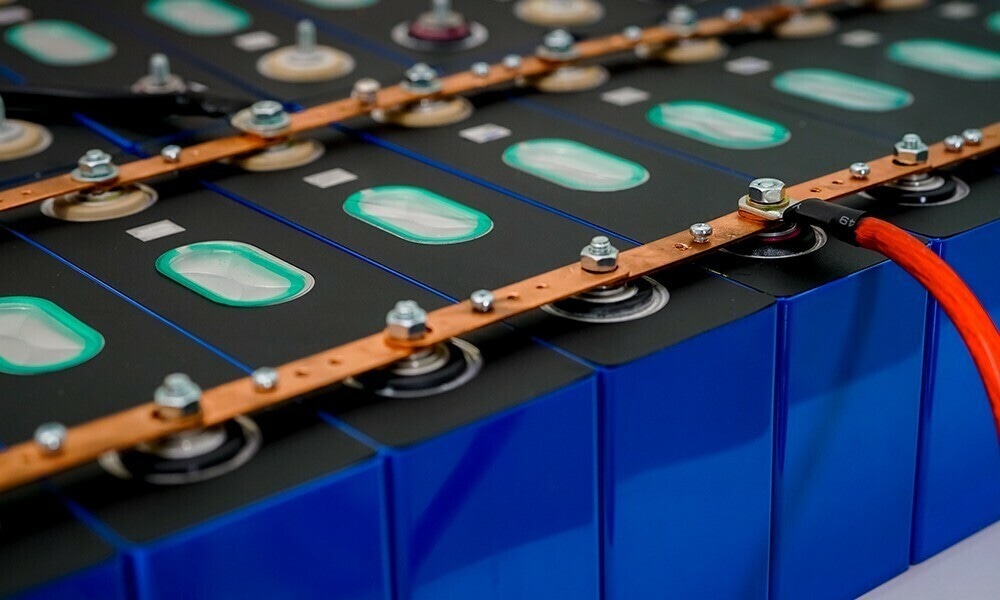

In 2025, Pakistan’s lithium market is marked by a surge in lithium-ion battery imports—primarily from China—driven by rising demand for solar energy storage systems and electric vehicles (EVs). While this import trend is fuelling growth, it has also spurred local manufacturers to diversify into lithium-ion technology.
According to the Institute for Energy Economics and Financial Analysis (IEEFA) of the USA, Pakistan imported about 1.25 gigawatt-hours (GWh) of lithium-ion battery packs in 2024, with an additional 400 megawatt-hours (MWh) arriving during the first two months of 2025.
The report projects that demand could grow to 8.75 GWh—representing about 26 percent of the anticipated national peak demand—by 2030. Pakistan’s National Electric Vehicle (EV) Policy 2025–2030 aims to convert 30 percent of all vehicles to EVs by 2030. With major EV producers such as China’s BYD planning local assembly by 2026, competition for limited battery supplies is expected to intensify.
In this context, it is encouraging that the cooperative framework agreement signed three years ago between the Islamabad-based China–Pakistan Joint Research Centre on Earth Sciences (CPJRC) and Tianqi Lithium Corporation of China is progressing well. Tianqi Lithium, a global leader in lithium development and manufacturing, is collaborating with CPJRC to advance lithium resource research, energy storage systems, and emerging battery technologies in Pakistan.
The partnership focuses on applying lithium in EVs and other energy storage technologies, alongside joint research and patent development to safeguard innovation. Its core objective is to deepen understanding of Pakistan’s lithium reserves and promote their use as raw materials for EV batteries—reducing dependence on imported lithium products.
Lithium, often described as “white gold,” is a strategic metal with wide-ranging industrial uses and promising economic prospects for Pakistan. Substantial lithium deposits have been identified in several regions, including Balochistan (Hamun-e-Mashkel, Chagai District), Gilgit-Baltistan (Shigar Valley and Skardu), Khyber Pakhtunkhwa (Chitral District and Waziristan region), Azad Jammu & Kashmir (Neelum Valley), and the Cholistan–Thar deserts spanning Punjab and Sindh. The Geological Survey of Pakistan is conducting geochemical exploration and feasibility studies in areas such as Chitral, Shigar Valley, and Skardu.
Geological and geochemical mapping is also under way in Dasu and Gilgit to assess lithium and associated metals. In mineral-rich Balochistan, preliminary mining activities have begun in Saindak and Dasht-e-Kun (Dasht-e-Kain) in Chagai District, led by Chinese and Canadian companies exploring copper, gold, silver, and lithium.
Globally, lithium is one of the most sought-after minerals, concentrated in about ten countries. Bolivia holds the largest reserves, though not yet exploited commercially. Global lithium resources are estimated at 105 million tons, with 27.69 million tons classified as proven reserves. Chile leads with 9.30 million tons, followed by Australia (6.20 million tons), Argentina (3.60 million tons), China (3.00 million tons), the United States (1.10 million tons), and Canada (0.93 million tons). Since 2023, significant lithium deposits have also been discovered in India, Iran, and Afghanistan.
According to the United States Geological Survey, global lithium mine production rose sharply to 240,000 tons in 2024 from 146,450 tons in 2023, while consumption remained above 100,000 tons annually. Australia, Chile, and China together accounted for about 75 percent of total output, producing 88,000 tons, 49,000 tons, and 41,000 tons, respectively.
Lithium compounds—including carbonate, oxide, hydroxide, and chloride—are widely used in industrial applications, and global output of lithium carbonate, a key component in lithium-ion batteries, has nearly doubled in five years. After recent volatility, lithium prices stabilized at around USD 40,000 per ton in 2024.
Lithium’s applications are diverse, but its dominant role lies in powering rechargeable batteries for EVs and renewable energy storage systems. It is also essential in electronics, mobile devices, optics, medical equipment, and high-technology sectors such as aerospace and nuclear processes.
Historically used in metallurgy, glass, and pharmaceuticals, lithium now finds growing use in synthetic rubber and advanced industrial materials. The global lithium market, valued at USD 28.08 billion in 2024, is projected to reach USD 55.52 billion by 2032, driven by the global energy transition.
Lithium-ion battery imports in Pakistan have risen sharply, a trend expected to continue as solar and electric mobility solutions expand. Local firms are taking strategic steps into the lithium market: Treet Battery Ltd has partnered with a Chinese company to introduce lithium-ion technology, while Hub Power Company (HUBCO) is exploring lithium reserves and collaborating with a Chinese partner on EV manufacturing. Yet, the market’s expansion faces regulatory and policy gaps.
Pakistan still lacks comprehensive national frameworks for battery recycling, product quality standards, and safe installation practices. High upfront costs of lithium systems restrict adoption among lower-income households, risking an unequal energy transition. With Pakistan’s e-waste collection rate effectively zero, most discarded batteries end up in landfills, posing serious environmental and health hazards.
Since lithium is infinitely recyclable, establishing a lithium-ion battery recycling network is critical for sustainable growth.
Experts also emphasize the need for advanced Battery Energy Storage Systems (BESS) to stabilize the national grid and mitigate load-shedding.
However, bureaucratic delays, unclear governance structures, and overlapping federal–provincial jurisdictions continue to impede progress. To attract investment, Pakistan must establish a transparent regulatory framework, invest in human capital and technological capability, and ensure policy consistency and security. With clear direction and efficient governance, Pakistan’s lithium resources could become a cornerstone of the country’s economic transformation—provided it avoids the pitfalls that have derailed similar projects in the past.
To expedite the development of this critical mineral, the government could integrate lithium exploration and processing within its investment portfolio. Accelerating resource development, processing, and refining would complement national goals of promoting green transportation and renewable energy.
Rapid progress in lithium extraction could reduce Pakistan’s import bill, strengthen energy security, and stimulate industrial growth. The initiative promises wide-ranging benefits—job creation, technological competitiveness, and expanded exports.
Copyright Business Recorder, 2025
The writer is retired Chairman of the State Engineering Corporation and former Chairman of the Institution of Engineers, Pakistan
























Comments
Comments are closed for this article.