


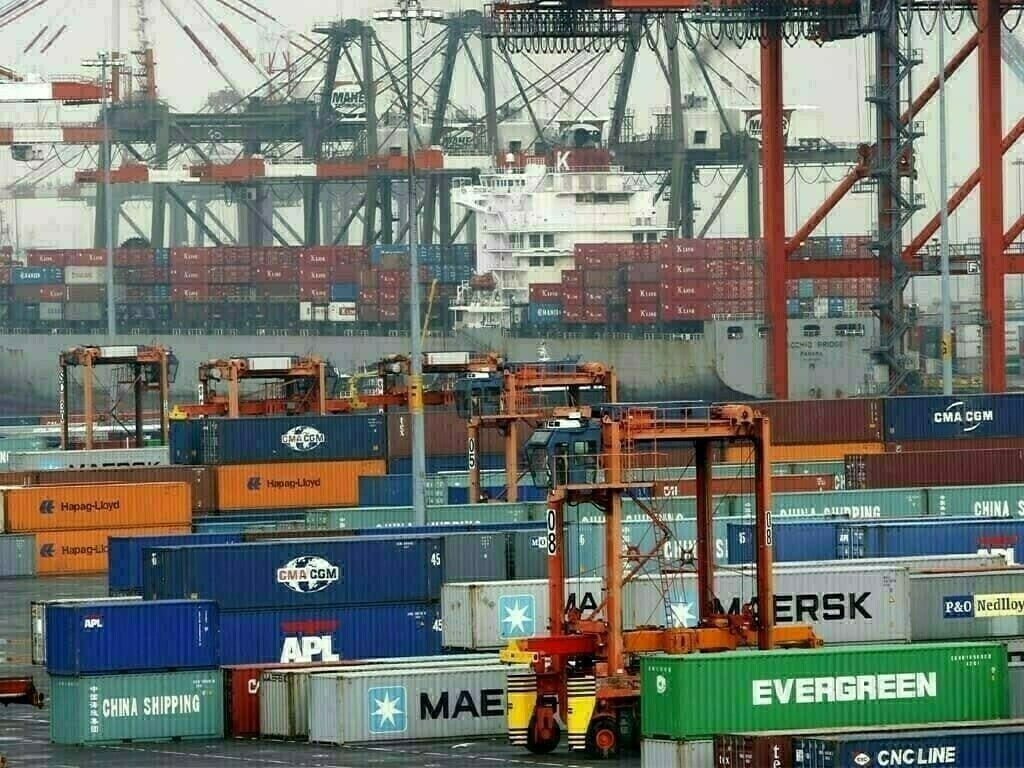
EDITORIAL: Pakistan’s trade deficit is on the rise — from negative USD 11.277 billion July-November 2024 to negative USD 15.469 billion in the same period in 2025 — a rise of a whopping 37.127 percent.
Exports declined by 15.35 percent in November 2025 compared to November 2024 while imports rose by 5.42 percent in November this year compared to the same month last year.
The government had been following a policy of imposing administrative controls on imports, with the International Monetary Fund (IMF) concurrence, but with the pledge that it would remove these controls as the trade balance became positive.
The current year’s data is extremely disturbing and indicates the continuation of a trend that has been the reason behind successive governments’ decision to borrow from the IMF — Pakistan is currently on its twenty-fourth programme — repeatedly highlighted by this newspaper as well as independent economists.
The rationale is as follows: Pakistan’s export sector is heavily reliant on import of raw materials and semi-finished products and any attempt to curtail imports through administrative measures (a policy that has been proactively followed from time to time to deal with a recurrent balance of payment crisis in which a trade deficit as well as external borrowing feature prominently) strengthened the trade balance and the balance of payment but, at the same time, compelled the government to increase its borrowing.
Last fiscal year, the revised estimates showed nearly 55 percent of all current expenditure earmarked for mark-up payments; however, this year’s budgeted amount is about 50 percent, which is based on assumptions of a decline in the discount rate from the current 11 percent, which has yet to be implemented.
Significantly, this boom-bust cycle was acknowledged by the IMF in its 10 October 2024 documents uploaded on its website: “Economic volatility has only increased over time, with a tight correlation between Pakistan’s boom-bust economic outcomes and its macroeconomic policies.
The repeated attempts to boost economic activity through fiscal and monetary stimulus have not translated into durable growth, as domestic demand increased beyond Pakistan’s sustainable capacity, resulting in inflation and depletion of reserves, given a strong political preference for stable exchange rates.”
The Fund’s prescription that is currently being followed is premised on the following analysis: “subsidies have taken the form of low-cost financing and other concessions, which although varied across industries, left financing and taxes net of subsidies more favourable than in peer economies and less-favoured sectors.
The tax system has been extensively used to provide non-transparent support through exemptions for privileged sectors like real estate, agriculture, manufacturing, and energy, as well as, through the proliferation of Special Economic Zones. The government’s intervention in price setting, including for agricultural commodities, fuel products, power, and gas (biannual), combined with high tariff and non-tariff protection tilted the playing field in favour of selected groups or sectors.
Despite all this support, the business sector has failed to become an engine of growth, and the incentives eventually weakened competition and trapped resources in chronically inefficient (including perpetually “infant”) industries.” This analysis cannot be faulted; however, the situation today is that the input costs of the productive sectors in general and export sectors in particular are higher than the regional average (higher utility costs, higher borrowing costs).
There is, therefore, a need for the government to phase out the harsh upfront conditions agreed with the Fund, which is not doable unless the government increases its leverage and begins to implement some in-house reforms, particularly slashing current expenditure that would automatically reduce the dependence on higher taxes and borrowing.
Copyright Business Recorder, 2025




















Comments
Comments are closed for this article.