


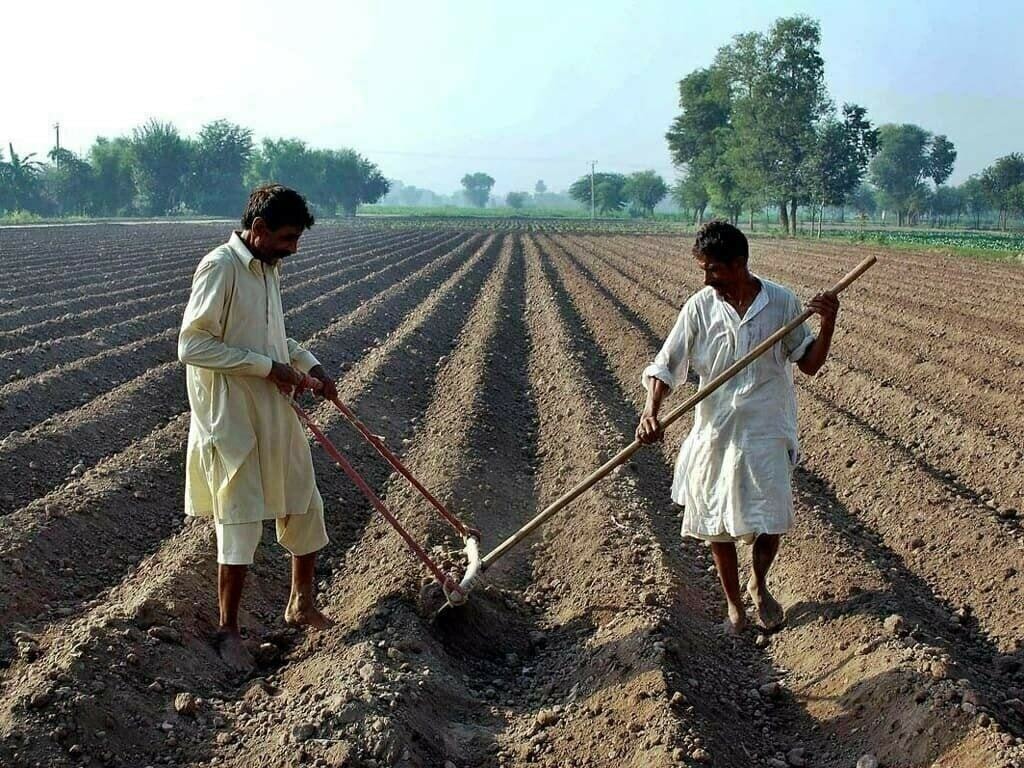

LAHORE: Farmers’ representatives on Tuesday accused the government of failing to protect growers from exploitation, warning that continued neglect of the agricultural sector is pushing producers toward an economic collapse that threatens the country’s food security.
Speaking at a press conference on Tuesday, Pakistan Kissan Ittehad (PKI) President Khalid Mahmood Khokhar said growers are being denied fair returns on almost every major crop, including potatoes and sugarcane, while the cumulative loss to wheat farmers alone has crossed Rs 2,200 billion.
He noted that potato farmers are unable to secure viable market rates despite a fully ready new crop, while stocks from the previous harvest remain piled up in stores. Similarly, sugarcane growers are still not receiving the full notified price of their produce. He alleged that when a sugar mill in Sindh recently increased the cane rate by Rs 40 per maund, the government moved to shut the mill instead of supporting the farmers, reinforcing the perception that official policies favour powerful industrial groups.
He said the crisis extends beyond growers, as consumers are also distressed, creating a situation in which neither the producer nor the end-user feels financially secure. He added that global practice places food security ahead of border security, but in Pakistan national priorities appear to revolve around a few influential families who continue to benefit at the expense of both farmers and consumers.
Referring to the sugar price hike to Rs 220 per kg, he said the government itself facilitated exploitation during both the current administration and the previous PTI-led government.
Presenting cost comparisons, the farmers’ representative said that cultivating one acre of cotton costs more than Rs 300,000 while per maund expenses exceed Rs 453. Despite this, growers are denied even a 25 percent profit margin on their hard work. He also highlighted that in India, the sugarcane support price, when converted into Pakistani currency, is around Rs 550 per maund, even though overall agricultural commodity prices there remain lower than in Pakistan. They added that many farmers cultivated wheat “only out of fear of God,” despite knowing it would not be economically viable under current market distortions.
He questioned why neither the federal nor the Punjab government has held any formal consultation with farmers in recent months, especially at a time when authorities are preparing to impose new taxes on a sector already mired in losses. He said the grower today feels he is not treated as a Pakistani citizen or even as a human being. Citing international examples, he said countries such as Brazil advanced rapidly because of sustained investment in agricultural research, while Pakistan continues to lag due to policy neglect.
Calling for urgent government intervention, he said Pakistan possesses natural advantages in land, climate and crop diversity, but the state must act to protect the farmer before the situation becomes irreversible. They reiterated their demand for the creation of an independent commission to determine fair crop prices and said it is the government’s responsibility to create new markets for agricultural goods. They added that electricity tariffs for farmers, which were once lower than industrial rates, have now surpassed them, further squeezing growers’ margins.
Concluding their briefing, Khalid Khokhar urged the government to ensure at least a 25 percent profit for farmers, in line with global norms, and to prioritise agricultural development as a cornerstone of economic growth.
Copyright Business Recorder, 2025

























Comments
Comments are closed for this article.