


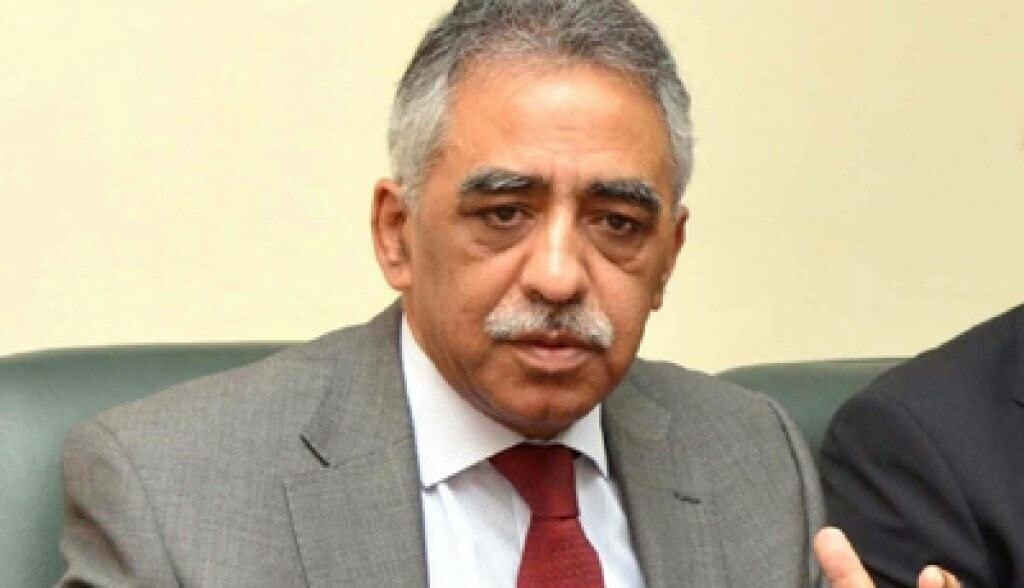

ISLAMABAD: The federal government came under renewed scrutiny on Saturday as Tehreek-e-Tahaffuz-e-Aain-e-Pakistan (TTAP), an alliance of six opposition parties, demanded an urgent investigation into alleged economic mismanagement highlighted in a damning 186-page International Monetary Fund (IMF) report.
Speaking at a press conference, TTAP leader, and former Sindh governor Mohammad Zubair and Pakistan Tehreek-e-Insaf (PTI) leader Taimur Khan Jhagra sharply criticised Prime Minister Shehbaz Sharif Administration for its perceived inaction following the publication of the IMF’s Governance and Corruption Diagnostic Assessment (GCDA) earlier this week.
Pointing to a section of the report, Jhagra highlighted the judiciary’s central role in undermining investor confidence. The IMF observed that “the judicial sector, which is organisationally complex, is not able to reliably enforce contracts or protect property rights due to inefficiency, outdated laws and issues with the integrity of judges and judicial personnel.”
“Capital investment in Pakistan is being throttled by investor fears of judicial corruption,” Jhagra said, adding that distrust in judicial and accountability institutions is deterring both domestic and foreign investors.
The IMF also raised concerns over the National Accountability Bureau (NAB), stating that anti-corruption efforts were constrained by “heavy reliance on a single institution exposed to strong political influence.”
TTAP accuses PM of trying to cover up corruption scandals
Jhagra shot back, questioning if the government could possibly deny the IMF’s claim that institutions tasked with fighting corruption were under political influence. Highlighting state overreach in the economy, the report noted that 72 per cent of formal sector employment is controlled by the state.
Jhagra said this pervasive state dominance inevitably created conditions for patronage and undue favours, citing the sugar sector as a stark example.
“For decades, firms in sugar benefited from government policies, subsidies and regulatory loopholes due to the nexus between industrial magnates and political leaders,” he said, echoing the IMF’s findings.
The Special Investment Facilitation Council (SIFC) also came under scrutiny. According to the IMF, the body operates under “untested transparency and accountability provisions.”
Jhagra dismissed the SIFC as largely symbolic, designed by the previous PML-N government to placate stakeholders without attracting real investment.
“It was never meant to bring in a penny’s worth of investment, and it hasn’t,” he added.
The opposition leaders framed the report as a test for the government: either it acts swiftly to implement the IMF’s recommendations or it faces mounting questions from the public and lawmakers. Jhagra was sceptical of any substantive action, quipping, “The government won’t remain, and neither will the SIFC.”
Echoing Jhagra, Zubair condemned the government’s silence and questioned why the GCDA had been withheld for three months, despite its release being a precondition for the next $1.2 billion tranche of IMF funding.”
The IMF’s report paints a stark picture of systemic corruption and political interference as barriers to economic growth. It warns that entrenched weaknesses across state institutions are choking investment and stymieing governance reforms, even as Pakistan continues to rely on the Extended Fund Facility (EFF) for fiscal support.
According to the assessment, Pakistan could potentially achieve growth of 5-6.5 per cent over the next five years if a comprehensive package of governance reforms is implemented within six months.
Recommendations include ending “special treatment” for powerful public sector entities, restricting unchecked financial authority, strengthening parliamentary oversight, and reforming anti-corruption bodies to ensure genuine independence.
Zubair urged immediate action, calling for a 15-point reform agenda to improve transparency, accountability and institutional integrity. He stressed that citizens are facing daily hardships due to soaring inflation and poor economic management, while government inaction continues to fuel public frustration.
Copyright Business Recorder, 2025




















Comments
Comments are closed for this article.