


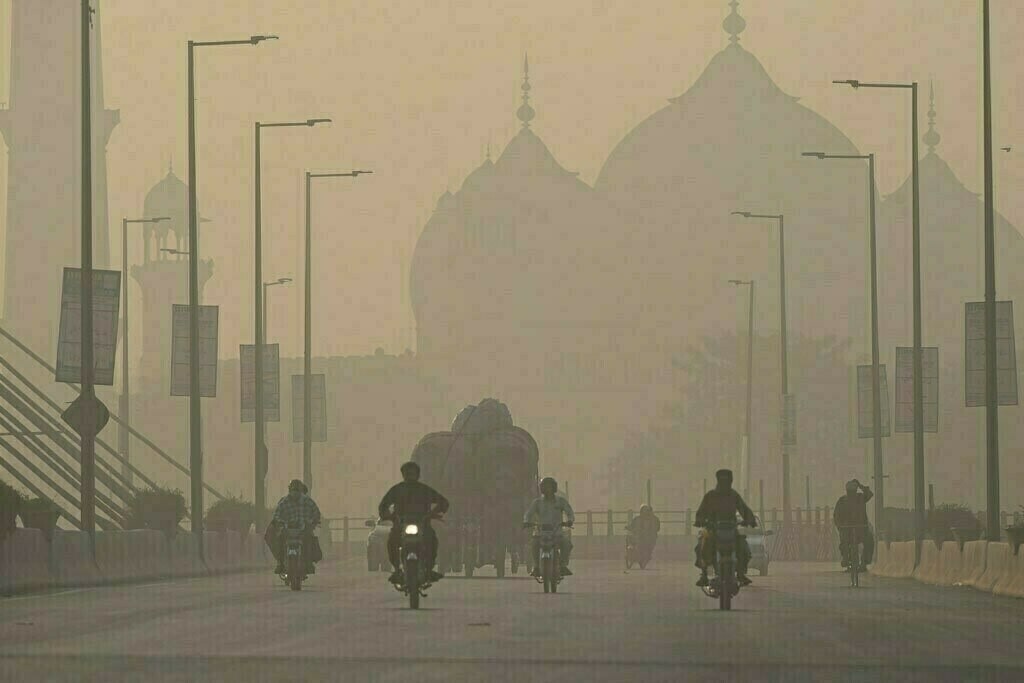

LAHORE: The Punjab government on Wednesday claimed a significant improvement in Lahore’s air quality this November, with environmental data confirming a 30 per cent recovery in Air Quality Index (AQI) reading as compared to the same month last year.
Data from the United States air quality monitoring agency shows that Lahore’s Air Quality Index (AQI) fell sharply from 565.2 recorded in November 2024 to 259.6 this year. Out of 18 observed days in November 2025, 16 were recorded with healthier air quality readings, said a statement issued by the Provincial Ministry of Environment.
According to an analytical review, not a single day in November 2025 was categorised as hazardous to public health, a notable contrast to November 2024, during which 11 days were classified in the dangerous range.
Officials attribute this improvement to intensified efforts under the vision of Chief Minister Maryam Nawaz Sharif to curb pollution and reduce smog levels. Senior Provincial Minister Maryam Aurangzeb stated that the progress reflects the dedication of all relevant institutions and teams working to cleanse Lahore’s environment. She added that this positive trend marks the beginning of a long-term transformation that, with continued effort, would extend from days to months and eventually years.
As of November 18, Lahore’s AQI stood at 209, showing a visible decline despite seasonal temperature drops typically associated with worsening haze. Authorities credit the changes to government measures and public cooperation.
The Parks and Horticulture Authority has accelerated plantation drives across major thoroughfares, supplementing them with regular tree washing campaigns. The government has also expedited the “Lungs of Lahore” project along the River Ravi Belt, where the pace of planting 400,000 trees has been increased.
Meanwhile, a massive afforestation initiative around the Lahore Ring Road is underway, aiming to plant 2.1 million trees across 112 kilometres to generate moderating climate effects.
Plantation of 45,000 bamboo plants around major drainage systems, including Hudyara Drain, is expected to reduce odour and particulate emissions. Expansion of green belts in Thokar, Lala Zaar, Bedian Road and Gajjumata is also contributing to enhanced urban greenery, while a three-tier plantation drive along a 1.3-kilometer stretch from Shahdara to GT Road has resulted in the installation of 5,500 trees standing 4 to 15 feet tall.
Officials emphasised that every vacant space in Lahore is being integrated into the “Green Lahore Mission” with the ambition of making the city smog-free.
In partnership with Pakistan Railways, the Punjab government has also agreed to develop a 43-kilometre railway corridor from Raiwind to Shahdara as a green zone, incorporating 30 parks and open-air gyms.
However, authorities have issued public health advisories in response to rising smog levels in certain areas, urging citizens to avoid unnecessary outdoor activity, use protective masks, reduce travel, and ensure indoor air hygiene.
Patients with asthma, allergies and respiratory issues have been advised to avoid early morning exercise, while children and senior citizens are encouraged to spend more time indoors.
The Senior Minister Punjab Maryam Aurangzeb, reiterated that the fight against smog cannot be won without public cooperation; otherwise, it will lead to a dangerous situation.
Copyright Business Recorder, 2025




















Comments
Comments are closed for this article.