



When Pakistan and China launched the China-Pakistan Economic Corridor (CPEC) in 2015, it was hailed as “game-changer”, and once-in-a-generation opportunity — the moment Pakistan would finally shift from aid dependence to investment-driven growth.
The USD 62 billion portfolio, spanning energy, transport, and industrial cooperation, was meant to be the backbone of a new economic era. Ten years later, CPEC remains the single largest expression of Chinese confidence in Pakistan’s potential. Yet the transformation it promised has not taken root. The game changed — but not as planned.
China delivered what it pledged. Roads were built across provinces, power shortages were addressed, and connectivity improved in regions long neglected. Despite Pakistan’s political transitions, Beijing remained steady — financing and completing major infrastructure in record time. But the outcomes on Pakistan’s side fell short, not because of Chinese disengagement, but because of Pakistan’s inability to absorb and operationalise investment at scale.
The first phase of CPEC was designed to remove physical bottlenecks — to build the foundation for industrialisation. That goal was achieved. But the second and most critical phase — industrial cooperation and export diversification — never truly began. The Board of Investment, Planning Commission, and provincial Special Economic Zone (SEZ) authorities worked in silos. There was no unified strategy to align energy, logistics, and industrial policy. Each government changed the narrative: one celebrated, the next recalibrated, and the next tried to revive. The result was continuity of projects but discontinuity of purpose.
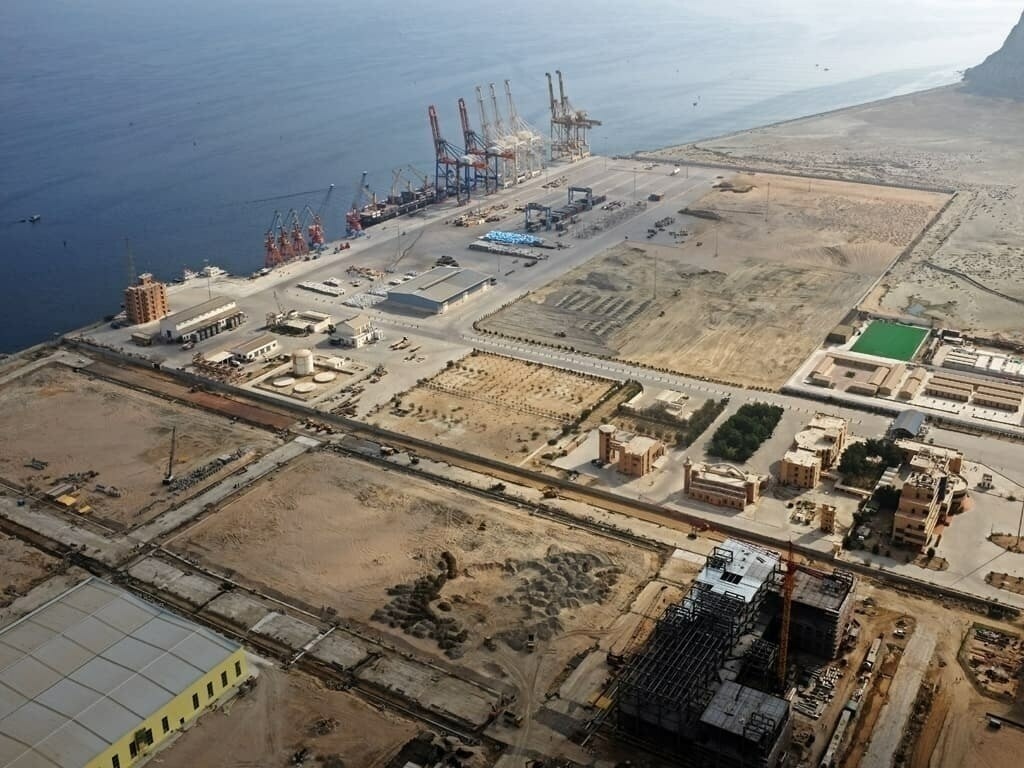
China’s financing— built roads and ports, but Pakistan’s governance could not build linkages between them. Gwadar’s infrastructure is ready, but its integration with regional trade and logistics remains undefined. Rashakai, AIIC and Dhabeji SEZs were announced with optimism, but delays in land acquisition, taxation regimes, and investor facilitation reduced momentum. Industrial cooperation was supposed to convert infrastructure into productivity; instead, it became the weakest link.
Across Asia and Africa, China’s Belt and Road playbook has delivered far stronger outcomes — not through greater funding, but through domestic discipline. In Ethiopia, Chinese-backed industrial parks became export hubs by aligning power, policy, and logistics. In Cambodia, Sihanoukville was transformed from a sleepy port into a manufacturing centre through coordinated regulation and land-use reform. In Kazakhstan, the Khorgos dry port turned into a major trade gateway because institutions worked to one national strategy. These examples show that China’s financing model works best where recipient governments translate projects into productivity — a test Pakistan has yet to pass.
The contrast between Chinese efficiency and Pakistani procedural inertia could not be sharper. Chinese state-owned enterprises worked on defined timelines; Pakistani institutions operated on shifting priorities. Political uncertainty, frequent transfers of key officials, and the absence of empowered project management units further eroded investor confidence. CPEC became less an economic strategy and more a slogan recycled across political cycles.
Yet despite these gaps, China has not withdrawn. It remains Pakistan’s largest investor, trading partner, and infrastructure collaborator. Increasingly, Chinese engagement is diversifying: private companies are entering technology, fintech, agriculture, and manufacturing. But Pakistan’s policy frameworks have not evolved to attract or retain them. Where China’s economic outreach is becoming more private-sector driven Pakistan’s approach remains procedural and state-centric — still expecting “projects” rather than partnerships.
Blaming CPEC for unmet expectations misses the point. The fault lies not in the design of the corridor but in Pakistan’s institutional unreadiness to manage long-term investment. The lesson is not about Chinese loans or geopolitics; it is about governance. Pakistan has struggled to create a coherent investment architecture that connects planning with execution, or federal vision with provincial ownership.
The Ministry of Planning, which leads the CPEC framework, needs to act not just as a coordinator but as a reform driver. It must align SEZ policy, trade facilitation, and industrial incentives under one predictable regime. The Board of Investment must shift from event-based promotion to year-round facilitation. The Provincial governments must move beyond land allocation and ribbon-cutting to genuine industrial stewardship. The SEZ authorities should operate as one-stop platforms — ensuring utilities, permits, and investor aftercare are delivered on fixed timelines. SEZs should be treated as industrial ecosystems rather than real estate ventures with prohibitive costs of land that discourage genuine investors. Provinces must compete on performance by linking incentives to actual job creation and export outcomes. Without provincial ownership of CPEC’s industrial phase, national plans will remain federal paperwork rather than local transformation.
Most importantly, policymakers must view Chinese investment as a platform for economic learning — technology, logistics, and value chain integration — not just as financial inflow.
CPEC did not fail Pakistan. Pakistan failed to prepare for what CPEC could have become. Infrastructure can be financed from abroad, but capacity must be built at home. China provided the opportunity; Pakistan lacked the readiness.
The next decade of Pakistan-China cooperation must be built not on new announcements but on institutional maturity — where policy consistency, transparency, and accountability finally replace episodic enthusiasm.
CPEC remains a symbol of Pakistan’s possibilities — but only if Pakistan chooses to govern with the same discipline with which China invests. The corridor has been built; now Pakistan must build itself.
Copyright Business Recorder, 2025
The writer is a former Add. Secretary-Executive Director General Board of Investment, Prime Minister’s Office, with extensive experience in investment policy, public governance, and corporate law. Email: [email protected]

























Comments
Comments are closed for this article.