


Before talks with Trump, Saudi Arabia doubles down on terms for Israel ties
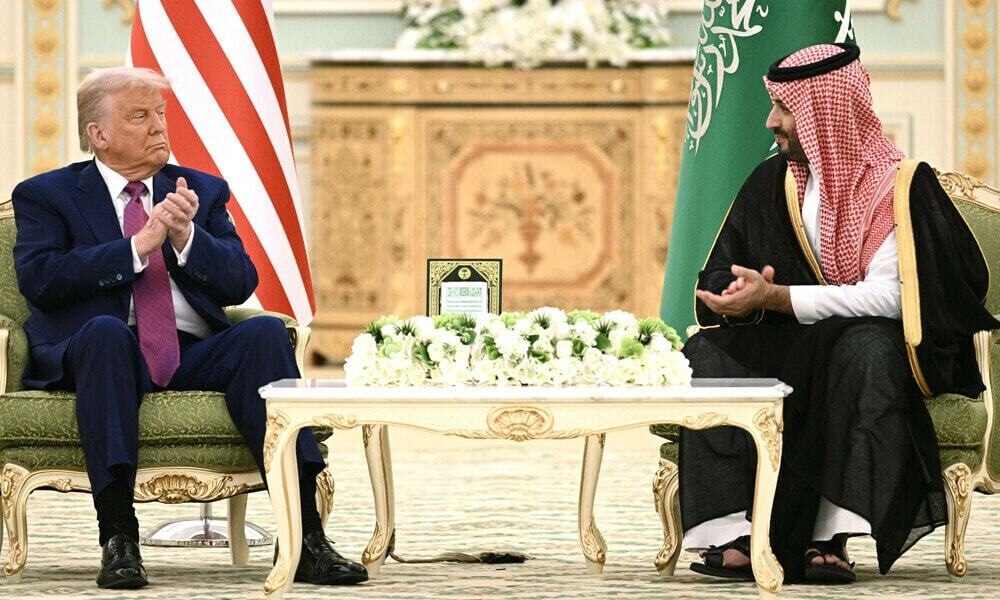

DUBAI: US President Donald Trump has been talking up the prospects of Saudi Arabia agreeing to normalise ties with Israel, but it is unlikely to happen when Saudi Crown Prince Mohammed bin Salman visits the White House this month.
The establishment of diplomatic relations between Israel and Saudi Arabia after decades of enmity could shake up the political and security landscape in the Middle East, potentially strengthening US influence in the region.
Trump said last month he hoped Saudi Arabia would “very soon” join other Muslim countries that signed the 2020 Abraham Accords normalising ties with Israel.
But Riyadh has signalled to Washington through diplomatic channels that its position has not changed: it will sign up only if there is agreement on a roadmap to Palestinian statehood, two Gulf sources told Reuters.
The intention is to avoid diplomatic missteps and ensure alignment of the Saudi and US positions before any public statements are made, they said. One said the aim was to avoid any confusion at or after the White House talks on November 18.
The Crown Prince, widely known as MbS, “is not likely to entertain any possible formalising of ties in the near future without at least a credible pathway to a Palestinian state,” said Jonathan Panikoff, former deputy US national intelligence officer on the Middle East.
MbS is likely to try to use his influence with Trump to seek “more explicit and vocal buy-in for the establishment of a sovereign Palestinian state,” said Panikoff, who is now at the Atlantic Council think tank in Washington.
Next week’s visit is the Crown Prince’s first to Washington since the 2018 killing of Washington Post columnist Jamal Khashoggi, an MbS critic whose murder in the Saudi consulate in Istanbul caused global outrage. MbS denied direct involvement.
The United Arab Emirates, Bahrain and Morocco have already normalised ties with Israel under the Abraham Accords, and Trump has said he expects an expansion of the accords soon.
“We have a lot of people joining now the Abraham Accords, and hopefully we’re going to get Saudi Arabia very soon,” he said on November 5, without offering a timeline.
In a television interview broadcast on October 17, he said: “I hope to see Saudi Arabia go in, and I hope to see others go in. I think when Saudi Arabia goes in, everybody goes in.”
But the agreement signed by the United Arab Emirates, Bahrain and Morocco sidestepped the issue of Palestinian statehood.
The two Gulf sources said Riyadh had signalled to Washington that any move to recognise Israel must be part of a new framework, not just an extension of any deal.
For Saudi Arabia — the birthplace of Islam and custodian of its two holiest sites, Mecca and Medina - recognising Israel would be more than just a diplomatic milestone. It is a deeply sensitive national security issue tied to resolving one of the region’s oldest and most intractable conflicts.
Such a step would be hard to take when Arab public mistrust of Israel remains high over the scale of its military offensive during the war against the Palestinian militant group Hamas in Gaza, despite a fragile ceasefire in the conflict that followed the Hamas-led attack on southern Israel on October 7, 2023.
Saudi Foreign Ministry official Manal Radwan has called for a clear, time-bound Israeli withdrawal from the Gaza Strip, the deployment of an international protection force and the empowerment and return of the Palestinian Authority to Gaza.
These steps, she said, are essential to the establishment of a Palestinian state - the prerequisite for regional integration and the implementation of the two-state solution.

























Comments
Comments are closed for this article.