


Reviving cotton: significance of govt initiatives and public-private collaboration


Pakistan’s cotton sector has faced multiple challenges over the past several years. Declining production, a weak supply chain, lack of research and development and the impacts of climate change have adversely affected not only the national economy but also farmers’ incomes and the country’s export potential.
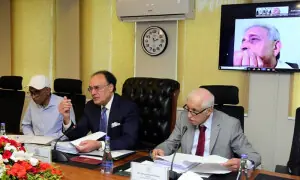
Against this backdrop, a recent high-level meeting led by the Deputy Prime Minister and Foreign Minister, Senator Ishaq Dar, emphasized comprehensive reform measures and immediate practical strategies for the revival of the cotton sector.
The meeting brought together the Federal Minister for National Food Security & Research, the Special Assistant to the Finance Ministry, senior officials of the ministry, representatives of the All Pakistan Textile Mills Association (APTMA), cotton ginners and farmers, addressing key issues such as declining production, gaps in research and development and weaknesses in the supply chain.
Effective collaboration between the public and private sectors can enable research institutions, the industry and farmers to work under a unified strategic framework. This model does not involve handing over control of any institution to the private sector; rather, it represents a cooperative framework under government supervision, providing a strong foundation for the entire cotton value chain. This initiative will not only ensure financial stability for research institutions but also accelerate the development of new seed varieties, promote advanced agricultural technologies and enhance the practical application of research at the farm level.
The All Pakistan Textile Mills Association (APTMA) has indicated a strong commitment to strengthening the cotton research and development system. Its decision to increase the cotton cess from PKR 50 per maund to PKR 142 per maund is a highly encouraging step. This measure will provide sustained funding to research institutions while creating increased opportunities for investment and innovation across the cotton value chain. Consequently, it will improve farmers’ incomes, enhance production and strengthen Pakistan’s competitiveness in the global market.
Global experience demonstrates that public-private partnerships have significantly improved the cotton sectors in countries like India, the United States and Australia. Enhanced research, solutions for crop diseases, market transparency and timely implementation of technology have enabled higher production and better quality. Pakistan can similarly achieve positive results through a collaborative approach between the private sector, research institutions and farmers under a coherent strategic framework.
Other key stakeholders in the cotton sector, including the Pakistan Cotton Ginners Association, Pakistan Cotton Brokers Association, Pakistan Business Forum, Pakistan Textile Council, hosiery and bedwear industries and exporters’ associations, also play vital roles across the value chain. Effective consultation and collaboration among these stakeholders will strengthen decision-making, ensuring more comprehensive and result-oriented policies and facilitating their transparent implementation.
It is also important to note that the recent policy measures are not directly related to the proposed merger between the Pakistan Central Cotton Committee (PCCC) and the Pakistan Agricultural Research Council (PARC). The federal cabinet has already approved the merger and legal procedures are underway at the parliamentary level.
However, the potential merger is expected to integrate the research resources, human capital and policy frameworks of both institutions under a unified system, which will enhance coordination, transparency and the prioritization of research initiatives.
Overall, the government’s recent measures, the proactive strategy of the Ministry of Food Security and the positive engagement of APTMA represent a new beacon of hope for the cotton sector.
Through transparency, institutional collaboration and the active participation of all stakeholders, Pakistan’s cotton sector can not only be revitalized but can also regain its lost competitive edge globally. This model will enhance productivity, quality and competitiveness in the region while generating positive impacts on the national economy and exports.
Copyright Business Recorder, 2025


















Comments
Comments are closed for this article.