


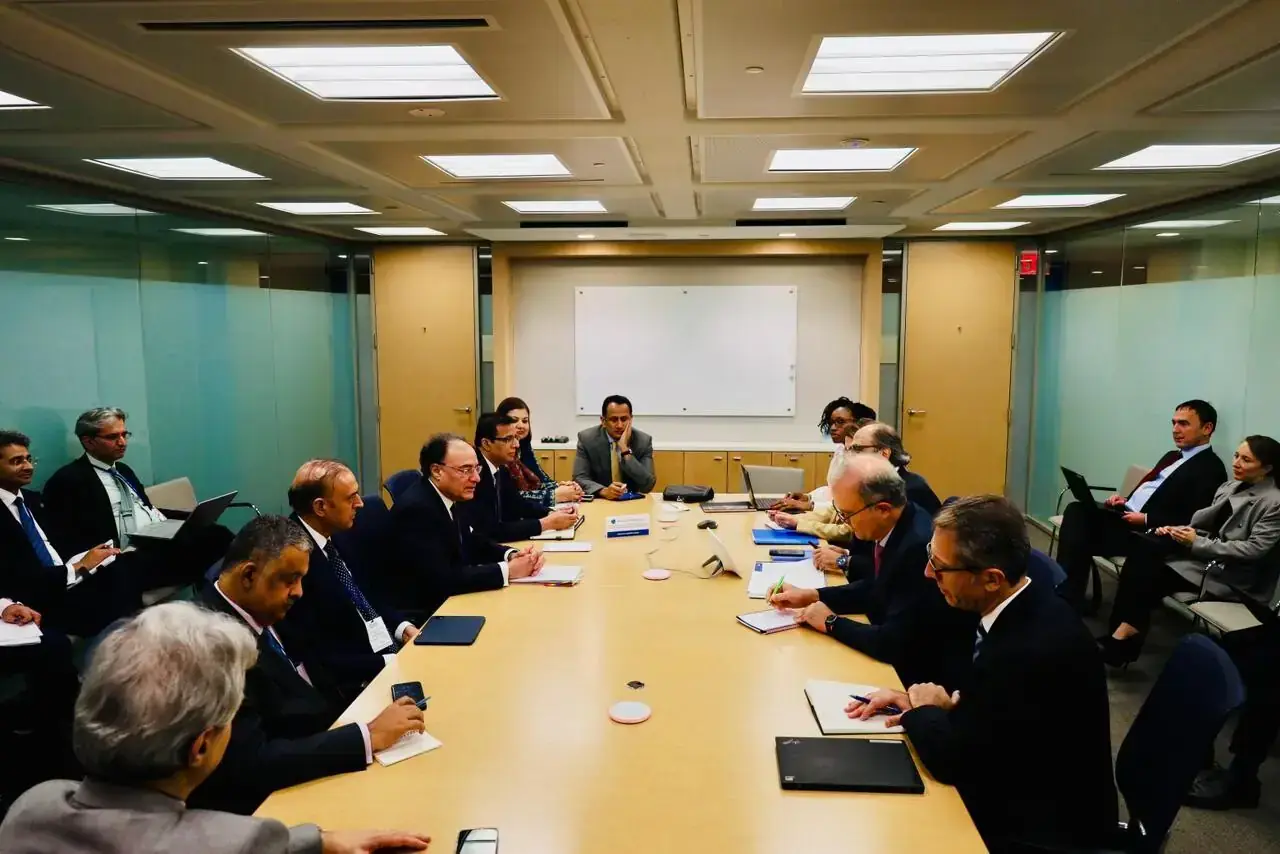

The recent talks with IMF ended seemingly positive, with Finance Minister Aurangzeb describing the whole affair as “productive”. His confident tone is perhaps justified by stable reserves, a smooth Eurobond repayment and renewed Saudi investment. The IMF, too, concluded its visit on a positive note, describing discussions as constructive and praising Pakistan’s “strong programme implementation.”
Apparently, Pakistan’s progress does appear to gain traction as the government moves closer to unlocking the EFF tranche. Behind all the optimism, however, lies a deeper concern. The tranche remains contingent on stringent conditions that are still under negotiation. The durability of this progress would thus depend less on declarations and more on how the numbers hold once the agreement is finally signed.
A closer inspection of economic indicators reveals a mixed picture. Take the stock market, for example. The KSE-100 index fell sharply, decreasing almost 3.7 percent in less than a week. This can be attributed to uncertainty over the delayed IMF staff-level agreement, regional tensions, and widespread profit-taking. Earlier last week, investor caution had deepened after reports surfaced of a $11 billion trade data gap that briefly unsettled the Fund’s review, even after clarification by the State Bank.
Remittances, like always, continue to alleviate pressure on the current account, showing encouraging growth of 11 percent year-on-year to $3.18 billion in September. By stabilizing reserves and sustaining consumption, remittances remain one of the few non-debt sources of resilience in our external position. The increase in car sales by 67 percent is also a healthy sign. Overall, the data points towards a cautious economy which is showing some signs of improvement but remains stunted due to political uncertainty and fiscal anxiety.
On October 8, 2025, the IMF released its end-of-mission statement following the second review of Pakistan’s Extended Fund Facility. The report praised “strong programme implementation” and described the talks as constructive, signaling that a staff-level agreement may soon be reached. Reading between the lines, however, the Fund’s acknowledgment conceals a difficult subtext.
The IMF’s conditions hinge mainly on Pakistan’s ability to service its debt payments and eventually repay the principal amount, minimizing default risk. In that respect, Pakistan has improved considerably, now it’s almost at par with Turkey in credit-risk rankings. When it comes to interest payments, however, the Fund remains uneasy about Pakistan’s cash flows, especially when the FBR comes up short of its targets. In such cases, the IMF’s response is rarely sympathetic.
To widen the revenue pool, it often presses for stricter measures that are almost always politically sensitive. These include a higher petroleum levy, adjustments to the general sales tax, electricity surcharge increases, tighter provincial cash surpluses, and the withdrawal of import and corporate exemptions. Some concessions, such as the abolition of the gift scheme and duty-free car imports, mark progress, but the broader trend points toward more taxation and tighter fiscal controls rather than relief.
These conditions coincide with politically sensitive events, as provinces clash with Islamabad over their fiscal expenditures, political parties remain divided, and war clouds are looming. The IMF’s insistence on maintaining provincial cash surpluses places an additional constraint on already limited fiscal space. With the new NFC Award under discussion, tensions between the center and the provinces are likely to further intensify.
Punjab, in particular, has flagged worries over delayed transfers, while Sindh has cited its own revenue commitments tied to foreign investment projects. The politics of fiscal sharing are colliding with the economics of IMF compliance, and both risk eroding the spirit of provincial autonomy at a time when cohesion is most needed.
Almost as worrying is how the power sector will be reformed, which is pivotal to the IMF’s structural adjustment program. The IMF is a strong proponent of privatizing loss-making distribution companies to reduce the government’s fiscal burden. Yet, the recent standoff between the government and K-Electric casts uncertainty about the IMF’s doctrine of efficiency through liberalization.
KE’s warning that tariff revisions could cause annual losses of up to Rs.100 billion illuminates the fragility of the privatised model itself. Adding to that fragility, NEPRA recently imposed a Rs 25 million fine on the utility over the 2023 nationwide blackout.
The penalty does little to alter behavior, as such costs often find their way back to consumers through tariff adjustments or deferred investments. With Rs272 billion in outstanding debt, heavy reliance on imported fuel, and the possibility of default clauses being triggered, the uncomfortable question remains: if privatization were meant to ensure efficiency, why does it still depend so heavily on regulatory forbearance and government mediation to stay afloat?
The answer lies in the mismatch between reform design and operational reality. Privatization without genuine competition or cost recovery has created entities that are too fragile to function independently and too important to fail. Each tariff dispute ripples through the entire energy chain, from fuel payments to circular debt accumulation, eventually feeding back into the IMF’s fiscal arithmetic. The result is a cycle of reform and reversal, where each correction creates a new imbalance.
As Pakistan edges closer to a staff-level agreement, the question goes beyond just unlocking the tranche. Are we ready to optimize our financial system through better taxation, real foreign investment and export growth, or will we simply rely on indirect taxes as a stopgap arrangement? Each failure to pursue genuine reform automatically kick-starts are form template from Washington that assumes fiscal discipline and market efficiency will converge to produce stability.
Yet those in Pakistan know for certain how each new IMF condition adds to political strain and economic fatigue. Provinces are being directed to have cash surpluses, creating center-province tensions. This is worsened by the over-reliance of provinces on federal revenues.
The energy sector, on the other hand, is expected to reform under rising losses and shrinking investment confidence. This leads to a complicated situation for the government, where the challenge becomes more political than technical. The government would need to implement painful reforms without igniting resistance from industries, provinces, and the public. The coming months will test whether Pakistan can meet the IMF’s fiscal targets without hollowing out its political capital.
Pakistan’s reform story is once again caught between promise and pressure. The progress made in stabilizing reserves, attracting investment, and rebuilding credibility is real, but fragile. The IMF’s conditions may deliver temporary discipline, yet they cannot substitute for long-term reform built on domestic consensus.
Fiscal centralization, provincial austerity, and regulatory overreach may satisfy the Fund in the short run, but they risk weakening the very institutions needed to sustain growth. The challenge ahead is to shift from reform by compulsion to reform by conviction, where fiscal responsibility aligns with social stability and policy continuity outlasts political cycles. Until that time comes, IMF’s tranches would only contribute to progress on paper.
Copyright Business Recorder, 2025
The writer is an economist and an educationist























Comments
Comments are closed for this article.