


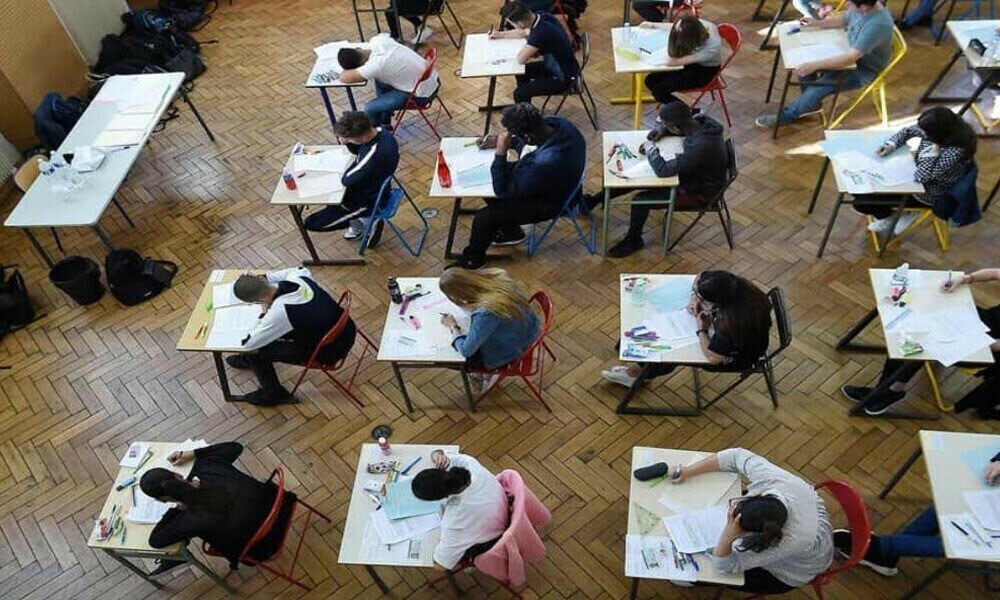
EDITORIAL: Over the past over four decades, the Cambridge International Examinations (CIE) system has entrenched itself as a highly important pillar of Pakistan’s education landscape.
Each year, the number of students enrolled under its O- and A-levels programmes continues to grow, even as the local matriculation and intermediate system deteriorates in quality and fails to keep pace with international standards.
More than 750 schools across the country follow the Cambridge curriculum and, according to the Cambridge Coordinator for Pakistan, in 2025, around 127,000 students sat for A Level exams alone, underscoring the system’s rapid expansion. However, alongside this growth lies a neglected reality: the massive outflow of untaxed money from Pakistan in the form of examination fees.
Recent research by the Federal Tax Ombudsman (FTO) estimates that a staggering Rs70-80 billion is repatriated annually to the UK under this head, encompassing not just school-level exams but also graduate and postgraduate degree programmes of foreign universities offered through local institutions, with the University of London taking the lead here.
And as pointed out above, the entire stream remains untaxed, which is a glaring enforcement failure. It is important to note, however, that this is not due to any legal vacuum. Last year, the FBR amended Section 101 of the Income Tax Ordinance 2001 through subsections (3A) and (3B) to introduce the concept of a “significant economic presence” for non-resident entities.
Under this framework, foreign businesses could be deemed to have a taxable presence in Pakistan if they crossed set thresholds on annual transaction volume and digital interactions with Pakistani users. The clear intention was to bring previously untaxed cross-border and digital transactions into the tax net.
However, as the FTO has revealed, the FBR has still not prescribed these thresholds even after 15 months, leaving the law ineffective and unenforceable. In fact, the FTO has gone as far as to term this failure as “glaring acts of maladministration; i.e., neglect, inattention, delay, and ineptitude in the discharge of duties and responsibilities”.
And it is difficult to dispute this description as the tax bureaucracy, despite its perennial obsession with squeezing salaried individuals and the corporate sector to every last paisa — sometimes through arguably unethical or needlessly high-handed manoeuvres — has inexplicably failed to operationalise a mechanism that could capture a significant, sustainable revenue stream.
One reason for this may be that the Cambridge system largely services the elite, and pressure from the upper echelons may have discouraged attempts to tax this area. But if this is indeed the case, then such resistance must be firmly pushed back, as Pakistan just does not have the fiscal space that would allow leaving vast remittances abroad untaxed, while ordinary taxpayers bear the brunt of financing the state.
What the very prospect of taxing CIE and other foreign certification-awarding entities ultimately highlights, however, is the dismal condition of our own education system and the steady collapse in academic standards and erosion in credibility of the examining boards of education because of increasing resort to unfair (cheating) means in examinations that has compelled increasing numbers of students to opt for foreign qualifications.
Public sector schools and matriculation and intermediate boards have consistently failed to produce students equipped to thrive in a global marketplace that values innovation, critical thinking and merit. Even within Pakistan, top universities and employers overwhelmingly favour students with Cambridge backgrounds, leaving graduates of the local system at a distinct disadvantage.
And as outlined above, the dependence on foreign certification is also draining vast sums abroad, untouched by taxation, while the tax machinery shies away from instituting measures needed to bring such flows into the net. What we face, in effect, is a dual failure: a revenue authority too hesitant to act where action is most needed and a domestic education system unable to meet the needs of its students.
Copyright Business Recorder, 2025


























Comments
Comments are closed for this article.