


Joint Chambers of Commerce & Industry at global level: DGTO invites proposals on formulating new framework
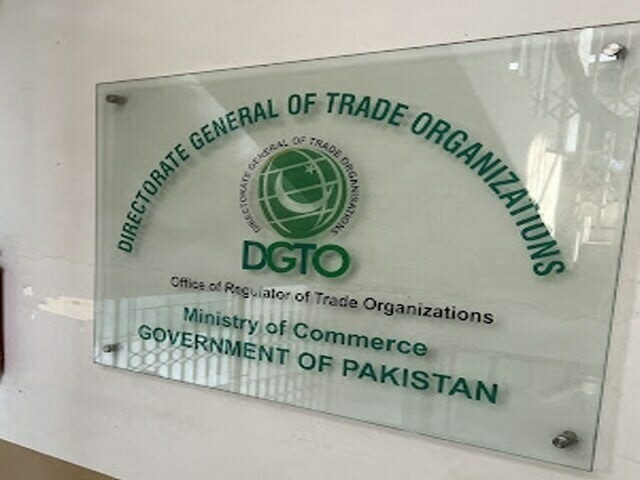

ISLAMABAD: The Directorate General of Trade Organisations (DGTO) has sought proposals from all registered trade organisations for formulating a new regulatory framework to establish Pakistan’s Joint Chambers of Commerce and Industry (JCCIs) at the international level.
In a letter to the Federation of Pakistan Chambers of Commerce and Industry (FPCCI) and all licenced trade organizations, the DGTO has stated that in pursuance of the directives issued by the Senate Standing Committee on Commerce during its meeting on September 11, 2025, the DGTO has been tasked with undertaking a comprehensive review of the policy and legal framework for the establishment and regulation of Joint Chambers of Commerce and Industry with partner countries.
During the deliberations, the committee observed that the current system for licencing and renewing JCCIs suffers from bureaucratic hurdles and outdated policies, leading to procedural delays and a lack of clarity. The committee underscored the urgent need to streamline procedures, remove ambiguities, and align Pakistan’s framework with successful international models to strengthen international trade facilitation.
Over 350,000 registered businesses in Karachi: creation of district chambers emphasised
According to the DGTO, the Trade Organizations Act, 2013 (TOA 2013) does not contain an explicit, purpose-built provision for the licensing of foreign or joint chambers. Consequently, the DGTO has historically relied on the discretionary exemption powers granted under Section 3(9) of the TOA 2013 to licence these strategically important bodies.
While this has provided a legal gateway, the absence of a dedicated statutory provision contributes to the regulatory challenges highlighted by the committee, particularly in assessing the authenticity of new applicants and the performance of existing licensees.
Therefore, to formulate a robust, transparent, and efficient new framework, this directorate formally solicits substantive proposals from all stakeholders, particularly the FPCC&I and its member bodies. The DGTO has asked the FPCCI and all licensed trade organisations to provide targeted recommendations focusing on the specific areas for reform identified by the Senate Standing Committee.
The proposals may include, but are not limited to, the following key areas: (a) Legislative Reforms: (i) proposals for the inclusion of a new, dedicated chapter or section within the T?A 2013 for licensing JCCIs. What should be the essential legal criteria (e.g., minimum membership, financial standing, corporate structure) for such entities?
b) Procedural Streamlining & Reciprocity ;(i) mechanisms to ensure the reciprocal establishment of chambers in partner countries ;(ii) developing a clear and efficient “embassy-based verification” process to replace the existing requirement for a No Objection Certificate (NOC), thereby ensuring authenticity without causing undue delay; and (iii) suggestions for establishing clear, binding timelines for application processing and appointing dedicated focal persons within relevant government departments.
c. Role of Pakistan’s Foreign Missions: (i) How to formally engage Trade and Investment Officers (TIOs) posted abroad to both verify foreign partners and actively lobby for the establishment of Pakistan’s chambers in their respective countries of posting.
d) Performance, Governance, and Renewal: (i) defining clear Key Performance Indicators (KPIs) for JCCIs to objectively measure their effectiveness in promoting trade and investment; and (ii) proposing a standardized process and documentation requirements for the renewal of licenses, contingent on meeting performance benchmarks.
e) International Best Practices: (i) identifying successful international models for bilateral chambers that Pakistan could emulate to create a world-class regulatory environment.
Meanwhile, the FPCCI, in a letter to country-wide chambers of commerce and associations, sought their comments on the regulation of Joint Chambers of Commerce and Industry (JCCIs). The consolidated proposals should address, but are not limited to, the following key areas: (i) Legislative Reforms; (ii) procedural Streamlining & Reciprocity ; (iii) role of Pakistan’s Foreign Missions ;(iv) performance, governance, and renewal; and (iv) international best practices.
Copyright Business Recorder, 2025

























Comments
Comments are closed for this article.